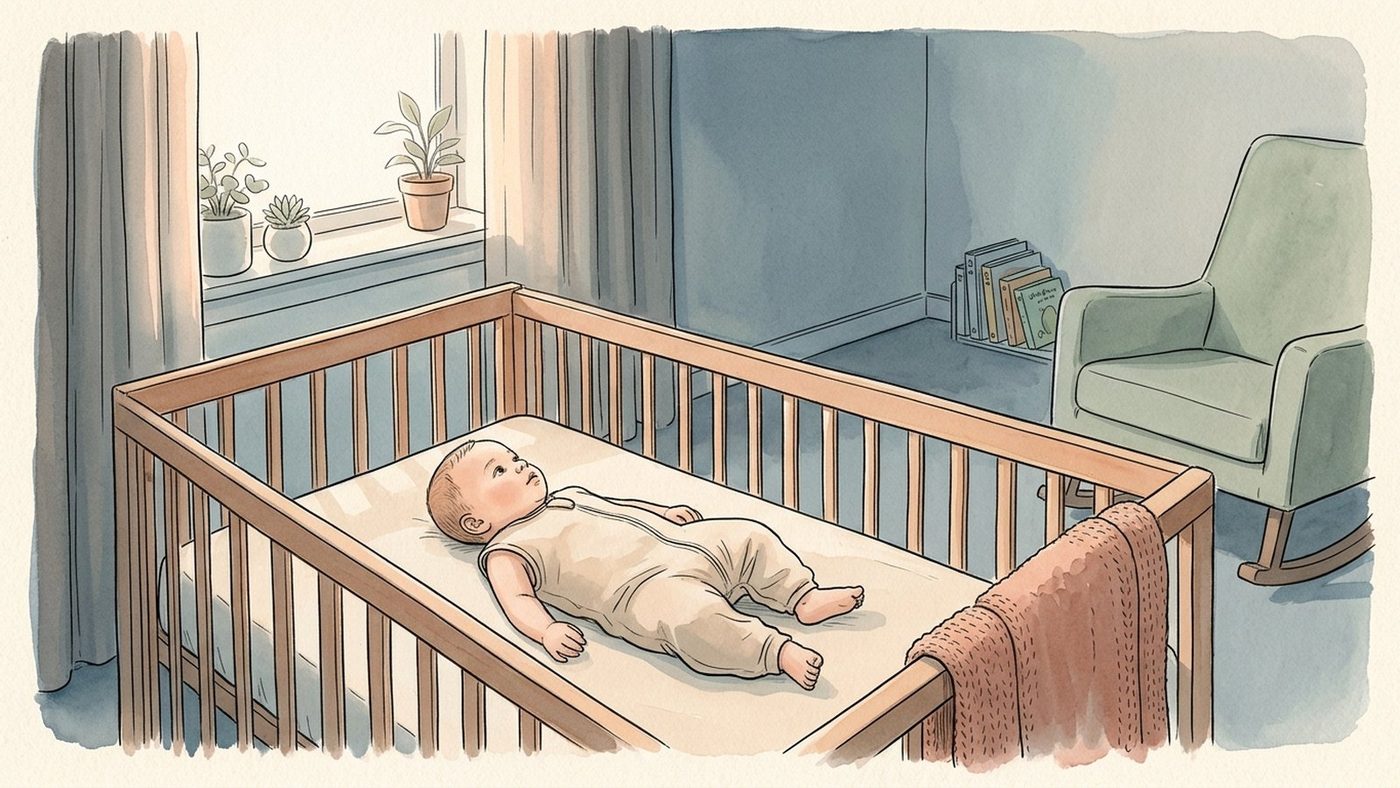
Short answer: Babies and toddlers often wake around 5am because by then they’ve used up most of the sleep pressure built during the day, so any small trigger, like early light, noise, hunger, or a wet diaper, can end the night. The changes most likely to help are a truly dark room, avoiding treating 5am as morning (keep it dim and quiet), and checking that naps and bedtime fit your child’s total sleep need. Some early waking is simply how a child is wired, and no approach works for every family.
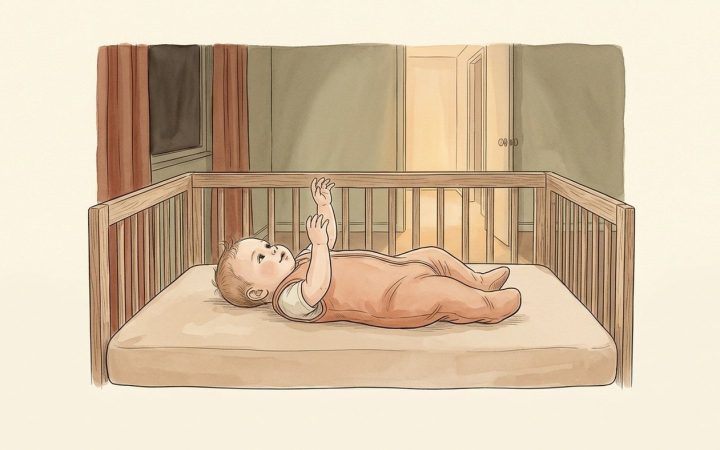
Adam went through a stretch of 5am starts, babbling happily at the first hint of light around the curtains. Here’s what the sleep science says about why it happens and what’s worth trying.
Key takeaways
- Why 5am: by early morning, sleep pressure is low, so small disturbances wake children more easily.
- Darkness first: block early light completely; young children’s body clocks are very sensitive to light.
- Keep 5am boring: dim lights, quiet voices, no play or screens until your chosen wake-up time.
- Check the daily total: too much daytime sleep or a very early bedtime can leave too little sleep for the early morning.
- Be patient: give any change one to two weeks before judging it.
Why does my baby wake up at 5am?
Because the drive to sleep is weakest in the early morning. Sleep scientists describe sleep with the two-process model: sleep pressure builds while we’re awake and drains away during sleep, while a roughly 24-hour body clock makes sleep easier or harder at different times. By around 4 to 6am, a child who went to bed at 7pm has already had most of a night’s sleep, so the remaining pressure is low. At that point, any nudge can tip them into being fully awake.
Common nudges include:
- Light. Dawn light around curtains, especially in spring and summer.
- Noise. Birds, traffic, garbage trucks, or a parent getting ready for work.
- Hunger or a wet or dirty diaper, especially in younger babies.
- Temperature. Homes often get coolest in the early morning.
- A schedule that front-loads sleep. A very early bedtime, a long day of naps, or a first nap so early that it acts like a continuation of night sleep.
Is waking at 5am normal for babies and toddlers?
It’s common, and for some children it’s simply their natural rhythm. What matters most is whether your child is getting enough sleep overall and seems rested. The American Academy of Sleep Medicine, in guidance endorsed by the AAP, recommends 12 to 16 hours per 24 hours (naps included) for babies 4 to 12 months, and 11 to 14 hours for children 1 to 2 years old.
A toddler who sleeps 7pm to 5am and naps two hours gets 12 hours, which is inside the recommended range. That child may not be “short on sleep” at all, just on an early schedule. A baby who wakes at 5am grumpy, rubbing their eyes, and ready for a nap an hour later is a different story: that pattern suggests they woke before they’d had enough.
| What you notice | What it may mean | What to try |
|---|---|---|
| Wakes at 5am happy and stays happy until the first nap | Early but possibly enough sleep | Darkness and a later “official” start; small bedtime shift |
| Wakes at 5am tired and needs a nap within an hour or so | Woke before getting enough sleep | Darkness, a calm response, and avoiding a very early first nap |
| Early waking began when days got lighter | Dawn light is the trigger | Blackout curtains or shades |
| Long naps and a very early bedtime | Too much sleep earlier in the day | Cap total daytime sleep or move bedtime a little later |
| Wakes for a feed, then won’t resettle | Hunger, or the feed has become a wake-up cue | For older babies, talk to your pediatrician about whether night feeds are still needed |
How do I stop my baby waking at 5am?
Work through the likely triggers one at a time. There are no trials of fixes for early waking in young children, so this list applies general sleep science and common practice; change one thing at a time and give it a week or two.
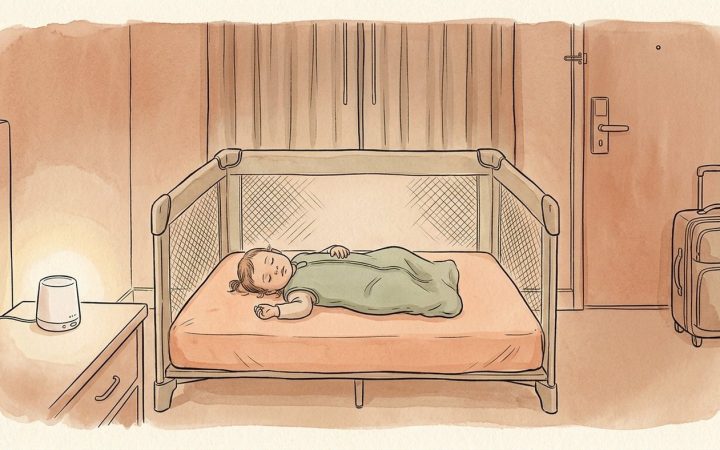
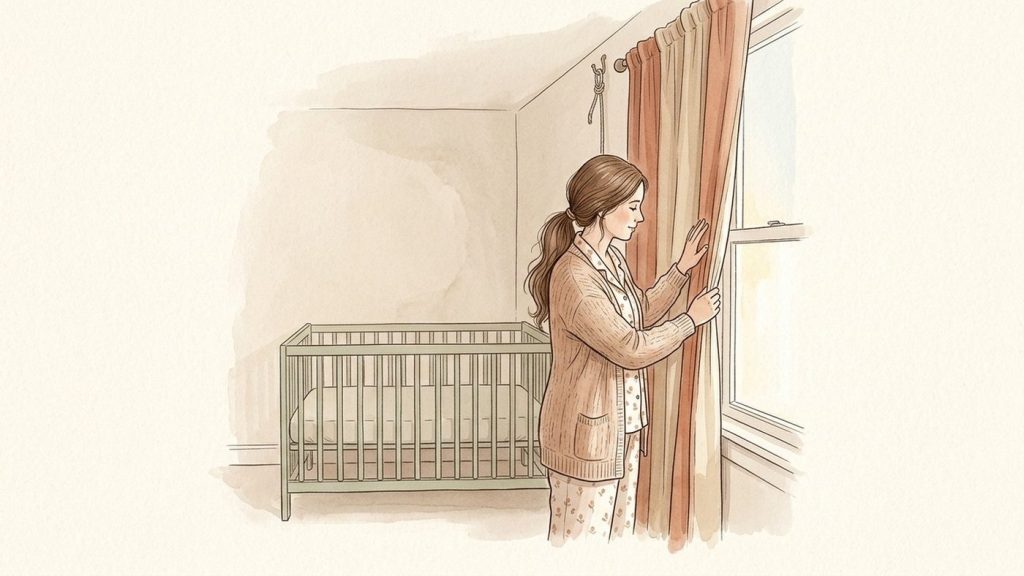
- Make the room truly dark. Blackout curtains or shades, and tape over small gaps or LED lights. In the morning, the room should stay dark until your chosen wake-up time.
- Treat 5am like night. Respond calmly, keep lights off or very dim, use few words, and don’t start play, screens, or breakfast. Bringing a child into a bright room tells their body clock it’s morning.
- Pick a realistic start time. Many families choose 6 or 6:30am. When it arrives, open the curtains, use a bright “good morning,” and get daylight soon after.
- Use daylight during the day, dim light in the evening. In a 2004 study of 56 babies aged 6 to 12 weeks, those who slept well at night had more light exposure in the early afternoon. And in preschoolers, an hour of bright evening light strongly suppressed melatonin, the hormone that signals night.
- Don’t let the first nap start too early. If your baby naps 30 minutes after waking at 5am, that nap can act like more night sleep and reinforce the early start. Stretch the first awake window slowly, within what’s typical for their age; see wake windows by age.
- Check daytime sleep and bedtime. If naps plus night add up to the top of the recommended range, cap the longest nap a little or move bedtime 15 to 30 minutes later.
- Mask morning noise. A steady white noise at a low volume, placed away from the crib, can cover early traffic or birdsong. Our post on whether white noise is safe for babies covers volume and distance.
What the research says: the science behind sleep pressure and light is solid, and studies show that young children’s body clocks respond strongly to light. But we couldn’t find any study testing specific fixes for early waking in babies or toddlers. Advice you’ll see online, like “early bedtime fixes early waking,” is based on experience, not trials, and results vary a lot from child to child.

Free download
Free: safe sleep checklist and sleep log
Track naps and night wakings for a week and the pattern shows itself. Part of our free 7-page printables pack.
Should I move bedtime later to fix early waking?
Sometimes, but it isn’t a guaranteed fix. If your child is already getting enough total sleep and bedtime is very early, a slightly later bedtime may push the wake-up later. But many parents find that an overtired child who goes down late still wakes early. In a large survey of more than 29,000 children up to age 3 in different countries, children in places with later average bedtimes also had shorter total sleep, a hint that wake-up times don’t simply move later when bedtime does.
A careful approach is to move bedtime by 15 minutes every few days and watch total sleep, rather than making a big jump. If early waking started around a nap change, our guide to the 3 to 2 nap transition may help, and if your baby is also up for long stretches in the middle of the night, see split nights.
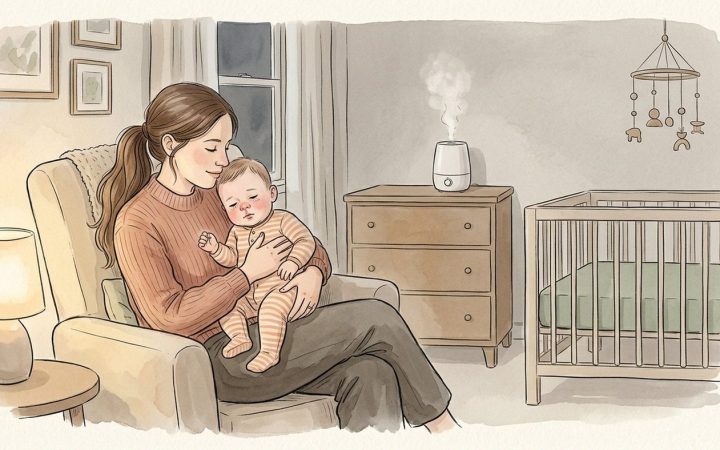
When you’re half-asleep at 5am, it’s tempting to bring your baby into bed or doze on the sofa with them. For babies under 1, the AAP recommends room-sharing without bed-sharing, and warns that falling asleep with a baby on a sofa or armchair is especially dangerous. If you feed or comfort your baby, put them back on their back in their own crib, with only a fitted sheet. Keep blackout blind cords well out of reach of the crib.
Talk to your pediatrician if:
- your child snores most nights, gasps, or seems to pause breathing during sleep
- your child seems very tired, irritable, or unwell during the day despite your changes
- early waking comes with pain, fever, or other new symptoms
- you’re struggling to cope with the lack of sleep, which is very common and worth raising
Frequently asked questions
Why does my baby wake at 5am to poop?
A dirty diaper is uncomfortable enough to wake a child from light early-morning sleep. Change them calmly in dim light, then treat it like night.
My baby wakes at 5am but isn’t crying. Should I go in?
If they’re content and safe, many parents wait. Quiet time in the crib is fine, and rushing in with lights and chatter can make 5am feel like morning.
Do toddler clocks help with early waking?
Many families use color-changing “OK to wake” clocks with older toddlers to show when morning starts. They haven’t been studied, but they’re low-risk. Use the dimmest setting so the light itself doesn’t wake them.
Will daylight saving time make early waking worse?
In spring the clock change can help an early riser; in fall it can make 6am feel like 5am. See our guide to daylight saving time and baby sleep.
How long does it take to fix early waking?
Often one to two weeks of consistent changes, and some children stay early risers. If your child is rested and within the recommended sleep range, early can still be healthy.
Sources
- Borbély AA (1982). A two process model of sleep regulation. Human Neurobiology. pubmed.ncbi.nlm.nih.gov
- Paruthi S, Brooks LJ, D’Ambrosio C, et al. (2016). Recommended Amount of Sleep for Pediatric Populations: A Consensus Statement of the American Academy of Sleep Medicine. Journal of Clinical Sleep Medicine. pmc.ncbi.nlm.nih.gov
- Harrison Y (2004). The relationship between daytime exposure to light and night-time sleep in 6–12-week-old infants. Journal of Sleep Research. doi.org
- Akacem LD, Wright KP, LeBourgeois MK (2018). Sensitivity of the circadian system to evening bright light in preschool-age children. Physiological Reports. doi.org
- Mindell JA, Sadeh A, Wiegand B, How TH, Goh DY (2010). Cross-cultural differences in infant and toddler sleep. Sleep Medicine. doi.org
- American Academy of Pediatrics, HealthyChildren.org. How to Keep Your Sleeping Baby Safe: AAP Policy Explained. healthychildren.org
- American Academy of Pediatrics, HealthyChildren.org. Sleep Apnea in Children: Detection and Treatment. healthychildren.org