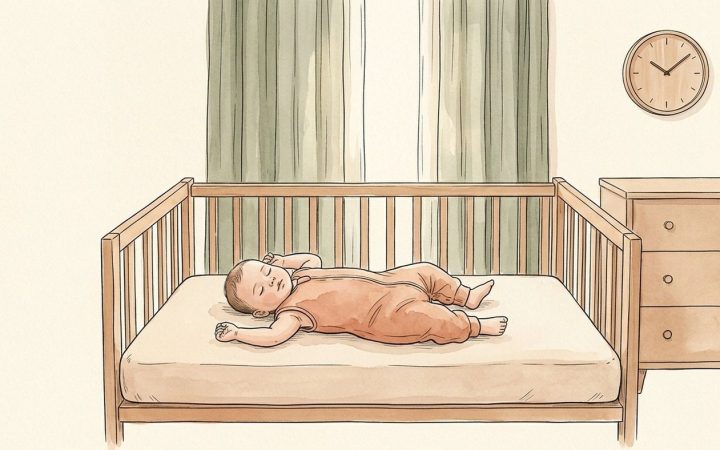
Short answer: A sweaty head during sleep is very common in babies and is usually harmless. Babies sweat first and most on the forehead and head, so damp hair doesn’t automatically mean your baby is too hot. Check the chest or the back of the neck instead: if it feels hot or sweaty, remove a layer; if it feels comfortably warm, your baby is fine. Keep the room around 16–20°C (61–68°F), skip hats indoors, and talk to your pediatrician if heavy sweating comes with feeding difficulties, fast breathing, or poor weight gain.
Key takeaways
- Common and usually normal: research shows newborns sweat first and most on the forehead.
- Check the right spot: the chest or back of the neck tells you more than the head, hands, or feet.
- Hot or sweaty chest: remove a layer or switch to a lighter sleep sack.
- Prevent overheating: room about 16–20°C (61–68°F), no hats indoors, no more than one layer more than an adult would wear.
- Red flags: sweating with feeds plus breathlessness, poor weight gain, or cool, clammy skin need a doctor’s check.
Why does my baby’s head sweat when sleeping?
Mostly because of where babies sweat. In a classic 1982 study in The Journal of Pediatrics, researchers Harpin and Rutter gently warmed preterm and term newborns and measured their sweating. Sweating appeared first, and was most marked, on the forehead. Babies born at 36 weeks or later could sweat from their first day, and sweating increased with age, but it was still a fairly inefficient way for babies to cool down.
So a sweaty head is often just your baby’s normal way of letting off a little heat. Other everyday reasons it shows up at sleep time:
- Heat trapped against the mattress. The back of the head rests on the sheet for long stretches, and that area can’t cool as easily.
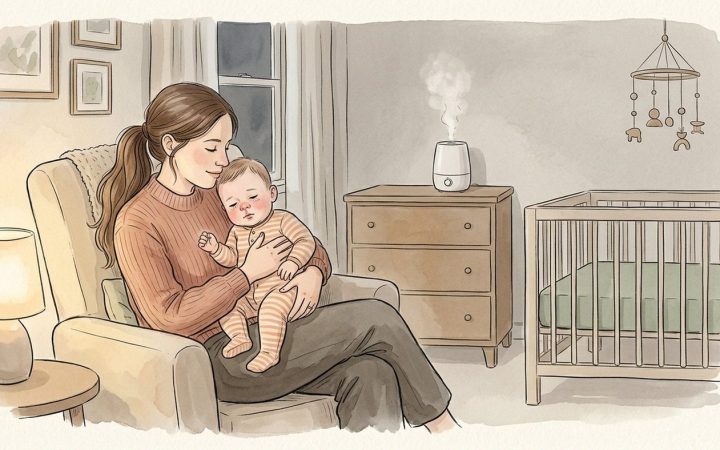
- Contact naps and feeds. Sleeping on a warm parent, or feeding snuggled close, adds body heat. See are contact naps safe for how to do these safely.
- Too many layers or too warm a room. Well-meaning bundling is a common cause, especially in winter.
- Fever. Babies can sweat as a fever comes down. If your baby feels hot or seems unwell, check their temperature.
We couldn’t find good research on how common night-time head sweating is in healthy babies, or on claims that it’s linked to deep sleep phases. What we can say is that it’s frequently reported by parents and, on its own, isn’t a sign of illness.
How do I tell if my baby is too hot at night?
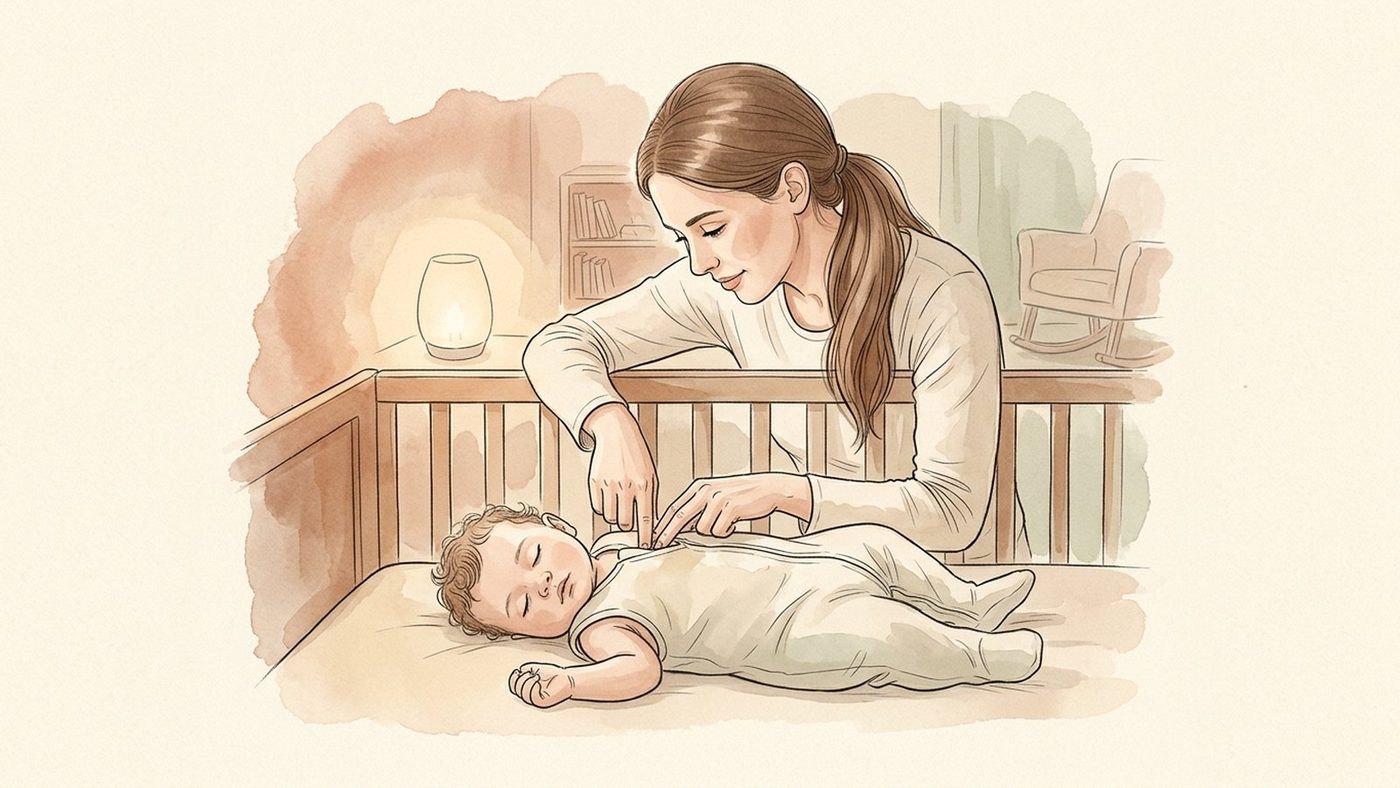
Feel your baby’s chest or the back of their neck. The Lullaby Trust, the UK’s safe sleep charity, says that if the skin there is hot or sweaty, your baby is too hot and you should remove one or more layers. If the chest feels cold, add a layer or use a warmer sleeping bag. Hands and feet are usually cooler than the body, and that’s normal.
| What you feel or see | What it likely means | What to do |
|---|---|---|
| Damp hair or forehead, chest warm and dry | Normal head sweating | Nothing; keep checking the chest |
| Chest or back of neck hot, damp, or clammy | Too warm | Remove a layer or use a lighter sleep sack |
| Flushed cheeks, heat rash, fast breathing | Overheating | Cool the room and remove layers; check for fever |
| Cold hands and feet, chest warm | Normal | No change needed |
| Chest feels cool | A bit cold | Add a layer or a warmer sleep sack |
| Sweating plus cool, clammy skin, breathlessness, or feeding problems | Possible medical cause | Contact your pediatrician (see below) |
The AAP says a baby could be too hot if you notice sweating, damp hair, flushed cheeks, heat rash, and rapid breathing. The key is the overall picture: damp hair alone with a comfortable chest is reassuring, while damp hair plus a hot, sweaty body means it’s time to cool things down.
Why does overheating matter for babies?
Because overheating is one of the factors linked to a higher risk of sudden infant death syndrome (SIDS). That’s why the AAP’s 2022 safe sleep recommendations advise dressing babies in no more than one layer more than an adult would wear to be comfortable, and avoiding hats and head coverings indoors. The Lullaby Trust explains that babies lose heat through their heads, and both it and the AAP advise taking hats off indoors.
This doesn’t mean a sweaty head is dangerous. It means the head is a useful heat outlet that you shouldn’t cover up, and the chest is where you check whether your baby’s overall temperature is right.
What the research says: the link between overheating and SIDS comes from observational studies and is reflected in every major safe sleep guideline. The finding that newborns sweat first on the forehead comes from a small but well-known physiology study. The 16–20°C room range is UK guidance; the AAP doesn’t give a specific number, and there’s no trial showing one exact temperature is best.
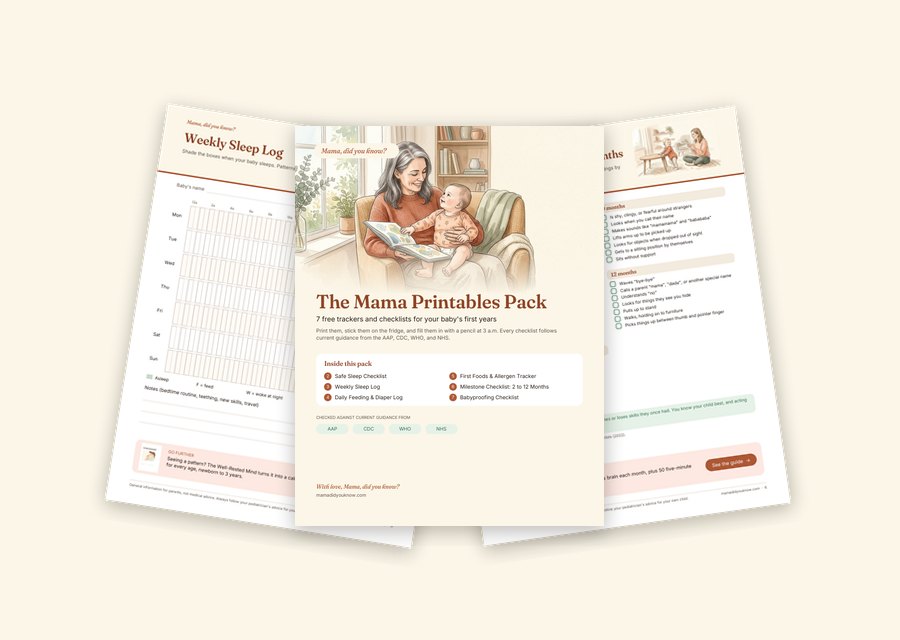
Free download
Free: safe sleep checklist and sleep log
Track naps and night wakings for a week and the pattern shows itself. Part of our free 7-page printables pack.
How do I keep my baby comfortable at night?
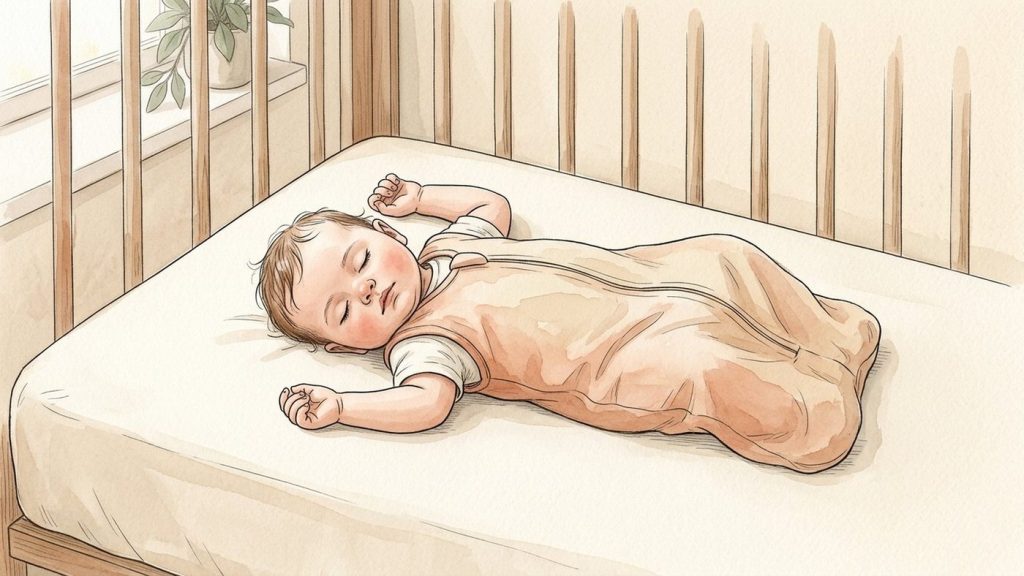
Aim for a cool room, light layers, and a well-fitted sleep sack. These steps come from AAP and Lullaby Trust guidance:
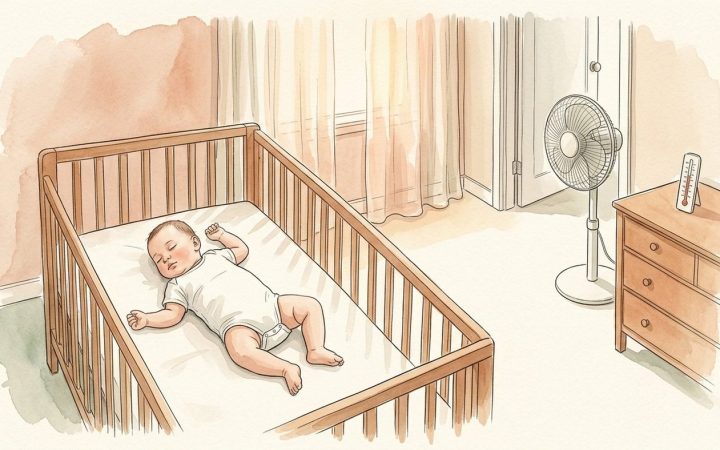
- Use a room thermometer. It’s hard to judge temperature by feel. The Lullaby Trust recommends about 16–20°C (61–68°F).
- Dress for the room, not the season. One layer more than you’d wear is plenty. Our guide to how to dress a baby for sleep by temperature has examples.
- Don’t double up. The Lullaby Trust notes that air trapped between layers adds warmth: two thin sleeping bags are warmer than they look, and a blanket folded in half counts as two.
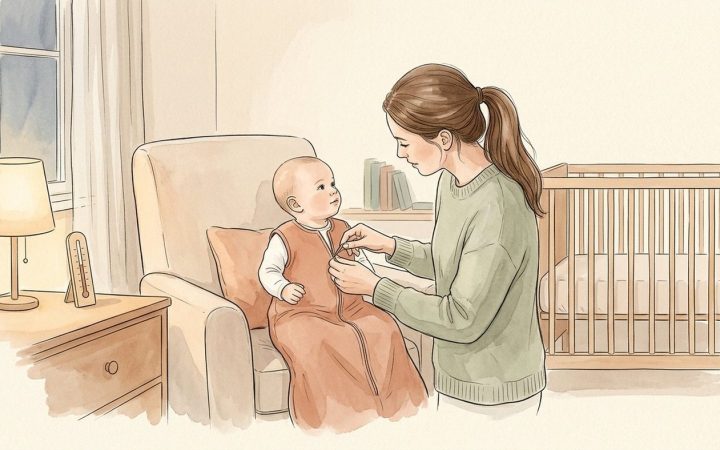
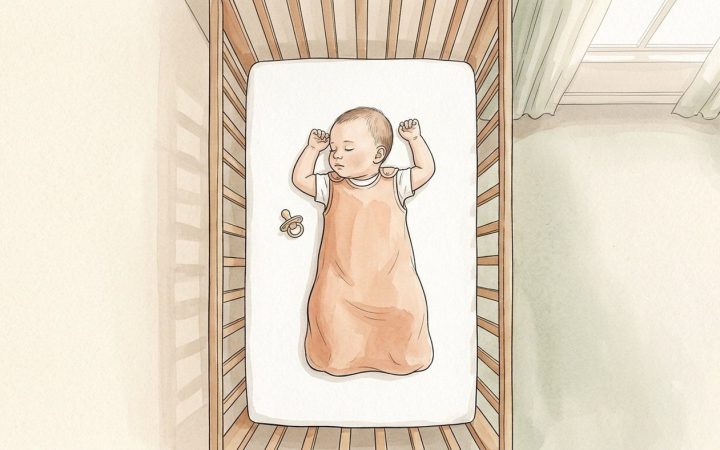
- Choose a well-fitting, non-weighted sleep sack. It should fit so your baby can’t slip down inside. Loose blankets aren’t recommended for young babies; see when can a baby sleep with a blanket.
- No hats indoors. Take hats off as soon as you come inside, including after car rides.
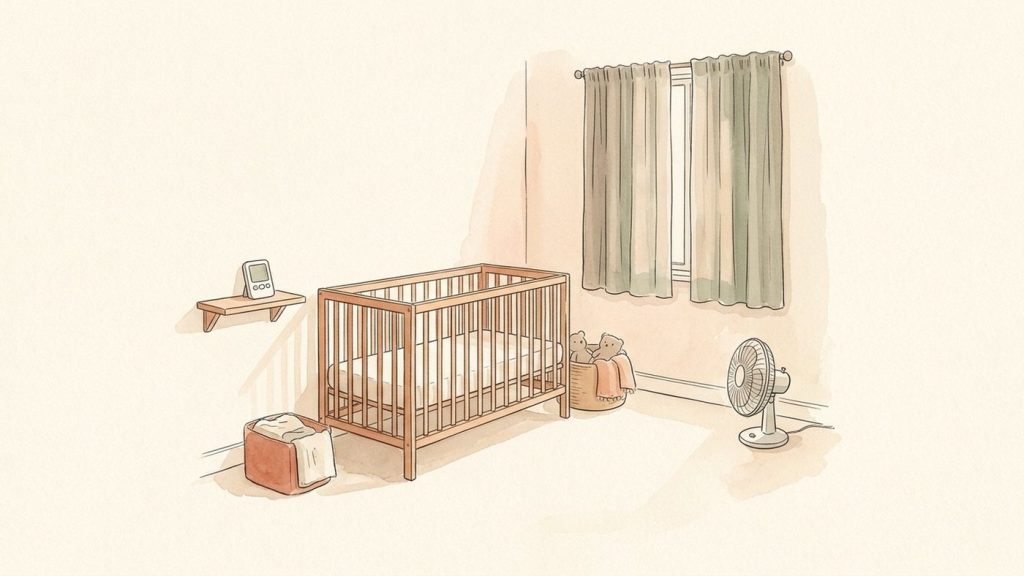
- Place the crib wisely. Keep it away from radiators, heaters, and direct sunlight. A fan can cool the room, but don’t point it straight at your baby.
In hot weather, the Lullaby Trust says a short-sleeved bodysuit or just a diaper can be enough. For more on very warm days, see our guide to a baby in a heatwave.
When is head sweating a sign of something else?
Rarely, but it’s worth knowing the pattern. Heavy sweating can be one sign of a heart problem in babies, usually alongside other symptoms. The NHS lists signs of congenital heart disease such as difficulty feeding, slow weight gain, shortness of breath, and being sweatier than usual with skin that feels cool and clammy. The pattern to look for is sweating during feeds together with tiring quickly, fast breathing, or not gaining weight, rather than a damp head after a nap.
Sweating can also come with fever and infections. If your baby feels hot, check their temperature, and follow our guide on baby fever and when to call the doctor. Don’t bundle up a baby with a fever; the Lullaby Trust advises not wrapping them more than usual.
Whatever the temperature, keep the AAP’s safe sleep basics: baby on their back for every sleep, alone, on a firm, flat surface with only a fitted sheet. No pillows, bumpers, blankets, or soft toys, and no weighted sleep sacks or swaddles. If your baby falls asleep on you during a contact nap and you feel drowsy, move them to their crib or bassinet.
Talk to your pediatrician if your baby:
- sweats heavily during feeds, tires quickly while feeding, or takes a long time to finish
- isn’t gaining weight as expected, or breathes fast even at rest
- is often sweaty with cool, clammy skin, or sweats heavily in a cool room
- has a fever, seems unwell, or snores loudly and struggles to breathe in sleep
Call your local emergency number if your baby has difficulty breathing, turns blue or gray around the lips or face, or becomes limp, floppy, or hard to wake.
Frequently asked questions
My baby’s head is sweaty but their body is cool. Is that OK?
Usually yes. Babies sweat most on the forehead and head. If the chest or back of the neck feels comfortably warm, not cold, your baby’s temperature is fine.
Should I wake my baby if their head is sweaty?
No need. Gently feel their chest. If it’s hot or sweaty, remove a layer or lower the room temperature without waking them if you can.
Why does my baby sweat while breastfeeding or bottle-feeding?
Feeding is effort, and being held close adds warmth, so mild sweating is common. Heavy sweating with every feed, plus breathlessness or poor weight gain, should be checked.
Will a cooler mattress or breathable sheet help?
Some parents find lighter cotton sheets help. Avoid any add-on padding or toppers in the crib; a firm, flat mattress with a fitted sheet is all the AAP recommends.
Do toddlers sweat at night too?
Yes, and the same checks apply. Feel the chest or back, adjust layers, and mention it to your pediatrician if it comes with snoring, breathing pauses, or other symptoms.
Sources
- Harpin VA, Rutter N (1982). Sweating in preterm babies. The Journal of Pediatrics. pubmed.ncbi.nlm.nih.gov
- The Lullaby Trust. Dress your baby for sleep. lullabytrust.org.uk
- American Academy of Pediatrics, HealthyChildren.org. How to Keep Your Sleeping Baby Safe: AAP Policy Explained. healthychildren.org
- Moon RY, Carlin RF, Hand I, et al. (2022). Sleep-Related Infant Deaths: Updated 2022 Recommendations for Reducing Infant Deaths in the Sleep Environment. Pediatrics. pubmed.ncbi.nlm.nih.gov
- American Academy of Pediatrics, HealthyChildren.org (2022). Swaddling: Is it Safe? healthychildren.org
- NHS. Congenital heart disease: Symptoms. nhs.uk