Short answer: Contact naps, where your baby sleeps on you, are safe as long as you stay fully awake and alert and can see your baby’s face. The danger comes if you fall asleep too, especially on a sofa or armchair, which the AAP links to a risk of sudden infant death up to 67 times higher. If you feel drowsy, move your baby to their own firm, flat sleep space on their back.
Key takeaways
- Awake adult = OK: holding a sleeping baby while you’re alert is not unsafe sleep.
- Sleepy adult = move the baby: put them on their back in a crib, bassinet, or play yard before you doze.
- Never on a sofa or armchair if you might sleep: the AAP says the risk is up to 67 times higher when babies sleep with someone on a couch or soft armchair.
- Keep the face clear: nose and mouth visible, chin off the chest, no blankets or pillows around the baby.
- Contact naps don’t ruin sleep: they’re normal for young babies, and you can shift some naps to the crib gradually.
Are contact naps safe?
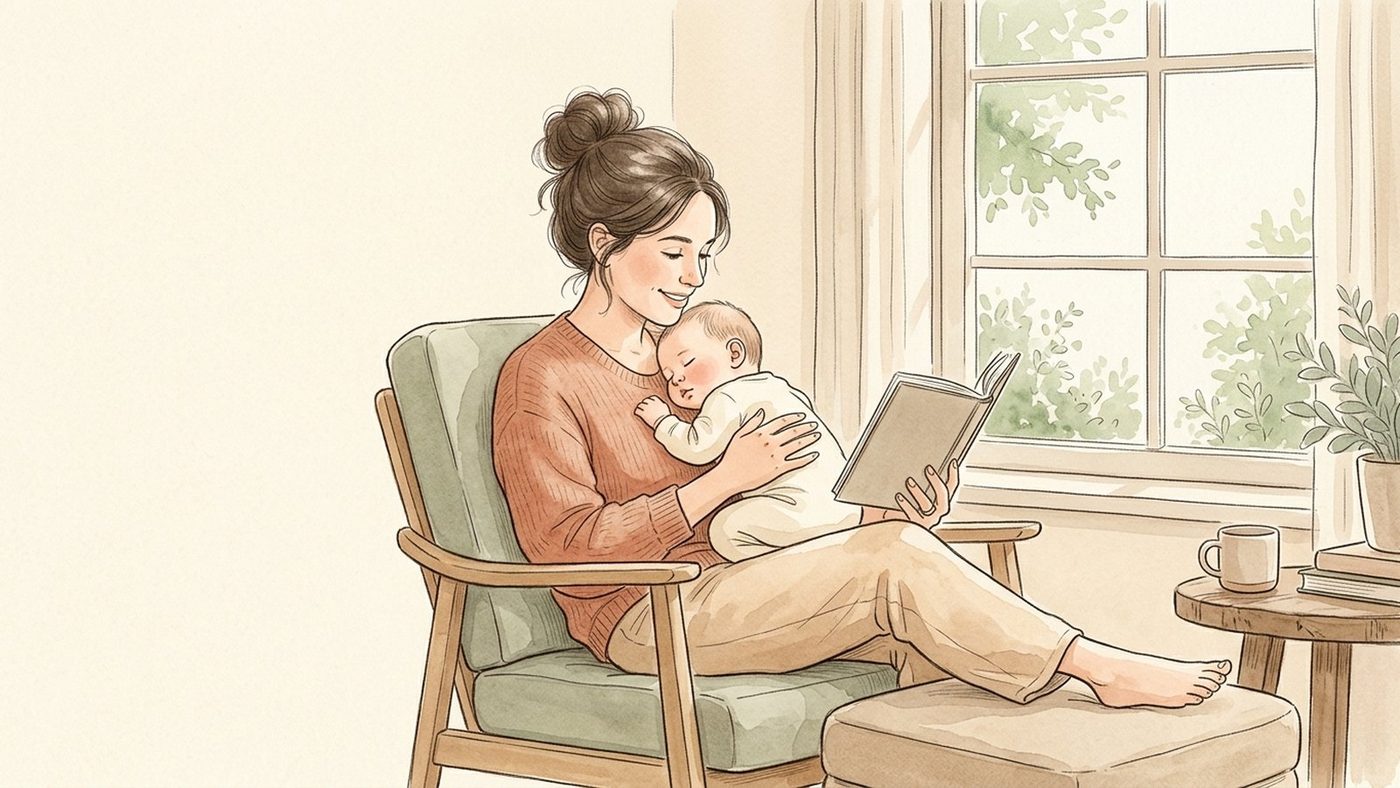
Yes, when the adult stays awake. Safe sleep rules are about where a baby sleeps when no one is watching, or when the adult is asleep too. A baby dozing on the chest of a parent who is alert, sitting up, and watching them isn’t the situation those rules warn against. Contact naps are a normal part of caring for a young baby.
The risk changes the moment the adult might fall asleep. The National Institutes of Health’s Safe to Sleep campaign says couches and armchairs are never safe places for babies to sleep, and that they are extremely dangerous when an adult falls asleep while feeding, comforting, or snuggling a baby. The UK’s Lullaby Trust says never to fall asleep on a sofa or armchair with your baby, because it significantly increases the risk of SIDS and babies can slip into a position where they’re trapped and can’t breathe.
That’s the honest tension with contact naps: they often happen exactly when parents are most exhausted. A warm, heavy, sleeping baby is a strong sleep cue for the adult too.
Why is falling asleep on the sofa with a baby so dangerous?
Soft cushions, gaps, and the adult’s body create several ways for a baby’s breathing to be blocked. A baby can slide into the gap between an adult and the back of the sofa, roll face-down into a cushion, or end up wedged under an arm. Babies can’t move themselves out of these positions.
The AAP’s parent guide to safe sleep states that the risk of sleep-related death is up to 67 times higher when babies sleep with someone on a couch, soft armchair, or cushion. The risk is higher still in situations that make adults harder to wake or babies more vulnerable:
| Situation | Why it raises the risk | What to do |
|---|---|---|
| Sofa, recliner, or armchair | Soft surfaces and gaps where a baby can get trapped | Only hold a sleeping baby here if you’re wide awake. Move them before you get drowsy. |
| Adult has had alcohol, drugs, or sedating medicine | Harder to wake, less aware of the baby | Don’t do contact naps. Put your baby in their own sleep space. |
| Anyone in the home smokes or vapes | Smoke exposure raises SIDS risk | Keep your baby smoke-free; avoid sleeping together |
| Baby under 4 months, premature, or low birth weight | Less able to move or wake | Be extra cautious about dozing off with your baby |
| Pillows or blankets around the baby | Can cover the face | Keep soft items away from your baby’s head |
If there’s any chance you’ll fall asleep while feeding at night, the AAP advises that an adult bed cleared of pillows, blankets, and other soft items is less dangerous than a sofa or armchair, and that you should move your baby back to their own sleep space as soon as you wake. That’s a harm-reduction fallback, not a recommendation to bed-share.
How do I do contact naps safely?
Treat it like holding your baby awake: you’re on duty the whole time. These steps reflect the safe sleep principles from the AAP, Safe to Sleep, and the Lullaby Trust:
- Only when you’re alert. If you’ve had a bad night, are feeling foggy, or have had alcohol or sedating medicine, skip the contact nap and use the crib.
- Sit upright. Choose a firm chair rather than lying back on a soft sofa or recliner. Lying back makes it easier to drift off.
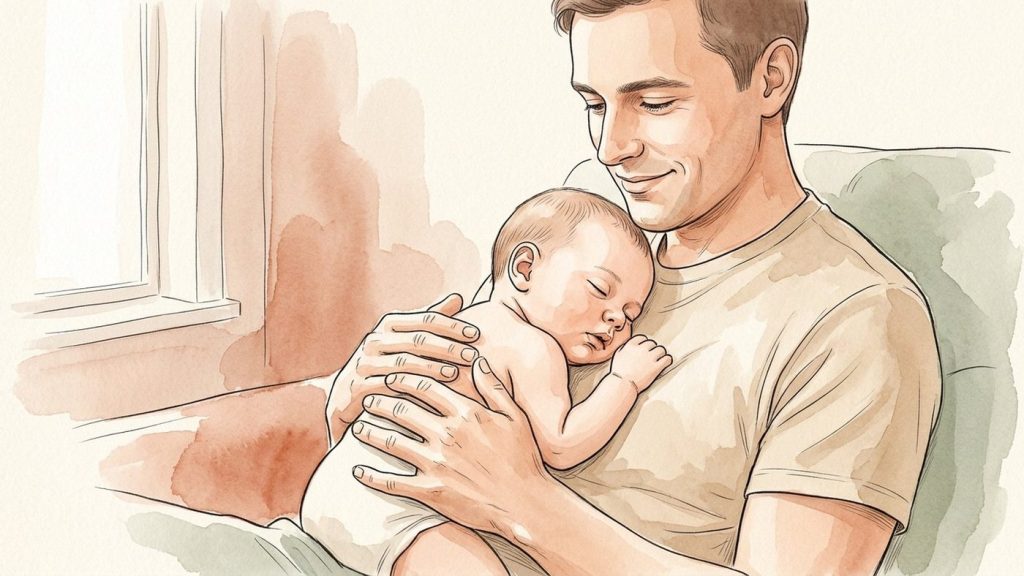
- Keep the face visible. Your baby’s nose and mouth should be clear, not pressed into your chest or clothing, with their chin off their chest so their airway stays open.
- No extra soft stuff. No blankets over your baby, no pillows propped around them.
- Stay engaged. Read, listen to something, or chat with someone. Many parents set a timer as a backup in case they start to drift.
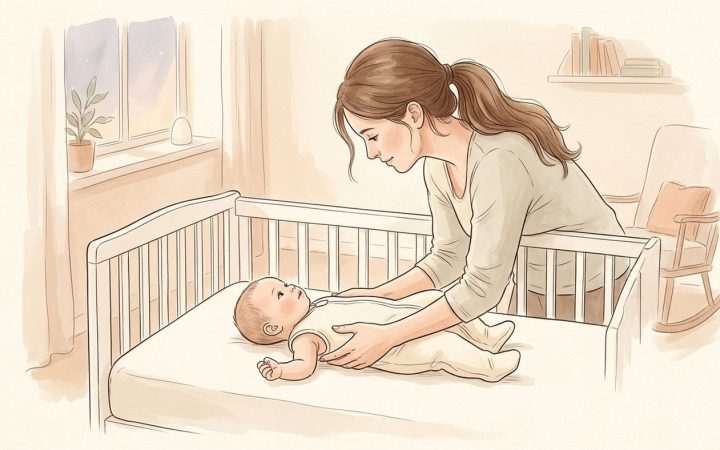
- Move them at the first yawn. If you feel sleepy, place your baby on their back in their crib, bassinet, or play yard, even if they wake up.
Using a baby carrier for naps works on the same principle, with you awake and upright. Follow the carrier’s instructions, keep your baby’s face visible and close enough to kiss, keep their chin off their chest, and check on them often. If your baby falls asleep in a car seat, swing, or bouncer instead, see baby sleep in a swing or car seat for why they should be moved to a flat surface.
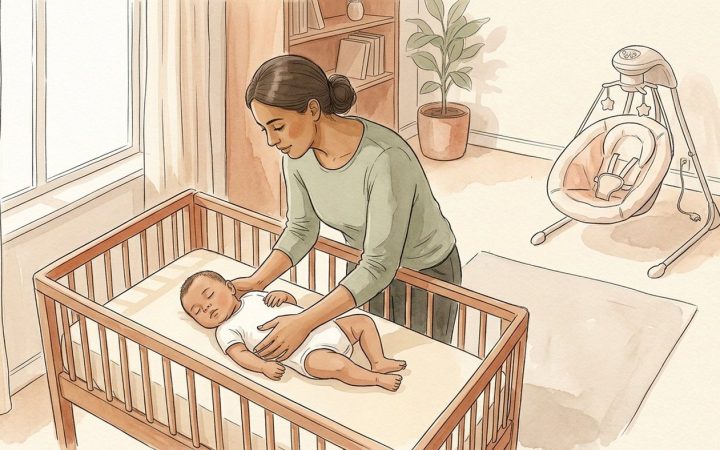
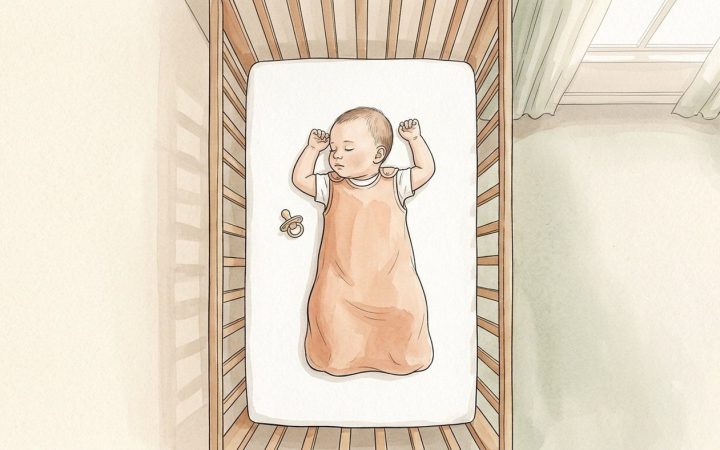
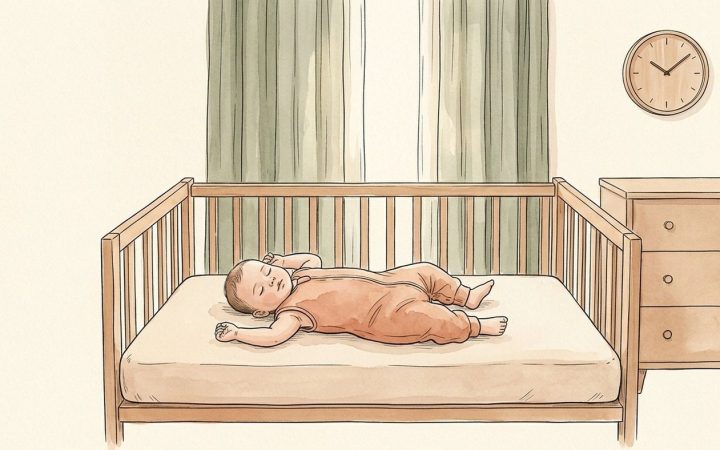
For any sleep you won’t be watching, place your baby on their back, alone, on a firm, flat surface with only a fitted sheet, in your room for at least the first 6 months. The AAP says room-sharing (not bed-sharing) can lower the risk of SIDS by as much as 50%. Never leave a sleeping baby on a sofa, adult bed, or nursing pillow.
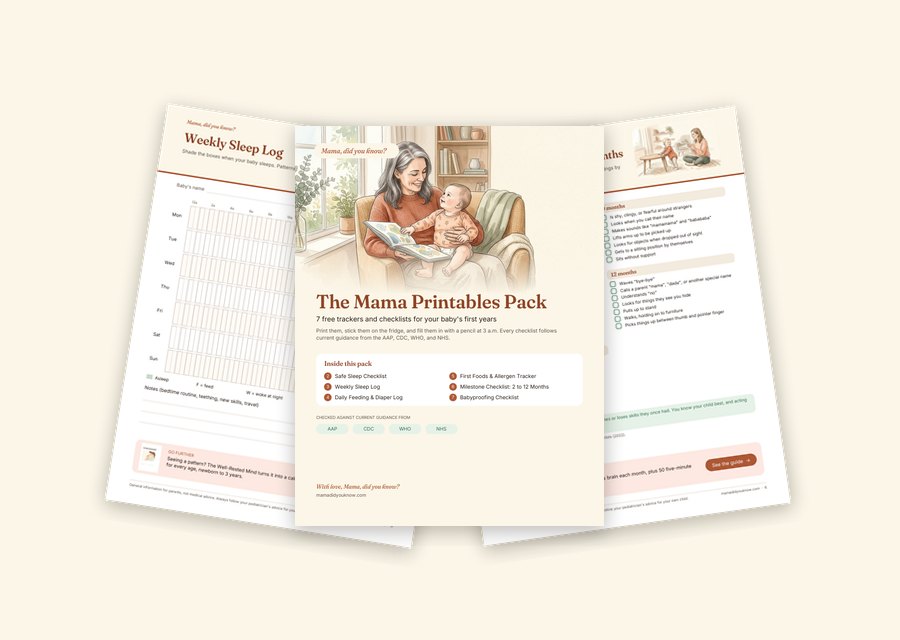
Free download
Free: safe sleep checklist and sleep log
Track naps and night wakings for a week and the pattern shows itself. Part of our free 7-page printables pack.
Are contact naps good for babies?
They can be. Being held is calming for young babies, and the AAP recommends skin-to-skin contact for at least an hour right after birth. Many newborns sleep more easily on a parent than anywhere else. Newborns and young babies are also biologically wired to want closeness; it’s not a habit you created.
What we don’t have is good research on contact naps specifically, such as whether they change how well babies nap later, or whether they help development. Most of what you’ll read about “contact nap benefits” or “contact nap habits” is opinion. The safety question is the one with clear evidence, and it all comes down to whether the adult stays awake.
What the research says: the high risk of sofa and armchair sleep comes from case-control studies of sudden infant deaths and is reflected in AAP, NIH, and Lullaby Trust guidance. These studies measure sleeping together, not awake holding, so there’s no evidence that contact naps with an alert adult are risky. Evidence on their long-term effects on sleep habits is essentially absent.
How do I move from contact naps to crib naps?
Gradually, starting with the nap that’s easiest. There’s no deadline. Some parents keep a contact nap or two for months because they enjoy them. Others need to move away from them sooner, often because they’re too tired to stay awake. If your baby will only sleep on you and you’re struggling, baby only sleeps when held covers this in detail. These common strategies aren’t backed by trials, but many families find them useful:
- Start with the first nap of the day. Sleep pressure is often more predictable in the morning, and many babies settle more easily then.
- Watch the timing. An overtired baby is harder to put down. Our guide to wake windows by age can help.
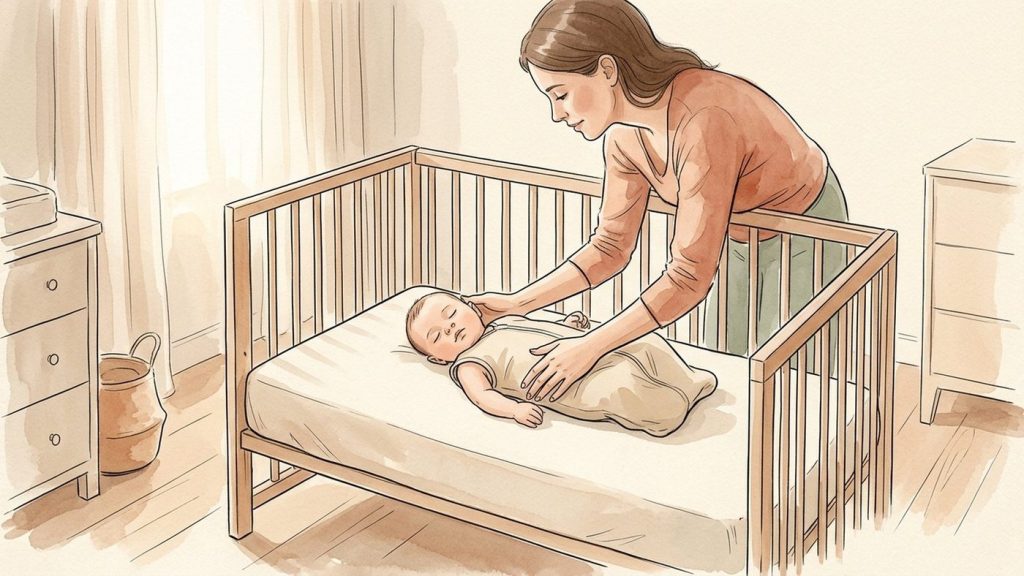
- Transfer once they’re deeply asleep. Waiting until their arms and legs are floppy can help, then lower them feet first, keeping a hand on their tummy for a moment.
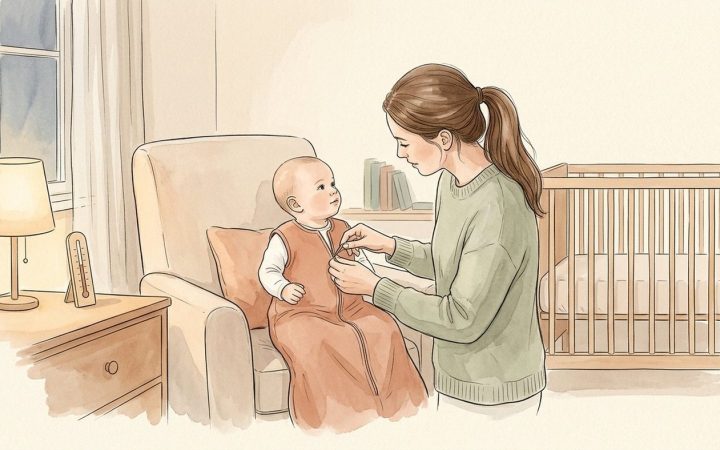
- Keep the sleep space familiar. A dark room and the same sleep sack each time help signal sleep. Use a sleep sack rather than a loose blanket.
- Accept short naps at first. A 30-minute crib nap is still progress.
If your baby is still swaddled, stop as soon as they show signs of trying to roll; see when to stop swaddling.
Call your local emergency number right away if your baby:
- is hard to wake, limp, or not breathing normally
- has blue or gray lips or face, or pauses in breathing
Talk to your pediatrician if your baby only sleeps when held and it’s leaving you dangerously exhausted, if they seem to struggle to breathe or snore loudly when lying flat, or if you’re feeling low or overwhelmed. Your own sleep matters for your baby’s safety too.
Frequently asked questions
Is it safe for my baby to sleep on my chest?
Yes, if you’re awake and alert, sitting up, and your baby’s face is visible. If you might fall asleep, move your baby to their own crib or bassinet first.
Can my partner hold the baby for a nap while I sleep?
Yes, as long as your partner stays awake. The same rules apply to anyone holding a sleeping baby, including grandparents and babysitters.
Will contact naps spoil my baby or create bad habits?
You can’t spoil a young baby by holding them. Some babies get used to sleeping on a parent and need help adjusting to the crib later, but that can be done gradually when you’re ready.
My baby’s head sweats during contact naps. Is that a problem?
Your body heat warms them, so a sweaty head is common. Check the back of their neck or chest; if it’s hot or clammy, remove a layer. See baby head sweating while sleeping.
What if I wake up and realize I fell asleep holding my baby?
Check your baby, then move them to their own sleep space. It happens to many tired parents. Use it as a signal to plan more support, such as a partner taking a shift or more crib naps.
Sources
- American Academy of Pediatrics, HealthyChildren.org. How to Keep Your Sleeping Baby Safe: AAP Policy Explained. healthychildren.org
- Moon RY, Carlin RF, Hand I, et al. (2022). Sleep-Related Infant Deaths: Updated 2022 Recommendations for Reducing Infant Deaths in the Sleep Environment. Pediatrics. pubmed.ncbi.nlm.nih.gov
- NIH, Eunice Kennedy Shriver National Institute of Child Health and Human Development. Safe to Sleep: Ways to Reduce Baby’s Risk. safetosleep.nichd.nih.gov
- The Lullaby Trust. Co-sleeping with your baby. lullabytrust.org.uk
- NHS. Sudden infant death syndrome (SIDS). nhs.uk