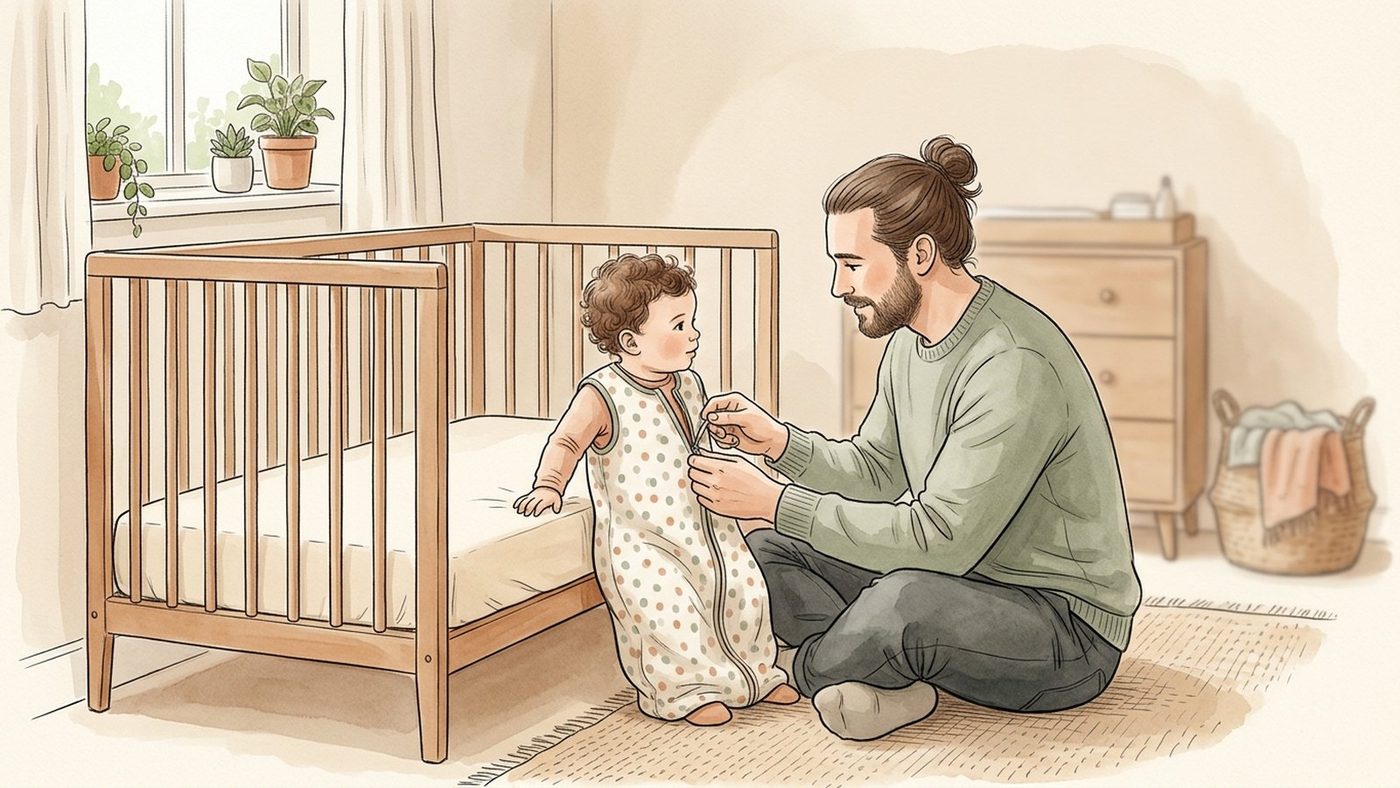
Short answer: Keep blankets, pillows, and stuffed animals out of your baby’s sleep space until at least 12 months; the American Academy of Pediatrics’ safe sleep rules cover the whole first year. After the first birthday, the AAP says it’s OK for a toddler to sleep with a special blanket or a teddy bear without buttons or loose ribbons. Pillows can wait longer: hospital guidance such as Cedars-Sinai’s says not before age 2.
Someone gave us a beautiful knitted blanket for Adam, and it’s still folded in a drawer. This article explains why.
Key takeaways
- 0–12 months: a fitted sheet only. No blankets, pillows, stuffed toys, or bumpers, even small or “tucked in” ones.
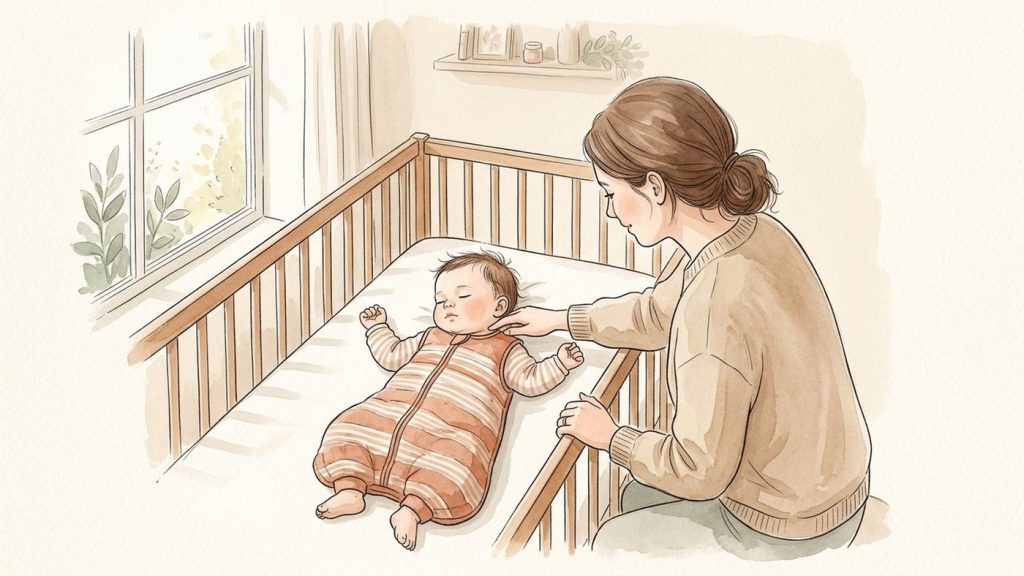
- To keep a baby warm: a wearable blanket or an extra layer, about one layer more than you’d wear yourself.
- From 12 months: a favorite blanket or soft toy is fine, as long as it has no buttons, loose ribbons, or loose stuffing or pellets.
- Pillows: not before age 2, then a small, firm one.
- Why it matters: about 3,500 babies in the US die from sleep-related causes each year, and soft bedding is one of the risks we can remove.
When can a baby sleep with a blanket?
After their first birthday. The AAP says soft objects and loose bedding can increase a baby’s risk of entrapment, suffocation, or strangulation, and its safe sleep recommendations apply to babies up to 1 year of age. That includes quilts, comforters, and non-fitted sheets, not just big fluffy blankets.
The US Safe to Sleep campaign is especially clear on one point parents often ask about: bedding that isn’t fitted is still a hazard “even if lightweight, small, or tucked in.” A thin muslin blanket tucked around the mattress counts.
You may notice that UK advice is a little different. The NHS suggests lightweight blankets, sheets, or a baby sleeping bag, while still ruling out duvets, pillows, and loose blankets. In the US, the AAP’s advice is simpler: use a wearable blanket and keep the crib bare.
| Age | Blanket | Stuffed animal or lovey | Pillow |
|---|---|---|---|
| 0–12 months | No. Use a wearable blanket or an extra layer | No. Cuddle with it while awake, not in the crib | No |
| 12–24 months | A special blanket is OK, per the AAP | OK, if it has no buttons, loose ribbons, or loose stuffing or pellets | Not yet. Cedars-Sinai says not before age 2 |
| 2–3 years | OK | OK, with the same checks | A small, firm pillow is OK |
How do I keep my baby warm without a blanket?
Dress your baby for the room instead of covering them. The AAP suggests layers of clothing or a wearable blanket, with no more than one layer more than you’re wearing. Overheating also raises the risk of SIDS, so warmer isn’t always safer.
- Aim for a room temperature of about 16–20°C (61–68°F), as UK guidance suggests.
- Feel your baby’s chest or the back of their neck, not their hands, to judge temperature. Sweating, a hot chest, or flushed skin means they’re too warm.
- No hats indoors for sleep once you’re home from the hospital.
- Skip weighted sleep sacks, swaddles, and blankets. The AAP says weighted products aren’t safe on or near a sleeping baby.
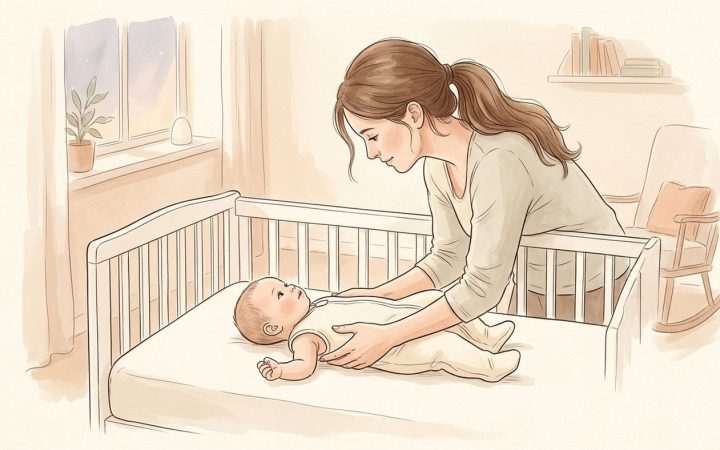
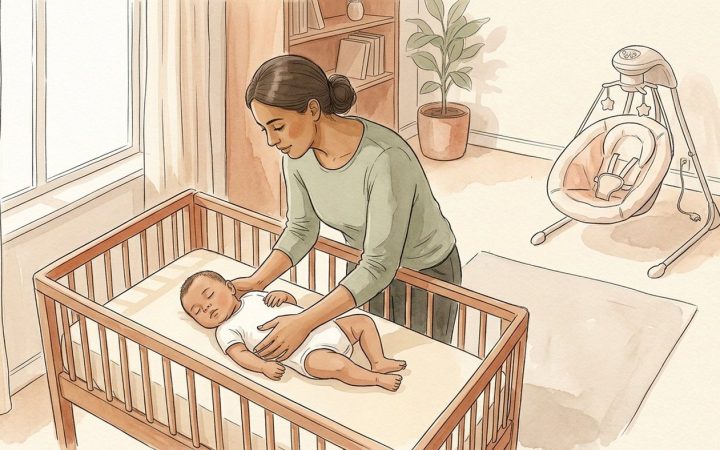
For the whole first year: baby on their back, alone, in a crib or bassinet with a firm, flat mattress and a fitted sheet, and nothing else inside. No pillows, blankets, stuffed toys, bumpers, positioners, or pods and nests. Share a room, not a bed, for at least the first 6 months; the AAP says room-sharing can lower the risk of SIDS by as much as 50%.
When can a baby sleep with a stuffed animal or lovey?
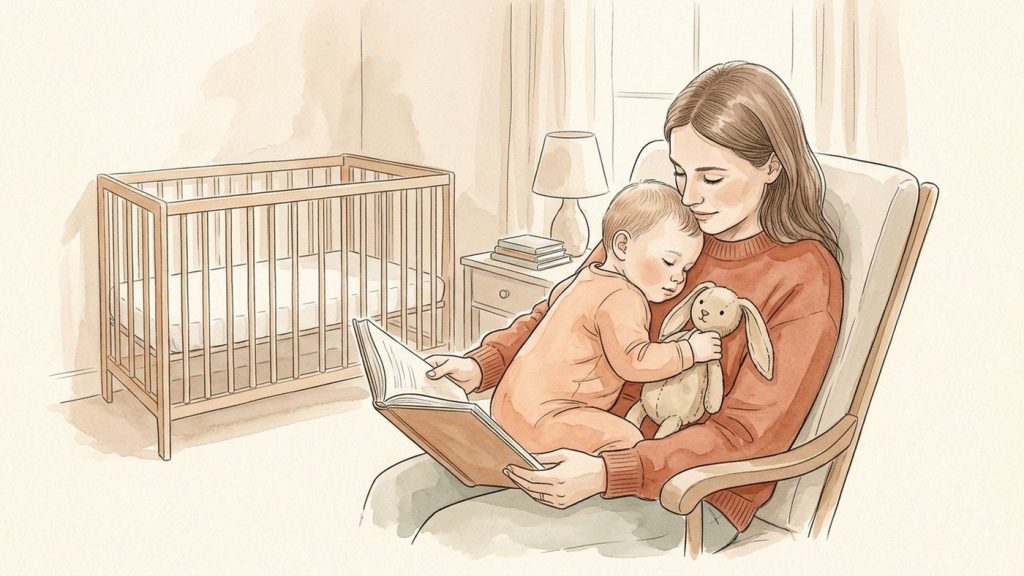
From 12 months. Before that, a lovey can still be part of your bedtime routine: cuddle it during the story or song, then leave it out of the crib.
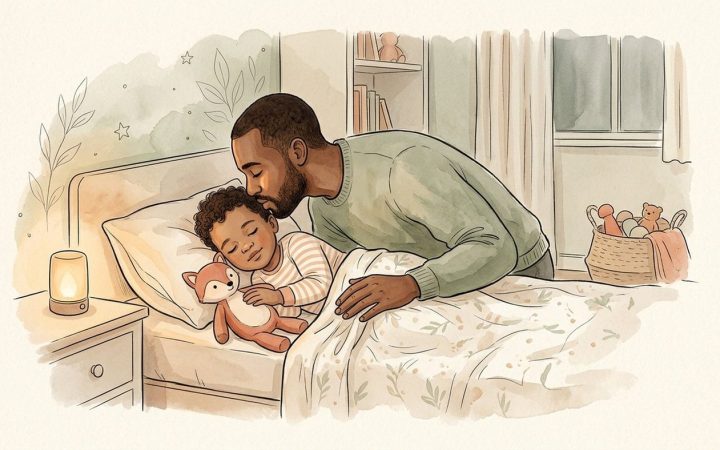
For toddlers, the AAP’s parenting site says it’s OK to let your child sleep with a teddy bear, special blanket, or favorite toy, and that a comfort object often helps children fall asleep, especially after night wakings. Check it first: no buttons or loose ribbons, and watch for stuffing or pellets that could come out.
Many children choose their special comfort object between 8 and 12 months, and often keep it for years, according to the AAP. The AAP also suggests getting two identical ones early and rotating them, so you can wash one and never face bedtime without it.
When can a toddler use a pillow?
Not before age 2, and then a small, firm one. We couldn’t find a specific pillow age in the AAP’s parent guidance beyond “no pillows in the first year,” so this is where honest sources differ. Cedars-Sinai’s patient guidance on moving a toddler to a bed says not to give a pillow before age 2, and to start with a small, firm pillow after that. We’d follow the more careful advice.
A pillow often arrives with the move from crib to bed. There’s no official age for that either. The same guidance lists signs a child is ready: the crib mattress is already on its lowest setting and the top rail is below three-quarters of your child’s height, your child can get a leg over the rail or climb out, or they’re about 35 inches tall. When you make the switch, add guardrails that sit flush against the mattress with no gaps.
Why are blankets and soft toys risky for babies?
Because they can cover a baby’s face or trap them. The NHS advice is to keep the cot clear of anything that could cover a baby’s face and head, and the US Safe to Sleep campaign says research links bumpers and bedding other than a fitted sheet to serious injuries and deaths from SIDS, suffocation, entrapment, and strangulation.
This matters more, not less, once babies start to roll, usually around 3 to 4 months. The AAP notes that once a baby can roll both ways easily, you don’t need to keep turning them back, but the crib must be clear so nothing can block their breathing. If you’re working on sleep in other ways too, our baby sleep chart by age shows what’s normal, and our guide The Well-Rested Mind covers safe sleep and every research-tested sleep method, step by step.
What the research says: the “nothing in the crib for the first year” rule is official AAP and NIH guidance, built on large data sets about sleep-related infant deaths, and UK health bodies agree on the core of it. Advice for after age 1 is gentler and based on expert judgment rather than trials, which is why sources give slightly different ages for pillows.
If your baby was born early, ask your pediatrician how long to follow safe sleep rules. The NHS advises following safer sleep advice for a year from a premature baby’s due date, not their birth date. Also ask before using any sleep product marketed as making soft bedding “safe.”
Frequently asked questions
Can my 10-month-old have a small lovey in the crib?
Not yet. US guidance keeps soft objects out of the sleep space for the whole first year, and size doesn’t change that. Keep the lovey for awake cuddles and your bedtime routine until the first birthday.
Can my toddler keep using a sleep sack after age 1?
Yes. A non-weighted wearable blanket is a perfectly good option for toddlers who kick off covers. Switch to a blanket whenever it suits your child.
Is a crib bumper OK if it’s thin or breathable?
Leave bumpers out. The AAP and the US Safe to Sleep campaign advise against bumpers in the sleep space, and padded crib bumpers are now banned from sale in the US.
What if my baby falls asleep on me with a blanket over us?
Move your baby to their own clear, flat sleep space as soon as you can. Never sleep with your baby on a sofa or armchair; the AAP says the risk can be up to 67 times higher there.
Sources
- American Academy of Pediatrics, HealthyChildren.org. How to Keep Your Sleeping Baby Safe: AAP Policy Explained. healthychildren.org
- American Academy of Pediatrics, HealthyChildren.org (2022). Safe Sleep: Back is Best, Avoid Soft Bedding, Inclined Surfaces & Bed Sharing. healthychildren.org
- NIH, Eunice Kennedy Shriver National Institute of Child Health and Human Development. Safe to Sleep: Ways to Reduce Baby’s Risk. safetosleep.nichd.nih.gov
- NHS. Sudden infant death syndrome (SIDS). nhs.uk
- The Lullaby Trust. Room temperature and safer sleep. lullabytrust.org.uk
- American Academy of Pediatrics, HealthyChildren.org. Toddler Won’t Go to Sleep? 7 Tips to Help End Bedtime Battles. healthychildren.org
- American Academy of Pediatrics, HealthyChildren.org. Transitional Objects: Security Blankets & Beyond. healthychildren.org
- Cedars-Sinai. Moving Your Toddler From Crib to Bed. cedars-sinai.org