Short answer: Later than many parents expect. Naming colors and counting are not on the CDC’s milestone checklists for 2- or 3-year-olds. The CDC lists “names a few colors of items” at 4 years and “counts to 10” at 5 years, ages by which at least 75% of children are expected to have the skill. Many toddlers start using color words and reciting numbers between 2 and 3, but they often mix them up for a long time, and that’s normal. A 2-year-old who doesn’t know colors yet is not behind.
Key takeaways
- Colors at 4: the CDC’s checklist puts “names a few colors of items” at 4 years.
- Counting at 5: “counts to 10” and “names some numbers between 1 and 5” are on the CDC’s 5-year checklist.
- Not 2-year milestones: neither colors nor counting appear on the CDC’s 2- or 3-year checklists.
- Mix-ups are normal: toddlers often say color and number words long before they use them correctly.
- Play beats drills: naming colors and counting during everyday life helps more than flashcards or apps.
At what age should a toddler know colors?
By age 4, most children can name a few colors. That’s where the CDC places the milestone “names a few colors of items” on its Learn the Signs. Act Early. checklists, which were revised in 2022 by an AAP expert group. The revision deliberately chose milestones that at least 75% of children reach by each age, so that parents and doctors don’t wait too long when something is truly off. That also means many children name colors earlier, and some a bit later.
Many toddlers start using color words between 2 and 3, often starting with one favorite (“blue!”) that gets applied to everything. Research on how children learn color words shows a long gap between first saying them and using them like adults. A 2013 study in the journal Cognition found that young children’s early color “mistakes” are actually systematic: they’re using the word for a broader range of shades than adults do and gradually narrowing it down. In other words, a toddler calling a purple cup “blue” is working it out, not failing.
When do toddlers learn to count?
Reciting numbers comes early; understanding what they mean comes later. The CDC lists “counts to 10” and “names some numbers between 1 and 5 when you point to them” on its 5-year checklist. Many 2- and 3-year-olds can rattle off “one, two, three…” like a song, but that’s different from knowing that three blocks means three.
A classic 1990 study by psychologist Karen Wynn showed this gap clearly. Two- and three-year-olds could count objects, but when asked “how many?” only the older children (average age about 3½) reliably answered with the last number they’d counted. When asked to hand over a certain number of items, younger children could usually manage one, and sometimes two, but didn’t use counting to do it. Wynn concluded that children grasp this key counting principle at roughly 3½ years.
Here’s what these skills typically look like by age:
| Age | Colors | Numbers and counting | On the CDC checklist? |
|---|---|---|---|
| 18 months to 2 years | May notice and sort by color; occasional color words | May say “two” or join in with counting songs | No |
| 2 to 3 years | Starts using color words, often mixed up | Recites some numbers; may count 1 or 2 objects | No |
| 3 to 4 years | Names some colors correctly | Begins to understand that the last number counted means “how many” | Colors at 4 years |
| 4 to 5 years | Names several colors reliably | Counts to 10; names some numbers 1 to 5 | Counting at 5 years |
What the research says: the CDC checklist ages are based on normative data and expert review, but the 2022 authors noted that cognitive milestones had the least normative data behind them. The research on color and number learning comes from small lab studies. Together they give a reliable general picture (later than many charts suggest, with wide normal variation) rather than precise cutoffs.
Is my 2-year-old behind if they don’t know colors?
No. Colors aren’t on the CDC’s 2- or 3-year checklists at all. At 2, the CDC milestones focus on things like saying at least two words together, pointing to things in a book when asked, pointing to at least two body parts, and playing with more than one toy at a time. At 3, they include talking in short back-and-forth conversations, asking “who,” “what,” “where,” or “why” questions, and drawing a circle when shown how.
Older charts and many toy or app marketing pages list color and counting skills at earlier ages. Those aren’t the benchmarks your pediatrician uses. If your toddler is meeting the language and play milestones for their age, colors and numbers will usually follow. For a closer look at early talking, see how many words at 18 months and late talkers.
Free download
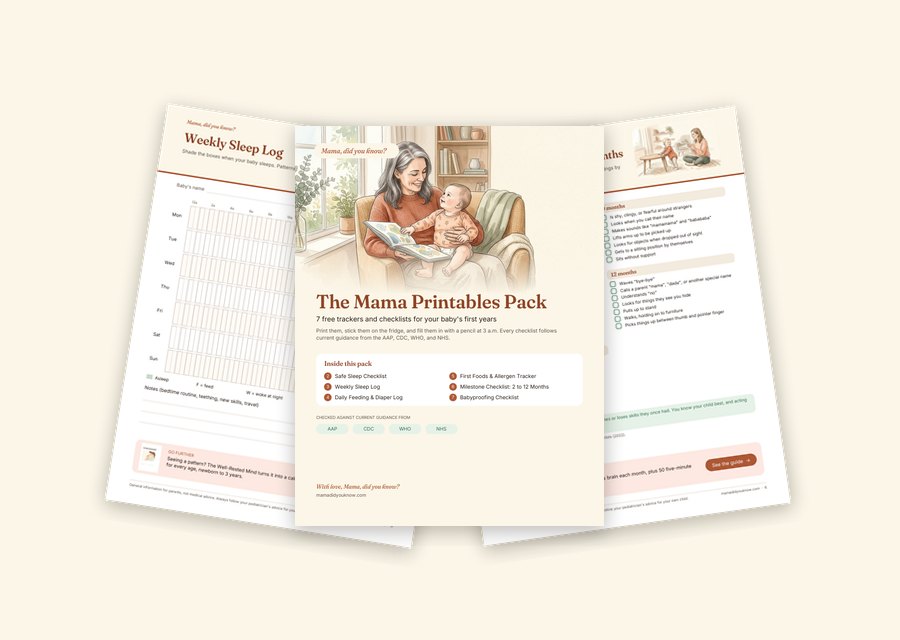
Free: milestone checklist, 2 to 12 months
The CDC milestones on one page, to tick off as your baby grows. Part of our free 7-page printables pack.
How can I help my toddler learn colors and numbers?
Weave them into everyday talk and play. The CDC’s own activity tips for 3- and 4-year-olds include counting simple things like fingers, toys, or bananas, and talking about colors, shapes, and sizes. Some easy ways to do this:
- Name colors in passing. “Your red shoes,” “the yellow banana,” “a green car.” Use one color word at a time, attached to a real object.
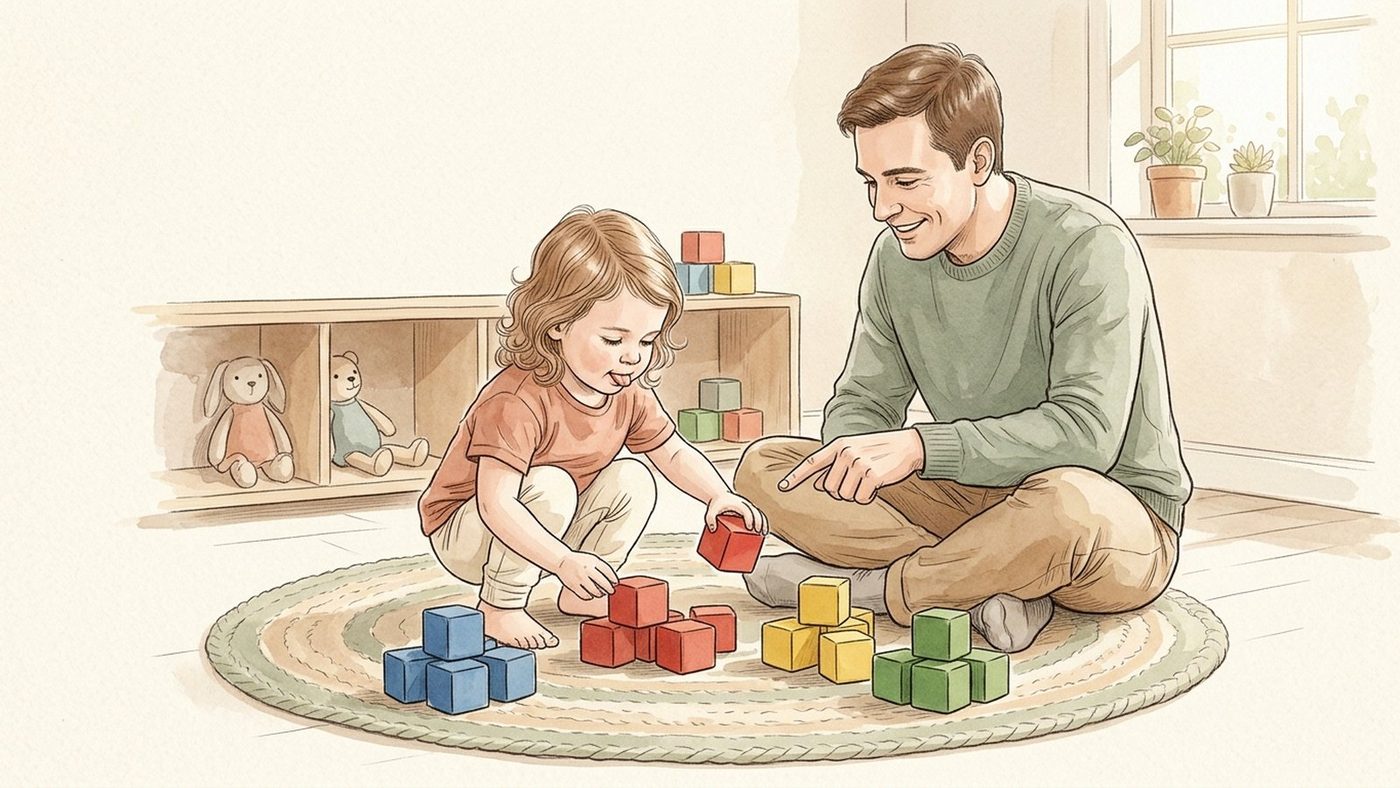
- Sort together. Put blocks, socks, or toy cars into piles by color. Matching comes before naming.
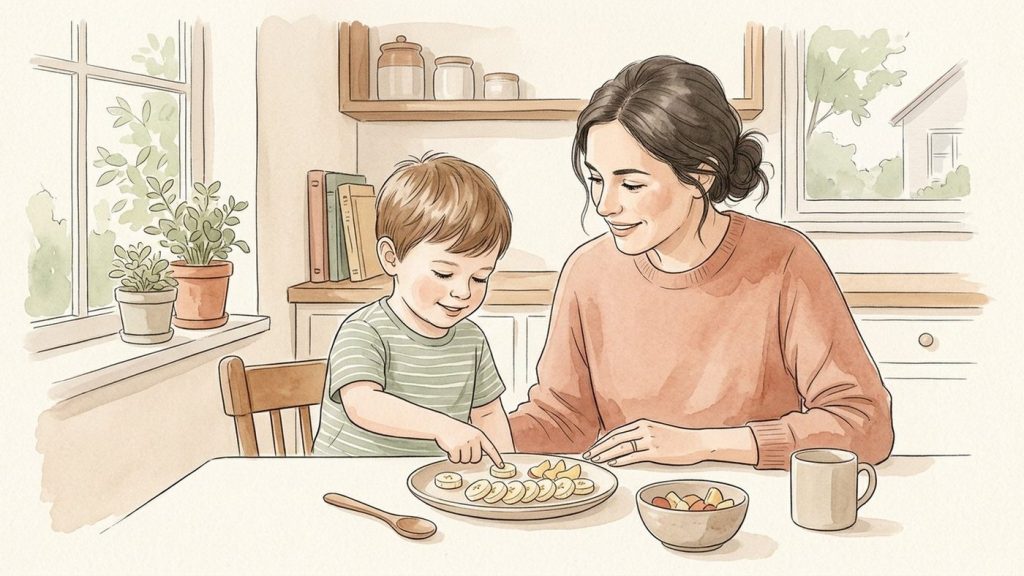
- Count real things. Count stairs as you climb, apple slices on a plate, or ducks in a book, touching each one as you go.
- Ask “how many?” after counting. Then answer it yourself: “One, two, three. Three ducks!” Repeating the last number helps build the idea of quantity.
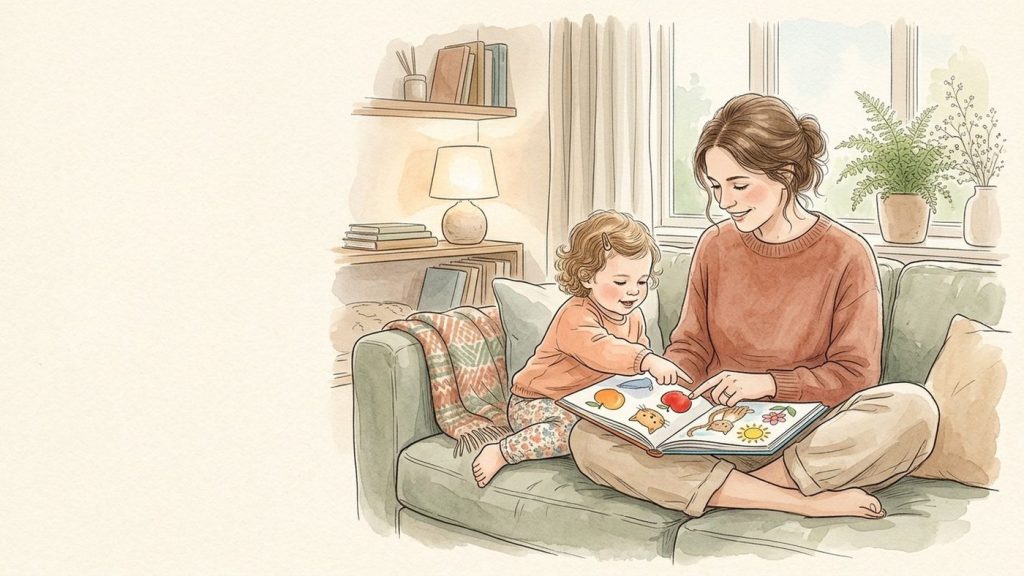
- Use songs and books. Counting rhymes and picture books make numbers and colors part of shared time. Our post on reading to your baby explains why books matter so early.
- Keep it light. Avoid quizzing (“What color is this?”) over and over. Toddlers learn best when it’s fun and low-pressure.
Educational apps and videos often promise faster learning of colors and numbers. For toddlers, the AAP recommends limited, high-quality screen time watched together with a parent, and very little before 18 to 24 months. Our guide to screen time for babies covers the details.
Why do some toddlers learn colors earlier than others?
Mostly because of normal variation and experience. The CDC’s milestone ages are set so that at least 75% of children reach them, which leaves a wide range of normal on either side. A toddler with older siblings, lots of shared reading, or a fascination with cars or crayons may pick up color words early. Another child who is busy climbing, building, or chatting about animals may simply not be interested yet.
What matters more at 2 and 3 is the broader picture your pediatrician looks at: understanding words, putting words together, playing, and connecting with people. A child who is doing well in those areas but hasn’t sorted out colors yet is usually right on track.
Could my child be color blind?
It’s possible but usually not the reason a toddler mixes up colors. Inherited red-green color vision deficiency is much more common in boys than girls, but most toddlers who confuse colors simply haven’t learned the words yet. Clues worth mentioning to your pediatrician include consistently mixing up particular pairs (like red and green, or brown and green) after age 4 while naming other colors correctly, or a family history of color blindness.
Talk to your pediatrician if your child:
- at 2, isn’t saying two words together, pointing to pictures in a book when asked, or pointing to body parts
- at 3, isn’t having short conversations or asking simple questions
- at 4, can’t name any colors, or at 5, can’t count or name any numbers
- loses words or skills they used to have, at any age
- seems to have trouble seeing, squints, or consistently confuses certain colors after age 4
The CDC encourages parents not to “wait and see” when a milestone is missed. A missed milestone isn’t a diagnosis; it’s a reason for a closer look.
Frequently asked questions
My 2-year-old calls every color “blue.” Is that normal?
Yes. Using one color word for many colors is a common early stage. Research suggests toddlers start with broad color categories and gradually narrow them down.
My toddler can count to 10 but can’t give me 3 blocks. Why?
Reciting numbers and understanding quantity are separate skills. Research suggests children typically grasp that the last number counted means “how many” at around 3½ years.
Do bilingual toddlers learn colors later?
They may know some color words in one language and some in the other, so it can look like fewer in each. Count both languages together. See bilingual toddler speech delay for more.
Should I use flashcards to teach colors?
They’re not necessary. Naming colors on real objects during play and daily routines is just as effective and more fun for toddlers.
Which colors do toddlers usually learn first?
It varies, and often depends on which colors a child hears named most. Many families notice basic colors like red, blue, and yellow come first, but there’s no fixed order.
Sources
- Centers for Disease Control and Prevention. Important Milestones: Your Child By Two Years. cdc.gov
- Centers for Disease Control and Prevention. Important Milestones: Your Child By Three Years. cdc.gov
- Centers for Disease Control and Prevention. Important Milestones: Your Child By Four Years. cdc.gov
- Centers for Disease Control and Prevention. Important Milestones: Your Child By Five Years. cdc.gov
- Zubler JM, Wiggins LD, Macias MM, et al. (2022). Evidence-Informed Milestones for Developmental Surveillance Tools. Pediatrics. pubmed.ncbi.nlm.nih.gov
- Wagner K, Dobkins K, Barner D (2013). Slow mapping: color word learning as a gradual inductive process. Cognition. pubmed.ncbi.nlm.nih.gov
- Wynn K (1990). Children’s understanding of counting. Cognition. pubmed.ncbi.nlm.nih.gov