Short answer: Potty regression after a new baby is common and usually short-lived. The AAP lists the birth of a sibling as one of the classic triggers, and says regression usually doesn’t last long, often a few days or weeks. First, check with your pediatrician that there’s no physical cause such as constipation or a urinary tract infection. Then respond calmly, skip punishment, keep the potty routine going, give your older child regular one-on-one time, and praise “big kid” moments. Avoid going back to diapers full-time if you can.
Key takeaways
- It’s expected: the AAP says to expect your older child to regress a little when a baby arrives, including toilet accidents.
- It’s usually brief: often a few days or weeks.
- Rule out medical causes first: constipation and urinary tract infections can both cause new accidents.
- Connection over correction: calm responses, no punishment, and daily one-on-one time.
- Avoid big backward steps: the AAP suggests avoiding a full return to diapers when possible.
Why does my toddler have potty accidents after the new baby?
Because a new baby is a huge change, even when your toddler is excited about it. The AAP lists the mother’s pregnancy or the birth of a new sibling among the common causes of toilet training regression, along with changes in childcare, moves, illness, and family stress. It notes that even happy events can be hard for young children.
The AAP’s guide to preparing an older child for a new baby puts it plainly: expect your child to regress a little. Children who were toilet trained may start having accidents or ask for a bottle again. It describes this as normal and as your older child’s way of making sure they still have your love and attention.
Some common reasons behind the accidents:
- Seeking attention. The baby gets diaper changes and cuddles, and your toddler notices.
- Disrupted routines. Different caregivers, visitors, and missed potty reminders all add up.
- Stress and big feelings. Toddlers often show worry through their bodies and behavior rather than words.
- Skills that were still new. Recently trained children are more likely to slip, because the habit hasn’t fully set.
Could it be something medical?
Sometimes, so check that first. The AAP says regression sometimes signals an infection or other disorder that needs treatment, and suggests having your child seen by their pediatrician to be sure the cause isn’t physical. The two most common culprits are constipation and urinary tract infections (UTIs).
| Clue | More likely emotional | Worth checking with your pediatrician |
|---|---|---|
| Timing | Started around the baby’s arrival | Started suddenly with no clear trigger |
| Peeing | Accidents when busy, upset, or wanting attention | Pain or burning, going much more often, urgency, or blood in the urine |
| Pooping | Occasional poop accident | Hard, painful, or infrequent poops; holding it in; smearing in underwear |
| General health | Otherwise well and playing | Fever, vomiting, tummy pain, or seeming unwell |
| Night | Some nighttime wetting | Sudden new bedwetting after months of being dry, with other symptoms |
Constipation deserves a special mention. The AAP explains that children may hold in poop because it hurts to pass a hard stool, and that children aged 2 to 5 may also hold back to show they can decide things for themselves. A big change at home can set that cycle off. Liquid poop leaking into underwear can actually be a sign of constipation, not diarrhea. If you suspect withholding, see toddler withholding poop and talk to your pediatrician before using any remedies.
How do I handle potty regression after a new baby?
Stay calm, keep the routine, and fill your toddler’s attention tank. The AAP’s suggestions boil down to identifying the problem, fixing what you can, and setting clear but kind expectations:
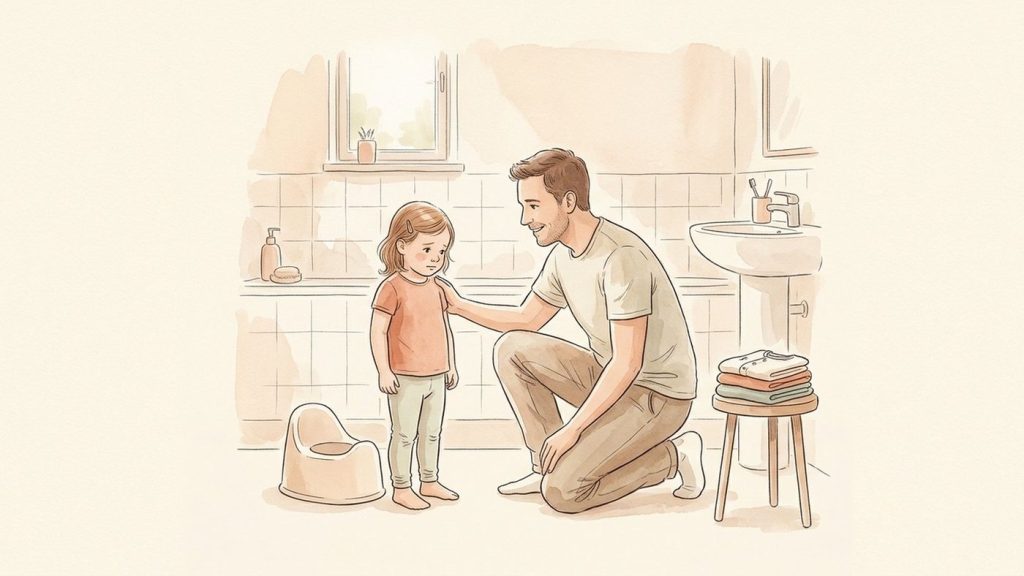
- Respond to accidents calmly. The AAP suggests gently telling your child you know they had an accident, that it’s okay, and that you know they’ll do better next time. Have them help with the cleanup in a matter-of-fact way.
- Name the feeling. “It’s a big change having a baby in the house. Sometimes that feels hard.” The AAP recommends helping your child identify the problem and sympathizing with their feelings.
- Bring back potty reminders. Offer the potty at likely times, such as after waking, after meals, and before going out, especially during busy baby moments like feeds.
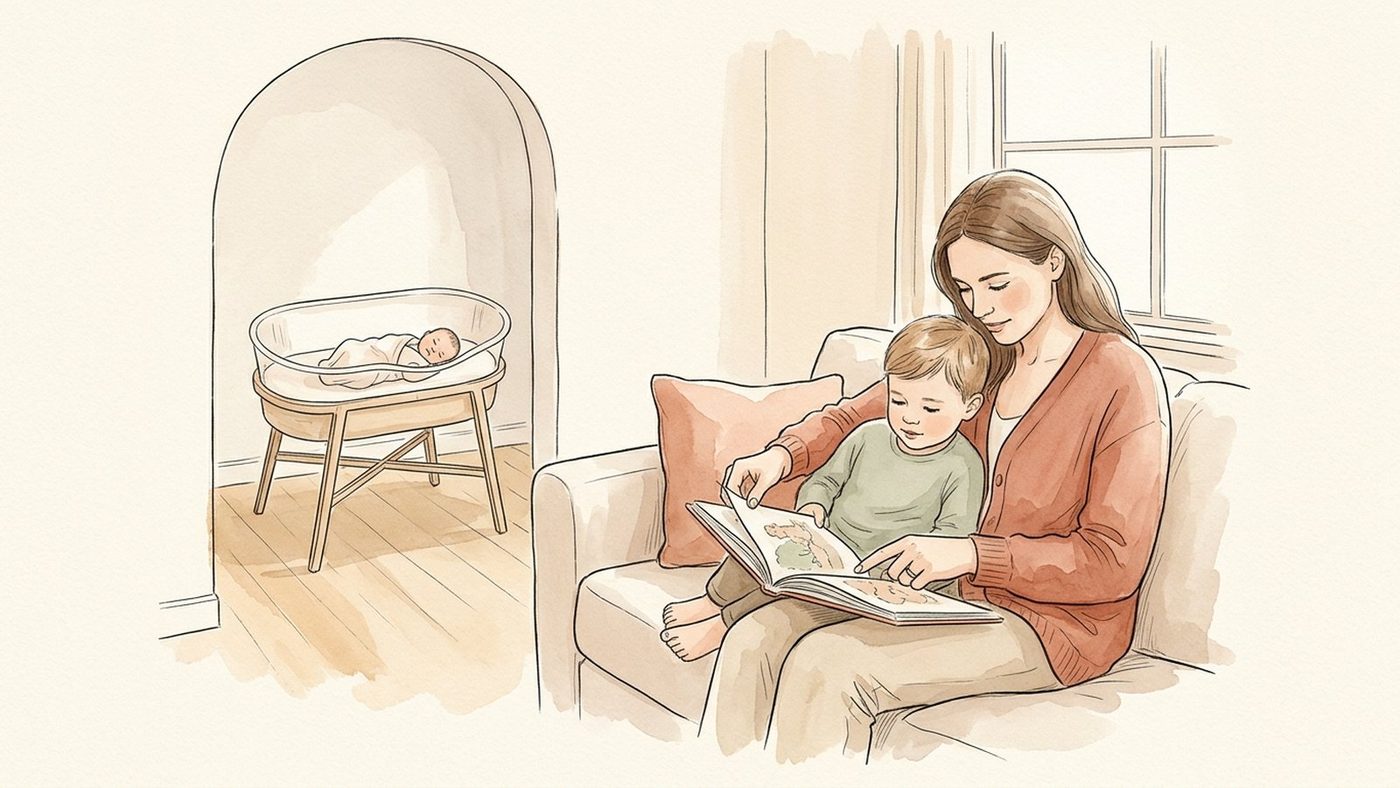
- Schedule one-on-one time. The AAP suggests setting aside special time for reading, games, music, or talking. Even a short, predictable daily slot where the baby isn’t the focus can help.
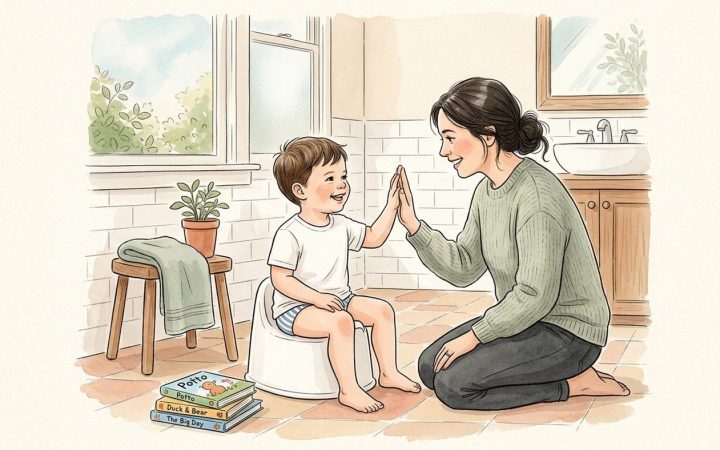
- Praise “big kid” moments. Notice successes on the potty and other grown-up behavior, with hugs, praise, or a simple sticker chart, as the AAP suggests.
- Compromise, don’t backtrack. The AAP advises avoiding major concessions like returning to diapers, but suggests small ones while your child feels insecure, such as training pants under underwear or keeping a potty in their room.
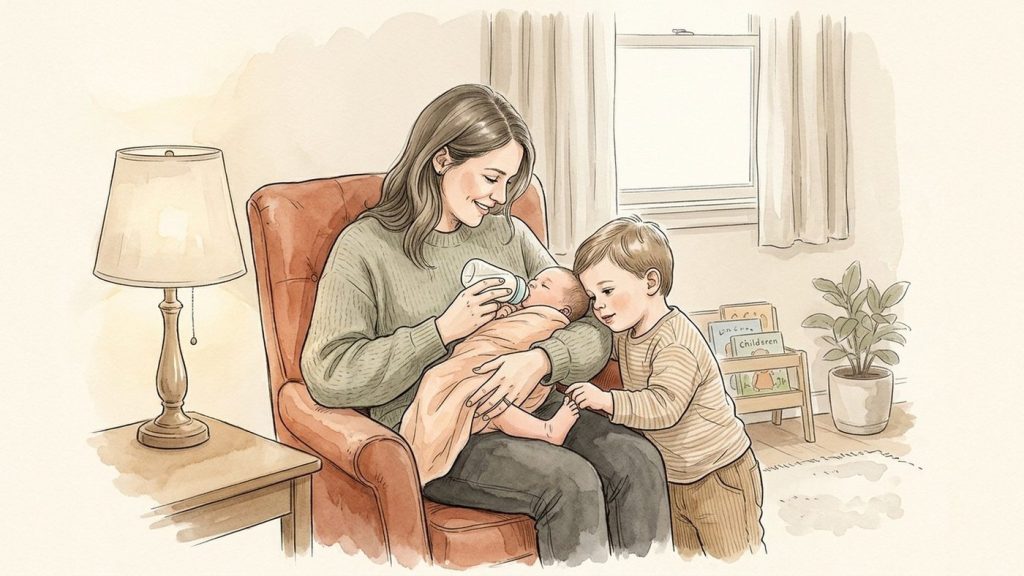
Involving your toddler with the baby can help too. The AAP suggests letting your older child cuddle next to you during feedings so they feel included. Our guide to preparing a toddler for a new baby has more ideas for the weeks before and after the birth.
Free download
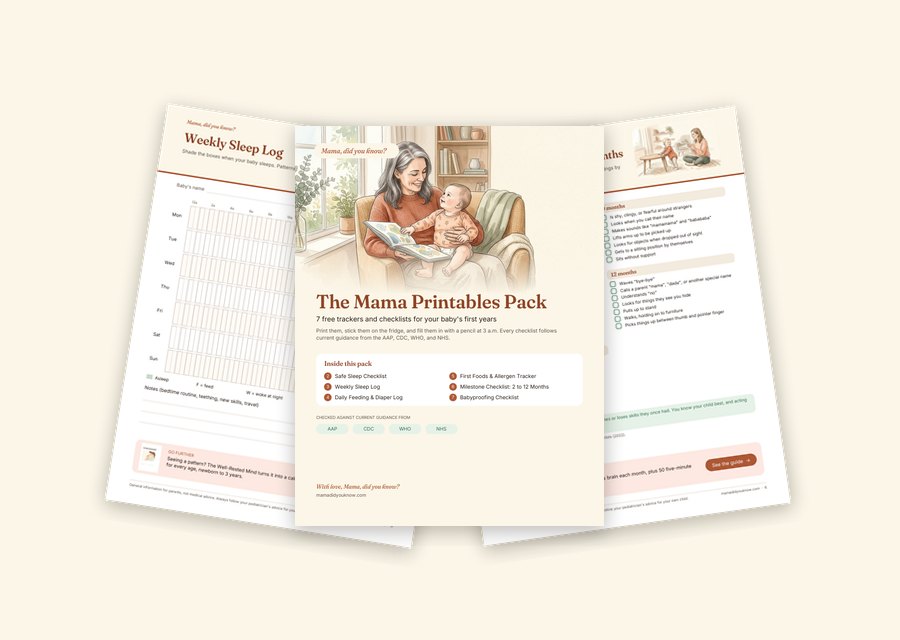
Free: milestone checklist, 2 to 12 months
The CDC milestones on one page, to tick off as your baby grows. Part of our free 7-page printables pack.
What should I avoid?
Punishment, shaming, and comparisons. The AAP says there’s no cause to criticize or punish a child for accidents, even when they try to hide them, which some children do around age 3. Telling your child to “act their age” tends to backfire; the AAP suggests giving them the attention they need instead.
- Don’t compare with the baby. “Only babies wear diapers” can make being a baby look even more appealing.
- Don’t make accidents a big event. Lots of attention for accidents, even negative attention, can keep them going.
- Don’t start new big changes now. The AAP suggests finishing toilet training or a move to a big bed before the baby arrives, or putting it off until the baby is settled.
How long does potty regression last?
Usually a few days to a few weeks. The AAP says regression usually doesn’t last very long, and that children often resume training after a few days or weeks. If it lasts a month or more and your child seems relieved by a break, the AAP says a short pause in training can be considered as an exception, though moving forward gradually is usually best.
What the research says: we found no studies measuring how often or how long potty regression lasts after a sibling is born. The advice here comes from AAP clinical guidance and pediatric experience, which is consistent but not based on trials. The recommendation to check for constipation and UTIs is standard medical practice.
Nighttime wetting is a separate issue. Staying dry at night depends on bladder maturity and often comes much later than daytime training; see night-time potty training age. If regression is part of a wider wobble, with more tantrums or hitting, it often settles as your family finds its new rhythm. Our posts on daily tantrums and toddler hitting may help.
A toddler who is feeling jealous may play too roughly with the baby. Never leave a toddler alone with a newborn, and supervise all “help” with holding, feeding, or carrying the baby.
Call your pediatrician if your child:
- has pain or burning when peeing, is going much more often, or has pink, red, or brown urine
- has a fever, vomiting, or tummy or back pain along with accidents
- has hard or painful poops, is holding them in, or has liquid poop leaking into their underwear
- is drinking or peeing much more than usual
- still has frequent accidents after a month, or shows other signs of distress such as losing other skills, sleeping badly, or seeming withdrawn
If your child seems very unwell, confused, or unusually drowsy, seek urgent care or call your local emergency number.
Frequently asked questions
Should I put my toddler back in diapers?
The AAP suggests avoiding a full return to diapers if you can. Small compromises, such as training pants under underwear for outings, are fine while your child adjusts.
My toddler wants a diaper like the baby. Should I let them?
Some families let a toddler “try” a diaper briefly in play, which often satisfies the curiosity. Keep the message warm: “You can use the potty like a big kid, and I’ll help you.”
Is it regression if my toddler was never fully trained?
Accidents are common for months after training, and the AAP notes children often progress in spurts with periods of little apparent improvement. A new baby can simply pause progress for a while.
Should I start potty training right before the baby is due?
The AAP suggests finishing training before the baby arrives if you can, and otherwise waiting until the baby is settled at home. If you’re weighing methods, see 3-day potty training.
Is my toddler doing it on purpose?
Rarely in a calculated way. Regression is usually a sign of stress or a need for reassurance, which the AAP describes as your child’s way of making sure they still have your love and attention.
Sources
- American Academy of Pediatrics, HealthyChildren.org. Potty Training Regression. healthychildren.org
- American Academy of Pediatrics, HealthyChildren.org. Emotional Issues and Potty Training Problems. healthychildren.org
- American Academy of Pediatrics, HealthyChildren.org. Preparing Your Older Child for a New Baby: How to Help Siblings Adjust. healthychildren.org
- American Academy of Pediatrics, HealthyChildren.org. Constipation in Children. healthychildren.org
- American Academy of Pediatrics, HealthyChildren.org. Sibling Relationships: How to Help Your Kids Build Healthy Bonds. healthychildren.org
- NHS. Urinary tract infections (UTIs). nhs.uk