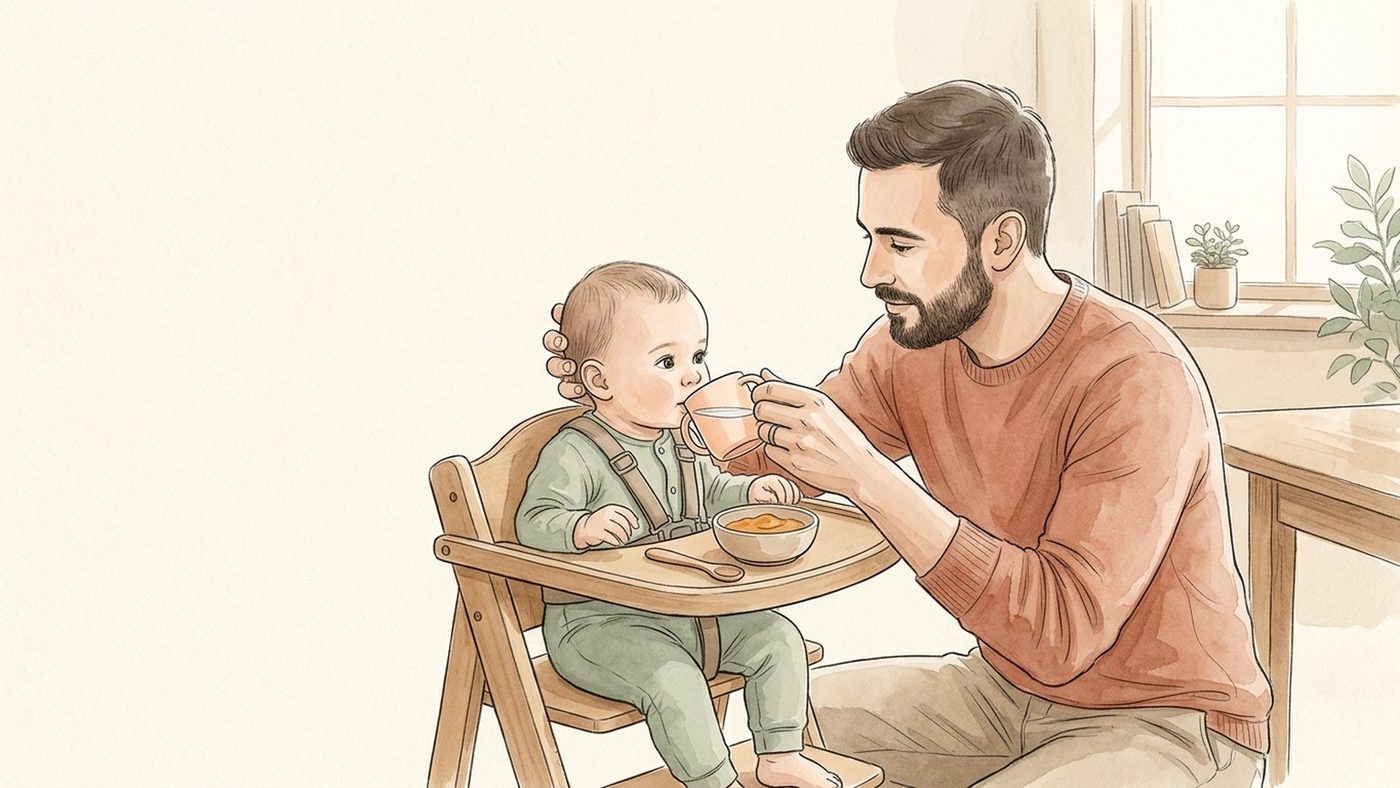
Short answer: Babies don’t need any water before about 6 months; breast milk or formula covers all their fluid needs. From 6 to 12 months, offer a few sips of water from an open cup with meals (up to 4–8 oz, or ½–1 cup, a day). From age 1, water and milk are the main drinks, with about 1–4 cups of water a day.
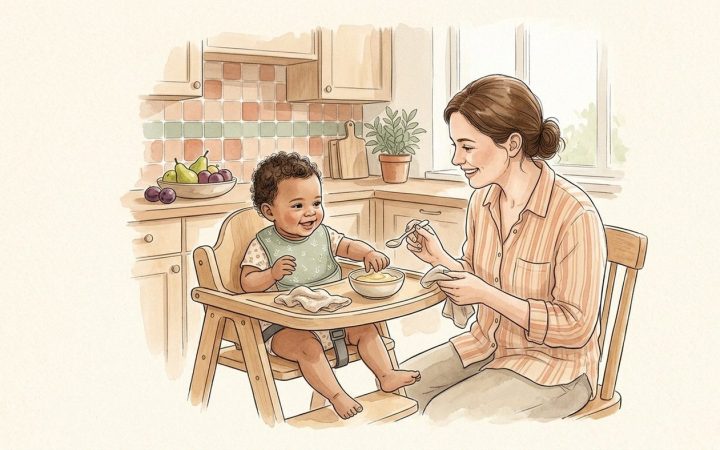
Adam’s first sips of water from an open cup ended up mostly on his shirt, and he loved every second. Here’s when water is right, and how much.
Key takeaways
- 0–6 months: breast milk or formula only. No water, juice, or tea, even on hot days.
- 6–12 months: small sips of plain water with meals, from an open cup. It’s practice more than hydration.
- 1–3 years: water and plain milk are the only drinks children need. No juice before 12 months, and little after.
- Always mix formula exactly as the label says. Never add extra water to stretch it.
How much water does a baby need, by age?
In 2019, the major US health organizations, including the American Academy of Pediatrics (AAP), the American Heart Association, the Academy of Nutrition and Dietetics, and the American Academy of Pediatric Dentistry, agreed on one set of drink recommendations for young children. Here is what they say, age by age.
| Age | Water | Milk | Juice |
|---|---|---|---|
| 0–6 months | None | Breast milk or formula only | None |
| 6–12 months | A few sips with meals, up to 4–8 oz (½–1 cup) a day | Breast milk or formula | None |
| 12–24 months | 1–4 cups a day | Plain whole milk, 2–3 cups (16–24 oz) a day | None, or no more than 4 oz of 100% juice |
| 2–3 years | 1–4 cups a day | Plain milk, up to about 2 cups a day | No more than 4 oz of 100% juice |
Why can’t babies under 6 months have water?
Because their milk already does the job, and water can crowd it out. For about the first six months, a healthy full-term baby needs only breast milk or iron-fortified formula; the WHO, the AAP, and the Dietary Guidelines for Americans agree. Breast milk is mostly water, and correctly made formula has exactly the water a baby needs.
A young baby’s stomach is tiny. Water fills it without any calories or nutrients, which can mean less milk and slower growth. And because young babies’ kidneys are still maturing, too much plain water, or formula made with too much water, can upset the balance of salts in the blood. That is rare, but serious.
Even in hot weather, breastfed babies under 6 months don’t need water. Offer the breast or bottle more often instead. If you’re worried your baby is too hot or not drinking enough, call your pediatrician.
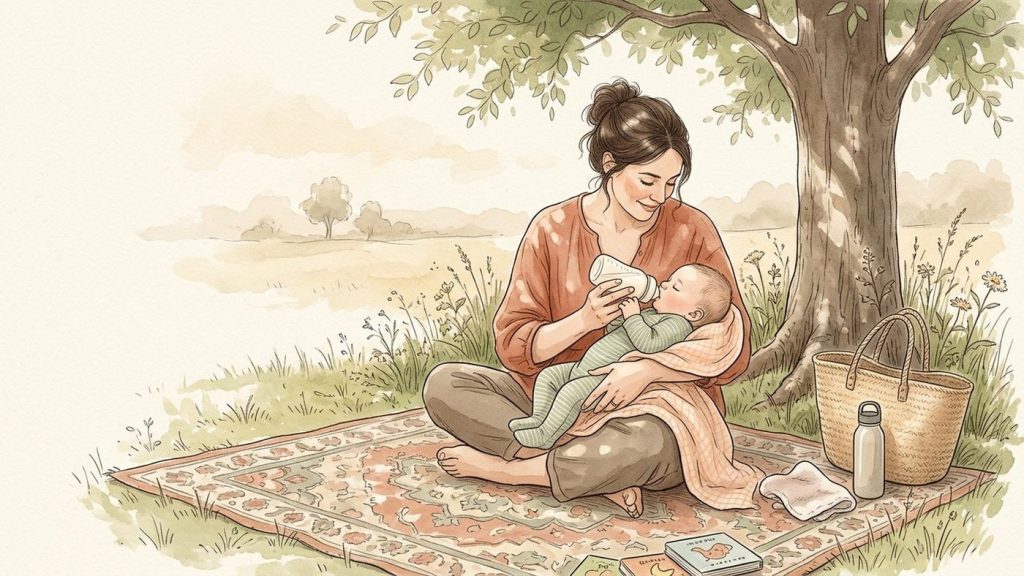
When and how should I start water at 6 months?
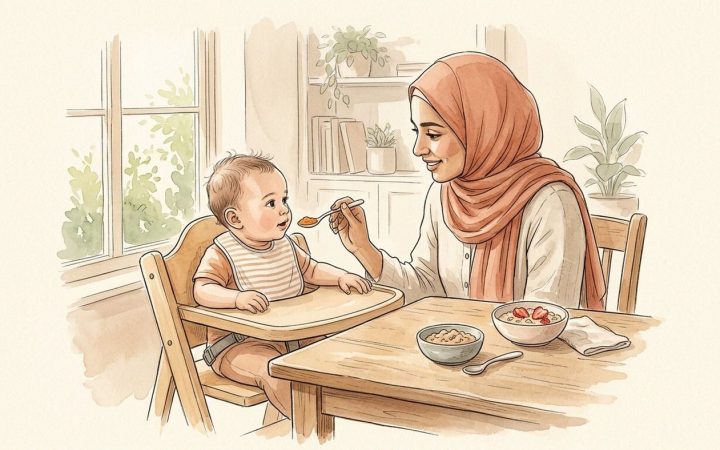
Start when your baby starts solid foods, usually around 6 months. At this age water isn’t really about hydration, since milk still does most of that. It’s about learning to drink from a cup and getting used to the taste of plain water.
- Pour a small amount of plain water, about an ounce (30 ml), into a small open cup.
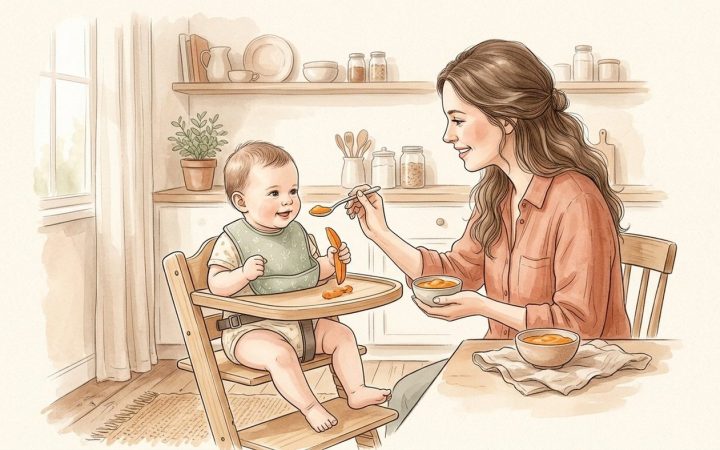
- Offer it at meals, while your baby sits upright in the high chair.
- Hold the cup to their lips and tip it slightly. Let them help hold it.
- Expect spills and coughs: that’s practice. Most children can drink from an open cup, with some spills, by about 18 months.
The NHS recommends an open or free-flow cup without a valve. The AAP also accepts sippy and straw cups. Either way, keep milk feeds as the main drink until 12 months.
What should toddlers drink after 12 months?
Water and plain milk. At 12 months, formula stops and plain whole milk takes over, about 2–3 cups (16–24 oz) a day. Water becomes the main drink between meals, about 1–4 cups a day depending on the heat, activity, and how much your toddler eats.
More than about 24 oz of milk a day fills toddlers up and crowds out iron-rich foods, which is a recognized risk for iron deficiency. Juice isn’t needed at all; if you offer it, keep it to 4 oz (120 ml) or less of 100% juice a day, in a cup at a meal. Whole fruit is always the better choice.
What the research says: the “no water before 6 months” advice is consistent across the WHO, the AAP, the NHS, and the 2019 US expert consensus on children’s drinks. Amounts after 6 months are expert recommendations rather than precise targets, so let your child’s thirst, meals, and the weather guide you within the ranges.
Call your pediatrician if your baby shows signs of dehydration:
- noticeably fewer wet diapers than usual, or dark yellow urine
- a dry mouth, or no tears when crying
- a sunken soft spot on the head, or unusual sleepiness or floppiness (seek care urgently)
Frequently asked questions
Can I give my newborn water for hiccups or constipation?
No. Hiccups are normal and pass on their own. For constipation in a baby under 6 months, talk to your pediatrician before giving anything other than breast milk or formula.
Do I need to boil water for my 6-month-old?
It depends on your water supply. The NHS says ordinary mains tap water is fine to drink for babies over 6 months without boiling, but water for making formula should always be prepared as the formula instructions say. If you use well water or live somewhere without safe tap water, follow your pediatrician’s or local health service’s advice.
Is it OK if my baby only takes a few sips?
Yes. Between 6 and 12 months, milk still provides most of your baby’s fluids. A few sips with meals is exactly what’s intended.
Can toddlers drink flavored water or plant milks?
Skip flavored and sweetened drinks. In the US, unsweetened fortified soy milk is the only plant milk considered nutritionally similar to cow’s milk; talk to your pediatrician before using others as a main drink.
Sources
- Healthy Eating Research (2019). Healthy Beverage Consumption in Early Childhood: Recommendations from Key National Health and Nutrition Organizations (AAP, AHA, AND, AAPD). healthyeatingresearch.org
- American Academy of Pediatrics, HealthyChildren.org. Recommended Drinks for Young Children Ages 0–5. healthychildren.org
- World Health Organization. Breastfeeding: exclusive breastfeeding for the first 6 months. who.int
- NHS. Drinks and cups for babies and young children. nhs.uk
- US Department of Agriculture and Department of Health and Human Services. Dietary Guidelines for Americans, 2025–2030. dietaryguidelines.gov