Short answer: Baby jumpers aren’t bad in small doses, but they don’t help babies learn to walk, and long or early use can get in the way of the floor play that builds real strength. There’s no official time limit. Physical therapy guidance suggests short sessions of about 10 to 15 minutes, only once your baby has solid head and neck control, with plenty of floor time in between. Hospital orthopedic experts also caution that long stretches with the legs dangling straight may not be ideal for hips.
Key takeaways
- Fun, not therapy: jumpers don’t strengthen legs or teach walking. Floor time does.
- Keep sessions short: no official limit exists, but the American Physical Therapy Association’s consumer site suggests about 10 to 15 minutes at a time.
- Wait for readiness: solid head control, and the age, height, and weight on the product label. Many therapists prefer waiting until around 6 months or later.
- Not the same as walkers: stationary jumpers and activity centers don’t roll, so they avoid the stair falls that make walkers dangerous.
Are baby jumpers bad for development?
Not in short bursts, but they don’t help it either. Experts at the Hospital for Special Surgery (HSS) in New York say it’s a misconception that bouncers strengthen babies’ legs, because babies aren’t actually activating their muscles the way they do in free play. The bouncing comes mostly from the springs, not from the baby pushing up through bent knees and hips.
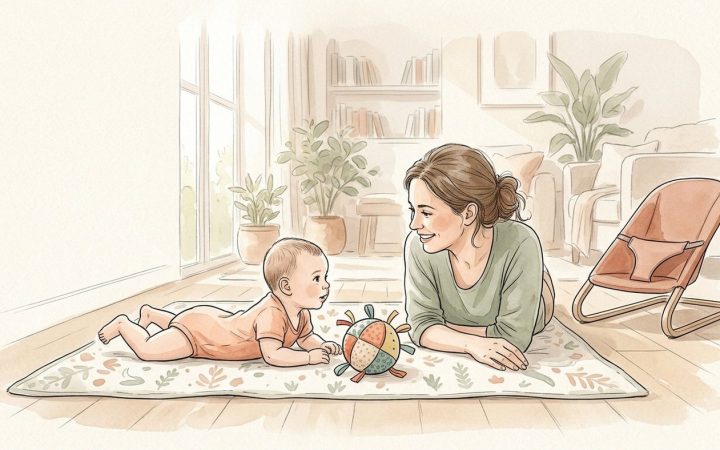
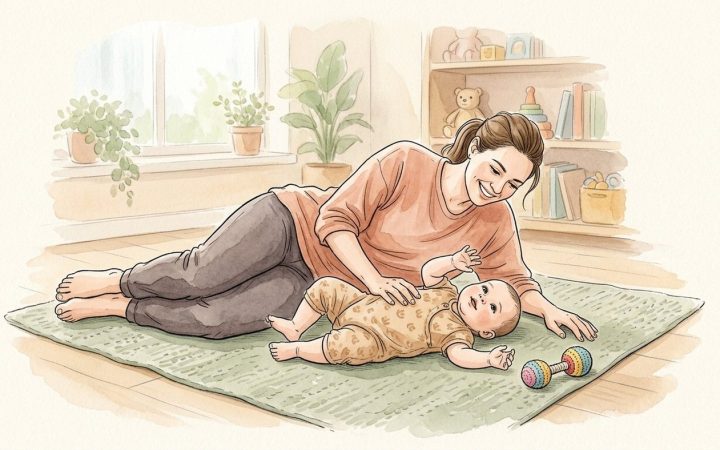
The bigger concern is what jumpers replace. Babies build the strength and balance for sitting, crawling, and walking by moving on the floor: tummy time, rolling, pivoting, reaching, and pushing up. The American Physical Therapy Association’s consumer site, ChoosePT, says equipment marketed to promote development in one area can limit it in others, especially when used for too long or too early, typically before about 7 months. It also cites research that the average baby spends five to six hours a day in “containers” such as car seats, swings, bouncers, and seats.
That’s the idea behind “container baby syndrome.” It isn’t a formal diagnosis, but it describes the problems physical therapists see when babies spend most of the day held in one position.
Are baby jumpers bad for hips?
Possibly, with long use, but the evidence is limited. HSS notes that research is mixed, but that keeping a baby’s legs straight and stretched for long periods may cause the ball of the hip to press against the edges of the socket, which in theory could contribute to hip dysplasia or dislocation. Babies may not show discomfort, so problems can go unnoticed.
Healthy hips prefer a “frog” or “M” position, with knees bent up and out. That’s why hip specialists recommend hip-healthy swaddling and carriers that support the thighs. Jumper seats that let the legs hang straight down for long periods don’t support that position, which is one more reason to keep sessions short.
What the research says: no study has measured a safe daily time in a jumper, and neither the AAP nor hip-dysplasia groups publish an exact limit. The “10 to 15 minutes” figure is expert opinion from physical therapists, and manufacturer blogs often suggest more. Studies on container time and motor development are mostly observational and can’t prove cause and effect. What experts agree on is the direction: short sessions, lots of floor play.
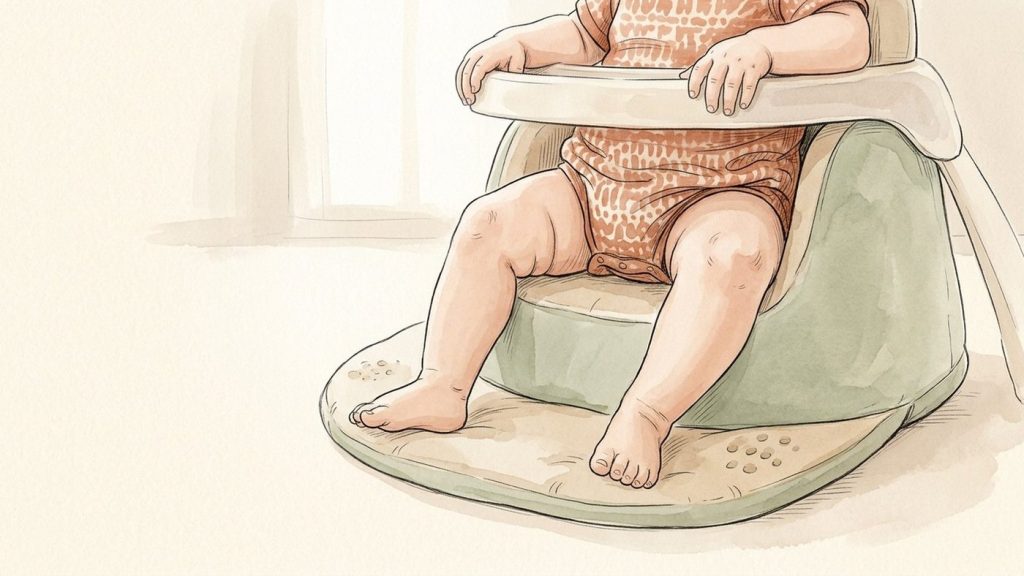
How long can a baby be in a jumper each day?
There’s no official limit, so short and occasional is the safest rule. ChoosePT advises limiting containers to 10 to 15 minutes at a time, and giving twice that time on the floor for every 10 minutes in a container. Elsewhere on the same page it mentions no more than 20 minutes at a time. HSS simply says don’t leave babies in these devices for hours and don’t overuse them, while noting it’s fine to use one briefly to free up your hands.
| Source | What it says about time | Type of advice |
|---|---|---|
| ChoosePT (American Physical Therapy Association) | 10 to 15 minutes at a time; double that on the floor | Expert opinion |
| Hospital for Special Surgery | Short use to free your hands is fine; not for hours at a time | Expert opinion |
| AAP | No specific jumper limit; strongly against wheeled walkers | Official guidance on walkers only |
| Jumper manufacturers | Often allow longer or repeated sessions | Commercial advice |
A practical way to think about it: count the jumper as part of your baby’s total “container time” for the day, along with car seats, swings, bouncers, and high chairs used outside meals. The less of that total, the better.
Free download
Free: milestone checklist, 2 to 12 months
The CDC milestones on one page, to tick off as your baby grows. Part of our free 7-page printables pack.
When can a baby start using a jumper?
Only once your baby has steady head and neck control, and meets the age, height, and weight limits on the product. HSS warns that jumper-type devices can be particularly problematic when used too early, and ChoosePT says problems are more likely before about 7 months. Many physical therapists prefer waiting until a baby can sit well with little support, which is often around 6 months. Our guide to when babies sit up has the typical timeline.
Stop using a jumper once your baby reaches the maximum weight or height, can climb or stand out of it, or starts walking.
Can jumpers cause toe walking?
They might encourage it. HSS points out that babies often stand on their toes in these devices, which isn’t healthy for long periods, and that throwing the body backward while bouncing can lead to uneven muscle strength, with weaker muscles at the front of the body. ChoosePT lists toe walking among the problems linked to heavy container use. These are clinical observations rather than proven effects, and most babies who tiptoe grow out of it. Our post on baby standing on tiptoes explains when it’s normal and when to ask a doctor.
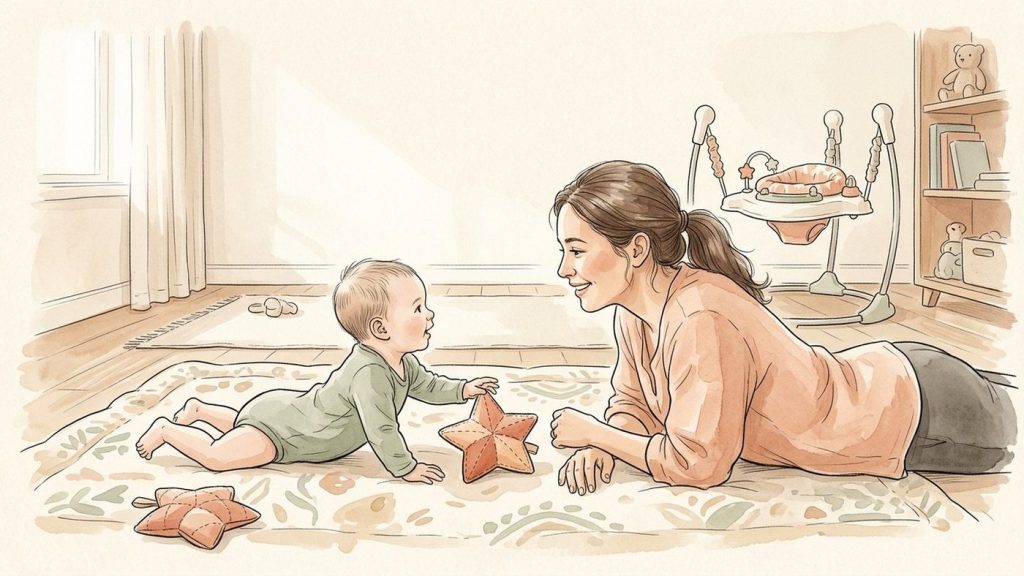
Are jumpers safer than baby walkers?
Yes, for injuries. The AAP’s concern with walkers is that they have wheels. A child in a walker can move more than 3 feet (about 1 meter) in a second and roll down stairs, causing broken bones and head injuries. The AAP describes stationary activity centers, which look like walkers but have no wheels, as a safer alternative, and play yards as great safety zones. See are baby walkers safe for the full story.
Doorway jumpers carry their own risks. Make sure the door frame and clamp are sturdy and installed exactly as directed, keep the jumper away from walls and furniture your baby could bang into, and check that the straps and springs aren’t worn. Check for recalls on your model, especially if it’s secondhand.
How do I use a jumper safely?
- Check readiness. Steady head control, and your baby meets the label’s age, height, and weight limits.
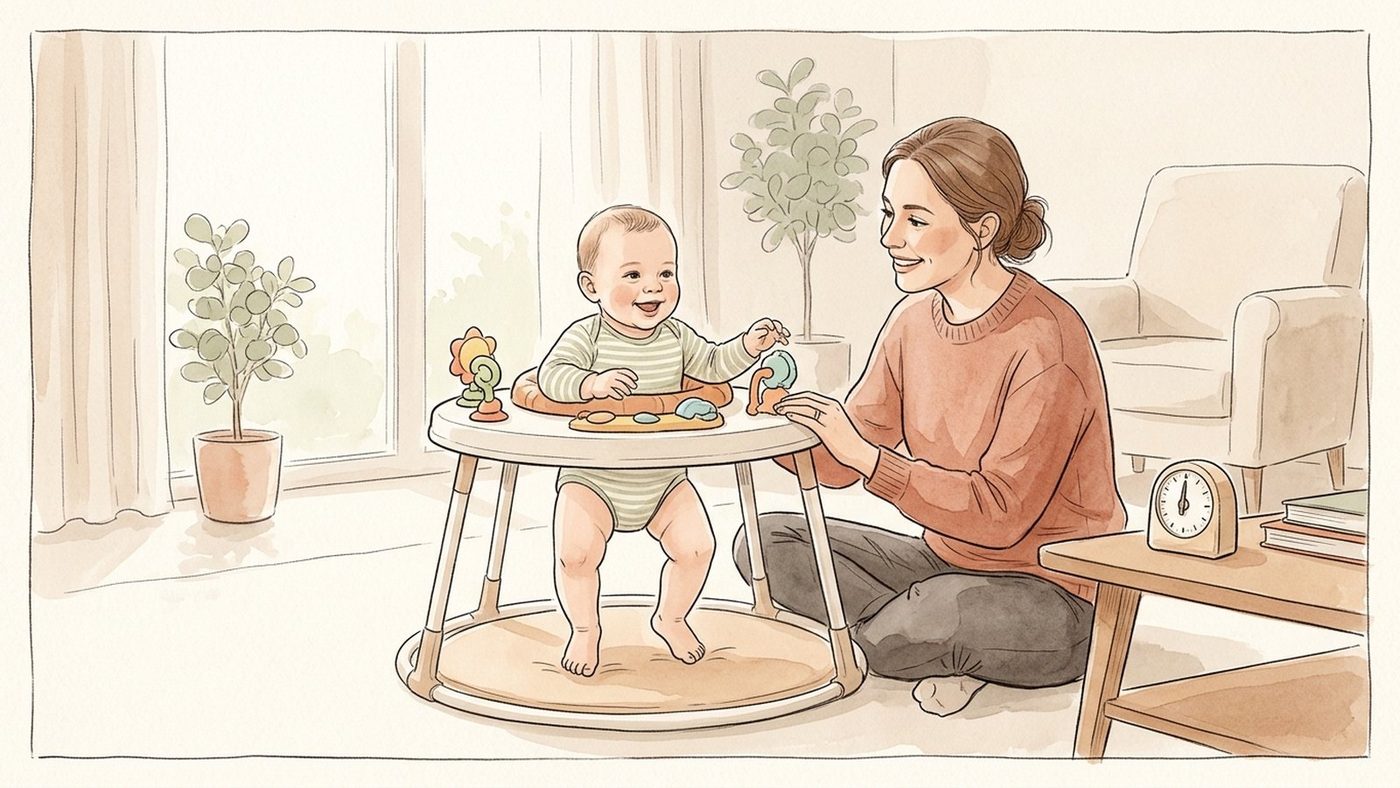
- Set the height so feet are flat. Adjust the straps or seat so your baby’s whole foot rests on the floor or base with knees slightly bent, rather than dangling on tiptoes.
- Use a timer. Aim for short sessions of about 10 to 15 minutes, and take your baby out sooner if they get fussy or tired.
- Stay close. Keep your baby within sight and reach. A jumper isn’t a babysitter.
- Never let your baby sleep in it. If they fall asleep, move them to a flat crib or bassinet on their back.
- Balance with floor time. Follow each session with at least twice as long playing freely on the floor.
For ideas to fill that floor time, our guides to tummy time and activities for a 6-month-old have simple games that build the same strength jumpers promise.
Talk to your pediatrician if:
- your baby’s thighs or bottom creases look uneven, one leg seems shorter, or one hip moves less, which can be signs of hip dysplasia
- your baby is behind on rolling, sitting, or crawling, or strongly prefers one side
- your baby always stands on tiptoes and can’t put their heels down
- you notice a flat spot on the head or your baby always turns their head one way
If your baby falls from a jumper or the jumper breaks and they hit their head, call your pediatrician, and call your local emergency number if they lose consciousness, vomit repeatedly, or seem unusually sleepy or floppy.
Frequently asked questions
Do jumpers help babies walk sooner?
No. HSS says the bouncing doesn’t really work the leg muscles, and the AAP says walkers don’t help babies learn to walk and may delay it. Floor play is what builds walking skills.
Is an activity center (exersaucer) better than a jumper?
Both are containers, so the same advice applies: short sessions, feet flat, lots of floor time. Neither rolls, so both are safer than wheeled walkers.
Can a 4-month-old use a jumper?
Some products allow it, but experts caution against early use. Waiting until your baby has strong head control and can sit with little support, often around 6 months, is a safer choice.
My baby loves the jumper. Should I stop?
No need. Enjoying a short bounce is fine. Just keep it to brief sessions and make sure most of the day is spent moving freely.
Do jumpers cause bowed legs?
We couldn’t find evidence that they do. Mildly bowed legs are normal in babies and toddlers and usually straighten on their own. Ask your pediatrician if bowing is severe, one-sided, or getting worse after age 2.
Sources
- Hospital for Special Surgery. Are Bouncers Bad for Babies? hss.edu
- American Physical Therapy Association, ChoosePT. Physical Therapy Guide to Container Baby Syndrome. choosept.com
- American Academy of Pediatrics, HealthyChildren.org. Baby Walkers: A Dangerous Choice. healthychildren.org
- International Hip Dysplasia Institute. Hip-Healthy Swaddling. hipdysplasia.org
- American Academy of Pediatrics, HealthyChildren.org. Hip Dysplasia. healthychildren.org
- Nemours KidsHealth. Toe Walking. kidshealth.org