Short answer: In a heatwave, keep your baby out of direct sun, keep the room as close to 16–20°C (61–68°F) as you can, and dress them lightly: in very hot weather a short-sleeved vest or just a diaper is fine for sleep, with no blanket. Never cover a stroller or pram with a blanket or muslin, aim fans at the room rather than at your baby, offer milk feeds more often, and check for overheating by feeling the chest or the back of the neck.
Key takeaways
- Sleep: back to sleep in a bare crib, a vest or just a diaper when it’s very hot, no blanket, and a fan pointed away from your baby.
- Strollers: don’t drape anything over the stroller. Use a clip-on sunshade or parasol that lets air flow.
- Feeding: breastfed babies under 6 months need more breast milk, not water. Formula guidance differs between countries, so ask your pediatrician.
- Checking: feel the chest or back of the neck, not the hands or feet. Clammy or sweaty means remove a layer and cool the room.
- Cars: never leave a baby alone in a car, even for a minute, even with the windows open.
Why are babies more at risk in a heatwave?
Because they can’t move away from the heat, take off a layer, or ask for a drink. The NHS lists babies and young children among the groups most vulnerable to hot weather, and the American Academy of Pediatrics (AAP) warns that a heat index of 90°F (about 32°C) or above, as defined by the US National Weather Service, can be dangerous, especially for babies and young children.
Heat can lead to dehydration, heat exhaustion and, rarely, heatstroke, which the AAP calls a medical emergency. Overheating during sleep is also one of the risk factors the Lullaby Trust and the AAP link to sudden infant death syndrome (SIDS), which is why sleep gets so much attention in hot-weather advice.
The good news is that the steps that protect babies are simple and mostly free: shade, fewer layers, a cooler room, and more feeds.
How should my baby sleep in a heatwave?
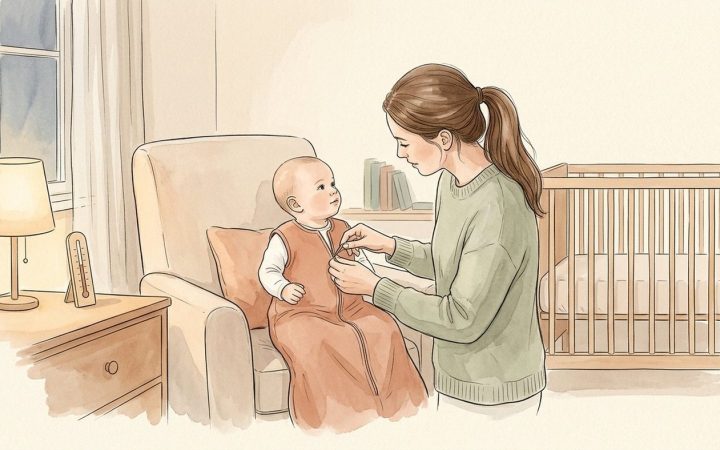
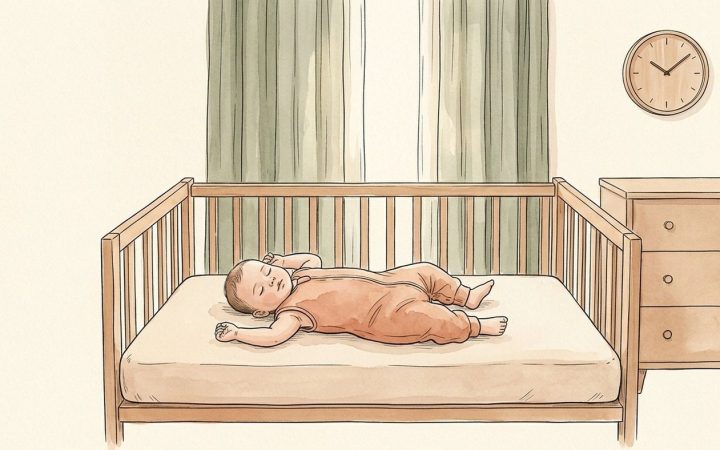
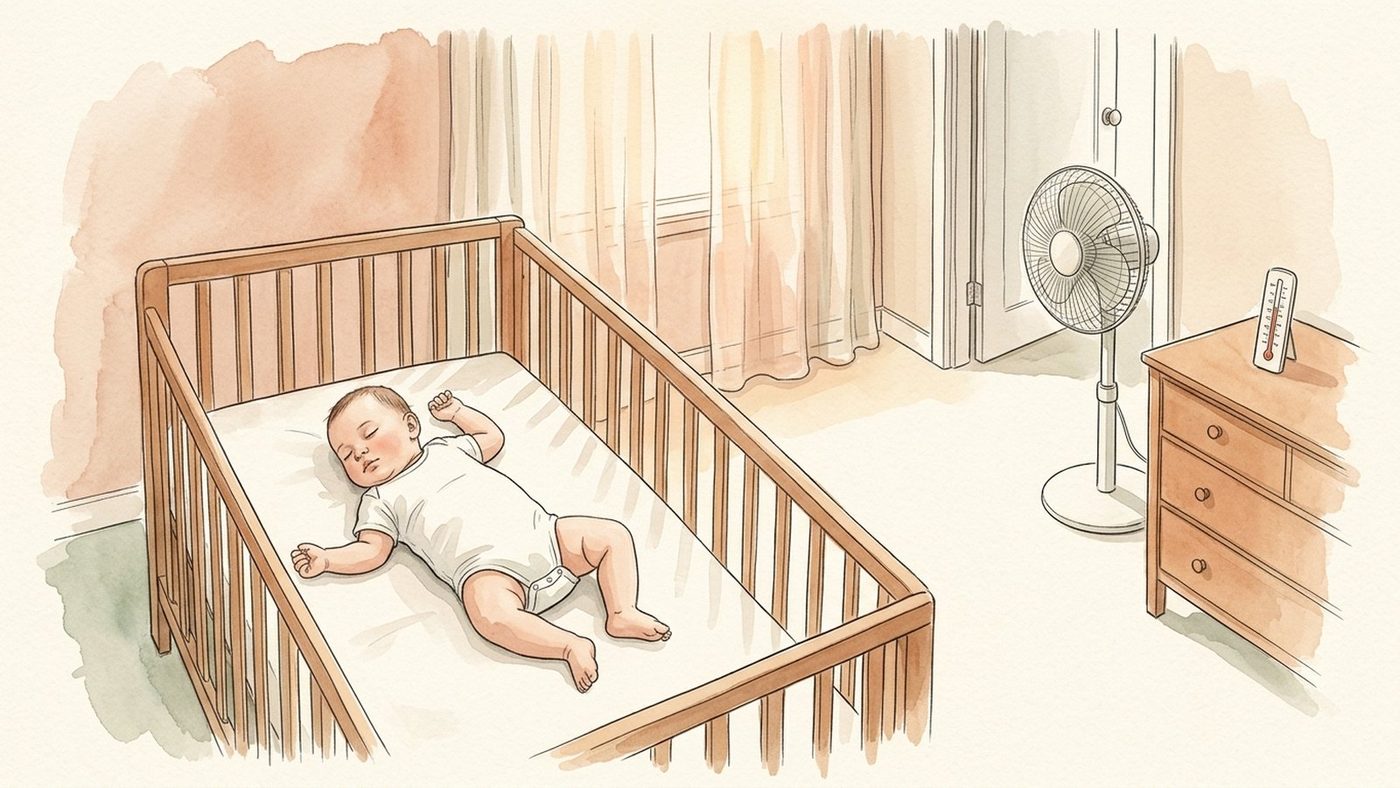
The same way as always, just with less on. The Lullaby Trust says a room temperature of 16–20°C (61–68°F) is comfortable and safe for sleep, and that in very hot weather it’s fine for a baby to sleep in a short-sleeved vest or even just a diaper. During a heatwave you may not be able to get the room that cool, and that’s OK. Do what you can, and dress your baby for the room you actually have.
Here’s a rough guide many parents use. It’s based on the Lullaby Trust’s advice, but no health body publishes an exact chart, so treat it as a starting point and check your baby:
| Room temperature | What your baby might wear for sleep | Bedding |
|---|---|---|
| Around 20–22°C (68–72°F) | Short-sleeved bodysuit, or a lightweight sleep sack over a vest | Fitted sheet only |
| Around 23–25°C (73–77°F) | Short-sleeved vest, or a very light summer sleep sack | Fitted sheet only |
| 26°C (79°F) and above | A diaper, or a diaper and a thin vest | Fitted sheet only, no sleep sack |
For the full layer-by-layer breakdown at every temperature, see our guide on how to dress a baby for sleep by temperature.
- Close curtains or blinds during the day. The Lullaby Trust and the NHS both suggest keeping the sun out of rooms during the hottest hours.
- Open windows and the bedroom door at night if it’s safe to do so, to let cooler air move through.
- Use a room thermometer. The Lullaby Trust notes it’s hard to guess a room’s temperature, especially when you’re hot yourself.
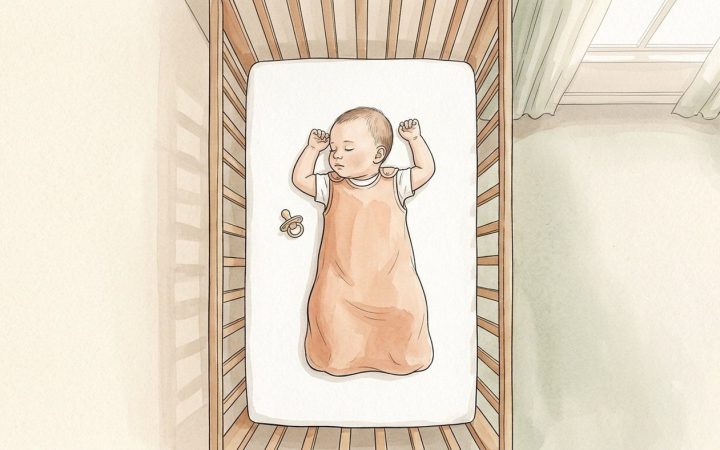
- Strip the crib back. Firm, flat mattress, fitted sheet, nothing else. Skip the sleep sack if the room is very hot.
- Place your baby on their back, for every nap and every night, just as in cooler weather.
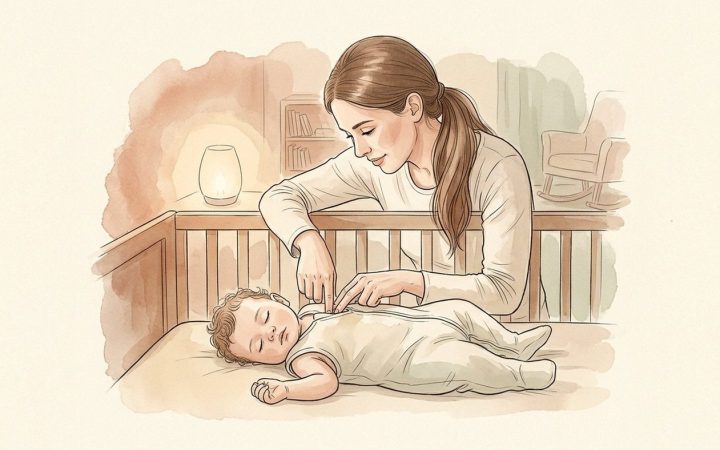
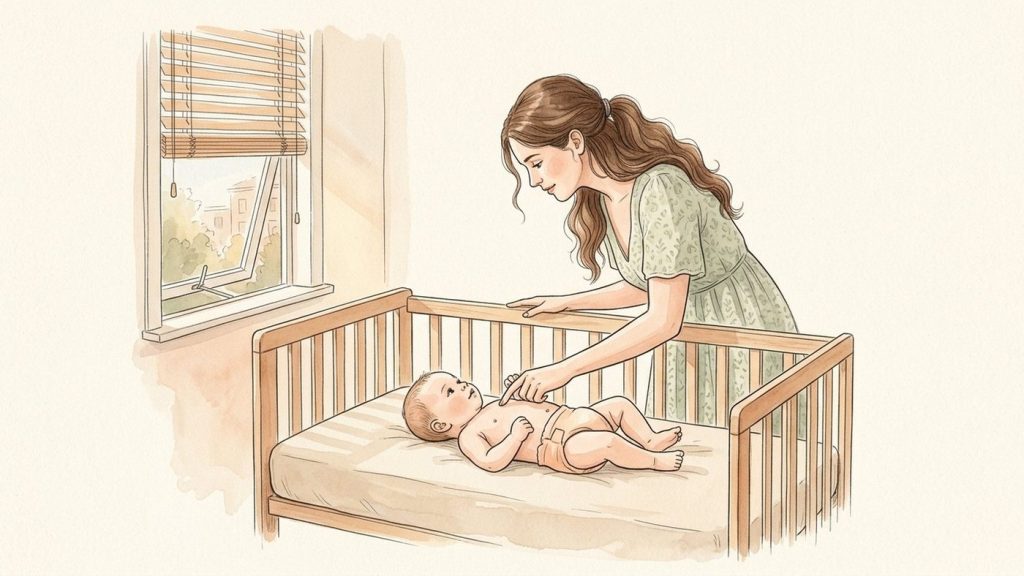
- Check the chest or back of the neck before you go to bed. If it’s clammy or sweaty, take off a layer.
Is it safe to use a fan or air conditioning for a baby?
Yes, as long as the fan isn’t blowing straight at your baby. The Lullaby Trust says you can use a fan to circulate air in the room but shouldn’t aim it directly at the baby. The AAP also advises keeping fans at a safe distance from children and not pointing them at yourself when the room is hotter than 90°F (32°C), because moving very hot air can add to dehydration rather than cool you.
Air conditioning is the most effective way to keep a room cool. If you don’t have it, the AAP suggests spending the hottest part of the day in a building that does, such as a library, a store, or a local cooling center.
A few practical points: keep fan cords and the fan itself out of reach of the crib, make sure a standing fan can’t be pulled over, and don’t hang a damp cloth over the crib to cool it.
What the research says: a 2008 California case-control study of 185 babies who died of SIDS and 312 comparison babies found that fan use during sleep was linked to a lower risk of SIDS, with the biggest difference in warmer rooms. It’s one observational study, and the authors and commentators noted it can’t prove cause and effect. No health body recommends a fan to prevent SIDS. A fan is a comfort tool on hot nights, not a safety device.
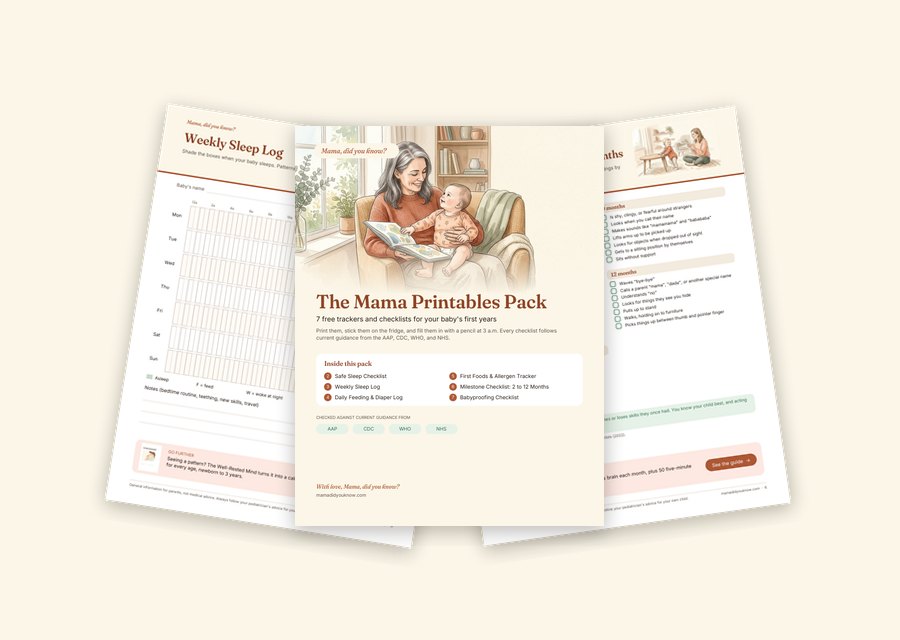
Free download
Free: safe sleep checklist and sleep log
Track naps and night wakings for a week and the pattern shows itself. Part of our free 7-page printables pack.
Can I cover the stroller or pram to keep the sun off?
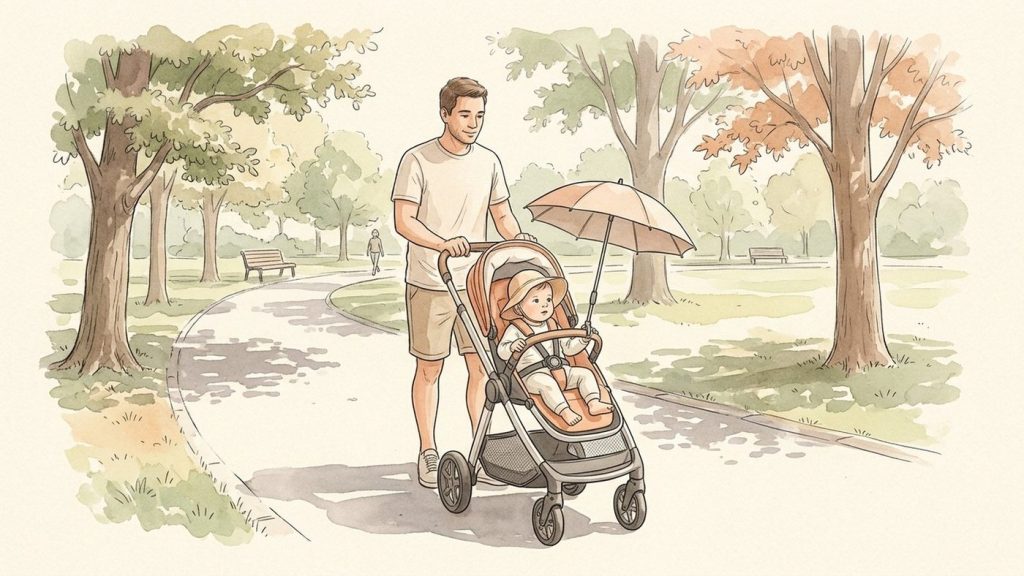
No. This is the single most repeated heatwave warning from the Lullaby Trust: don’t cover prams, strollers, or travel systems with blankets, muslins, or any cover that blocks airflow. A thin cloth feels like shade, but it traps heat inside, and the space under it can get much hotter than the air outside. Overheating is a risk factor for SIDS.
Instead:
- use a clip-on sunshade or parasol that leaves the sides open
- walk on the shady side of the street and plan outings for early morning or evening
- stay indoors in the hottest hours; the NHS puts these at 11am to 3pm
- check the chest or neck often, and take your baby out of the stroller into the shade if they feel hot
Babies under 6 months should be kept out of direct sun. Shade, a wide-brimmed hat, and light, loose clothing that covers the arms and legs come first. The AAP says that if shade and clothing aren’t enough, a small amount of sunscreen can go on small uncovered areas like the face and backs of the hands, while the FDA says to check with your pediatrician before using sunscreen under 6 months and the NHS says to keep young babies out of direct strong sunlight altogether. From 6 months, use a broad-spectrum sunscreen; UK guidance recommends at least SPF 30 with good UVA protection, reapplied often.
If your baby falls asleep in the stroller or car seat, the usual rule still applies: move them to a firm, flat surface on their back when you can. Our post on baby sleep in a swing or car seat explains why.
Does my baby need water in a heatwave?
If your baby is under 6 months and breastfed, no: offer the breast more often instead. Both the AAP and the Lullaby Trust say exclusively breastfed babies don’t need extra water before solids, though they may want to feed more often in the heat. The AAP adds that babies fed breast milk from a bottle can be given extra breast milk.
For formula-fed babies under 6 months, the advice differs by country. The AAP says babies should not be given water, especially in the first 6 months, and that formula-fed babies can have extra formula. The NHS and the Lullaby Trust say formula-fed babies may need small amounts of cooled boiled water between their usual milk feeds in hot weather. Both agree water should never replace feeds, and formula should never be watered down. Too much plain water can be dangerous for young babies, so ask your pediatrician what’s right for yours.
Once your baby has started solids, offer sips of water from an open or straw cup with meals and in between on hot days. Our guide on when babies can drink water covers amounts by age.
Signs your baby may need more fluids include fewer wet diapers than usual, darker urine, a dry mouth, and being unusually sleepy or fussy. In a newborn, compare against our guide to how many wet diapers a newborn should have.
How can I tell if my baby is too hot?
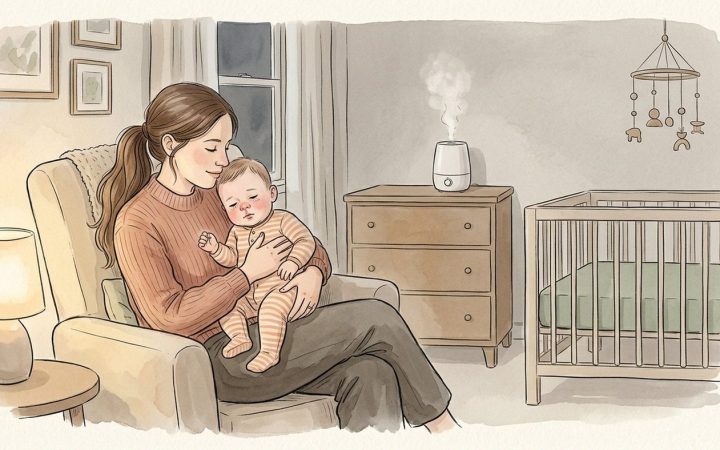
Feel the chest or the back of the neck. Hands and feet often feel cool even when a baby is warm, so they’re not a good guide. If your baby’s chest or neck is clammy or sweaty, the Lullaby Trust says to remove a layer and bring the room temperature down.
Other signs of overheating include flushed cheeks, damp hair, heat rash, and fast breathing. A sweaty head on its own is common in sleeping babies; our post on baby head sweating while sleeping explains when it matters.
To cool a hot baby down, move them somewhere shaded and cooler, take off extra clothing, offer a feed, and sponge their skin with lukewarm (not cold) water. The NHS says someone with heat exhaustion should start to feel better within about 30 minutes of cooling down. With a baby, don’t wait that long if anything seems wrong: call for advice.
Never leave a baby alone in a car, even for a moment, and even with the windows down. The AAP warns that the inside of a car can become dangerously hot in a short time, even with the windows open. In a heatwave, also check the car seat buckles and fabric before you put your baby in, since they can get hot enough to burn skin. Keep safe sleep the same as always: on the back, on a firm, flat surface, with nothing over the face.
Call your pediatrician, or your local emergency number if it’s severe, if your baby:
- has a fever, or is under 3 months and has a temperature of 38°C (100.4°F) or higher
- has far fewer wet diapers than usual, very dark urine, a sunken soft spot, or cries without tears
- is unusually floppy, very sleepy, hard to wake, or not interested in feeding
- is vomiting, breathing fast, or still seems unwell after being cooled down
- has hot skin that isn’t sweating, a seizure, or is unresponsive: these can be signs of heatstroke, so call your local emergency number straight away
For more on temperatures and when to call, see our guide on baby fever and when to call the doctor.
Frequently asked questions
Can my baby sleep in just a diaper in a heatwave?
Yes. The Lullaby Trust says that in very hot weather it’s fine for a baby to sleep in a short-sleeved vest or just a diaper. Keep them on their back in a bare crib, with no blanket.
Should I still use a sleep sack when it’s very hot?
Not if the room is very warm. A lightweight summer sleep sack works on warm nights, but when the room is well above 20°C (68°F), a vest or diaper alone is usually enough. Never swap the sleep sack for a loose blanket.
Is a muslin over the stroller OK if it’s thin?
No. The Lullaby Trust advises against covering a stroller or pram with any blanket, cloth, or cover that blocks airflow, however thin. Use a clip-on sunshade or parasol instead.
Can I give my baby a cool bath before bed?
A lukewarm bath can help a hot baby feel more comfortable. Avoid cold water, which can make a baby shiver, and always stay within arm’s reach during bath time.
Should my baby wear a hat indoors to keep the sun off?
No. Hats are for shade outdoors. The AAP says not to put a hat on your baby indoors once you’re home from the hospital, and to dress them in no more than one layer more than you’re wearing.
My baby is waking more in the heat. Is that normal?
Very common. Hot babies often wake to feed more, which also helps keep them hydrated. Sleep usually settles once the weather cools.
Sources
- The Lullaby Trust. Baby summer safety. lullabytrust.org.uk
- The Lullaby Trust. Dress your baby for sleep. lullabytrust.org.uk
- American Academy of Pediatrics, HealthyChildren.org. Protecting Children from Extreme Heat: Information for Parents. healthychildren.org
- American Academy of Pediatrics, HealthyChildren.org. Baby Sunburn Prevention Tips. healthychildren.org
- American Academy of Pediatrics, HealthyChildren.org. How to Keep Your Sleeping Baby Safe: AAP Policy Explained. healthychildren.org
- NHS. Heatwave: how to cope in hot weather. nhs.uk
- NHS. Heat exhaustion and heatstroke. nhs.uk
- NHS. Drinks and cups for babies and young children. nhs.uk
- Coleman-Phox K, Odouli R, Li DK (2008). Use of a fan during sleep and the risk of sudden infant death syndrome. Archives of Pediatrics & Adolescent Medicine. pubmed.ncbi.nlm.nih.gov
- US Food and Drug Administration. Should You Put Sunscreen on Infants? Not Usually. fda.gov