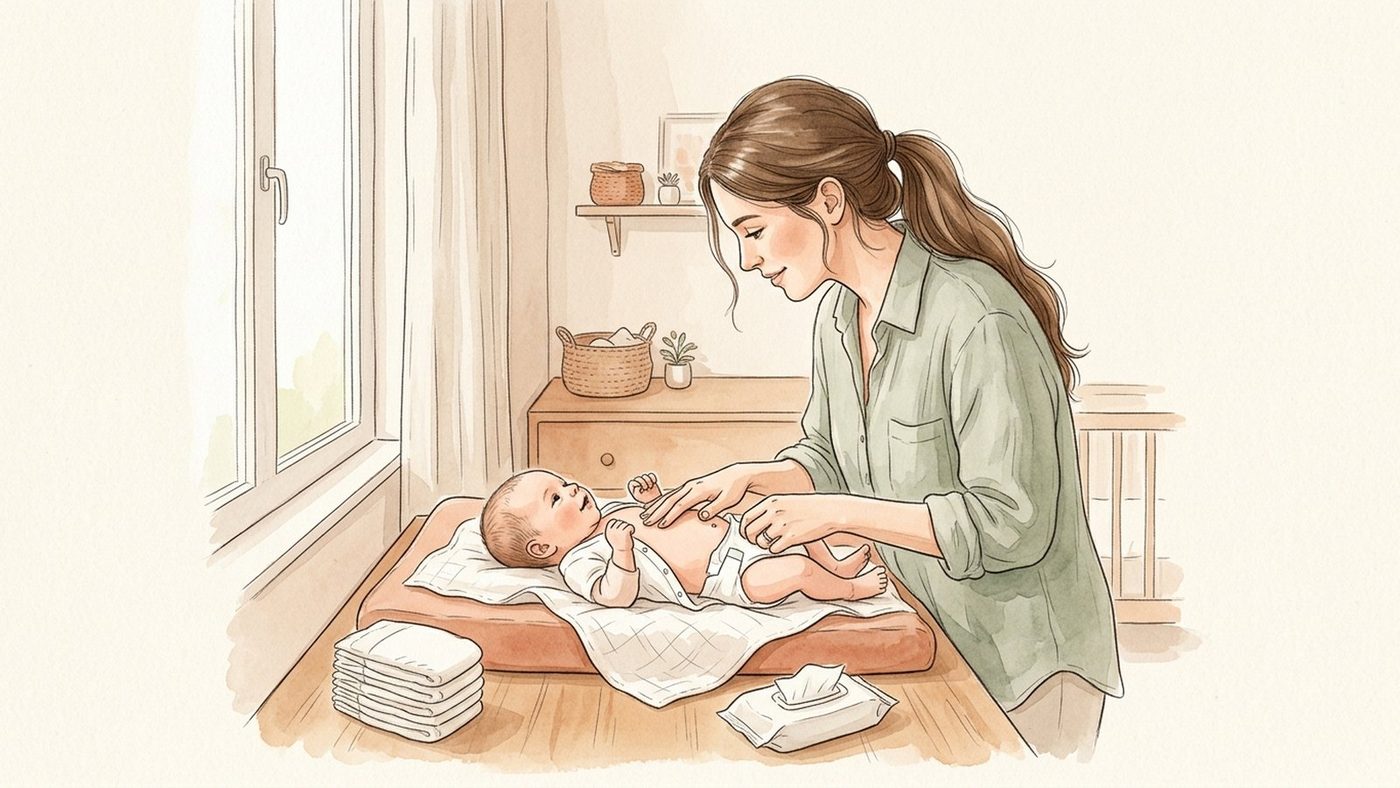
Short answer: Expect only one or two wet diapers in the first day or two, then a steady rise as feeding gets going: about three or more by days 3–4, and at least six heavy wet diapers every 24 hours from around day 5 to 7 onward. The AAP says a well-fed newborn should have six or more wet diapers a day with pale, nearly colorless urine by 5 to 7 days old. Fewer than that, dark urine, or a baby who isn’t feeding well is a reason to call your pediatrician.
In the newborn fog with Adam, I kept a tally of diapers on my phone because I couldn’t remember whether the last one was an hour or four hours ago. These are the numbers that tally was checking against.
Key takeaways
- The count climbs day by day: roughly one wet diaper on day 1, two on day 2, three or more on days 3–4.
- The target from about day 5–7: six or more heavy wet diapers in 24 hours, with pale urine.
- Poop changes too: from black, sticky meconium to green, then yellow by around day 4–5.
- Call early, not late: too few wet diapers, dark urine after the first days, or poor feeding all deserve a call.
How many wet diapers should a newborn have each day?
It depends on the day, because milk intake ramps up over the first week. Before milk “comes in,” newborns take small amounts of colostrum and wet fewer diapers. Once intake rises, the count rises with it. The NHS says that in the first 48 hours, your baby is likely to have only 2 or 3 wet diapers, and that from day 5 wet diapers should become more frequent, with at least 6 heavy wet diapers every 24 hours.
Different sources slice the first week slightly differently, which is why charts online seem to disagree. Here’s how the main guidance lines up:
| Baby’s age | Wet diapers in 24 hours | Poop to expect |
|---|---|---|
| Days 1–2 | About 1–2 (2–3 across the first 48 hours) | At least 1 black, sticky meconium poop a day |
| Days 3–4 | 3 or more, feeling heavier | At least 2, changing from greenish to yellow |
| Days 5–6 | 5–6 or more, heavy | Yellow, soft or loose |
| Day 7 to about 6 weeks | 6 or more, heavy, pale urine | Breastfed: often several a day, yellow and seedy |
| After the first month or two | About 6 or more is still a good guide | Patterns vary widely, especially in breastfed babies |
This table combines the NHS page on whether your baby is getting enough milk, UNICEF UK Baby Friendly’s breastfeeding assessment tool, and the AAP’s HealthyChildren.org guidance. The overlap is what matters: a steady increase through the first week, reaching six or more heavy wet diapers by about day 5 to 7.
How can I tell if a disposable diaper is wet?
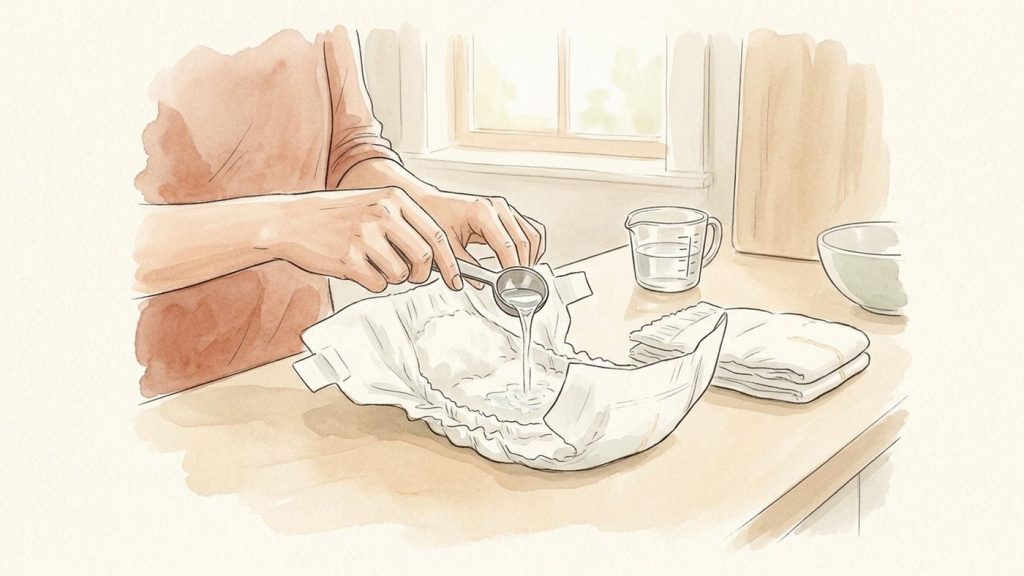
By weight more than look. Modern disposables are so absorbent that a wet one can look almost dry. UNICEF UK’s breastfeeding assessment tool and several NHS leaflets suggest a simple trick: pour 2 to 4 tablespoons (about 30–60 ml, or 1–2 oz) of water into a clean diaper and feel how heavy it is. That’s roughly what a “heavy wet diaper” should feel like in the first weeks.
Many disposables also have a wetness indicator line that changes color. It’s handy, but it only tells you there’s some urine, not how much, so the weight check is more useful when you’re counting.
What color should newborn pee be?
Pale yellow or nearly colorless once feeding is established. The AAP describes a well-fed baby at 5 to 7 days as having six or more wet diapers with nearly colorless or pale yellow urine. Darker, more concentrated urine is common in the first couple of days, when babies are taking small volumes.
You may also see a pink, orange, or brick-red stain in the diaper in the first days. The AAP explains that this is usually highly concentrated urine, not blood, and that it’s often mistaken for blood. UK feeding leaflets call these stains urates and say they’re expected in the first couple of days but shouldn’t continue after that. If the pinkish staining persists, the AAP says to consult your pediatrician. Actual blood in the urine is never normal.
Baby girls sometimes have a little white discharge or even a small amount of blood-tinged mucus from the vagina in the first days. This is usually caused by the mother’s hormones and passes on its own, but mention it to your pediatrician if you’re unsure. It’s different from a brick-red urate stain.
Free download
Free: babyproofing and safe sleep checklists
Room-by-room babyproofing and the safe sleep basics on the fridge. Part of our free 7-page printables pack.
What about dirty diapers?
Poop tells the same story as pee. In the first day or two, newborns pass meconium, which is black and tarry. The AAP’s HealthyChildren site says to expect one or two of these on days 1 and 2, then at least two stools turning greenish to yellow on days 3 and 4, and by 5 to 7 days, yellow, loose stools with small curds, at least 3 to 4 a day. The NHS says breastfed babies should do at least two soft, yellow poops a day from day 4, for the first few weeks.
The two numbers differ a little, but the direction is the same. If your baby’s poop is still dark on day 3 or 4, UK guidance suggests getting feeding support. Formula-fed babies often have fewer, firmer, tan or yellow-brown stools. After the first 4 to 6 weeks, some breastfed babies go several days without a poop, which can be normal as long as they’re feeding well, gaining weight, and the poop is soft when it comes. Our baby poop color chart covers colors in detail.
What else tells me my baby is getting enough milk?
Weight gain, feeding behavior, and how your baby seems overall. Diapers are just one piece. The AAP and NHS point to these signs together:
- Weight: the AAP says babies typically lose no more than 8–10% of birth weight in the first few days, then start to gain. It lists being under birth weight at 2 weeks as a warning sign.
- Frequent feeds: newborns usually feed 8 to 12 times in 24 hours.
- Swallowing: once milk is in, you can hear or see regular swallows during feeds.
- Contentment: your baby seems settled after most feeds, with a moist mouth, and comes off the breast or bottle on their own.
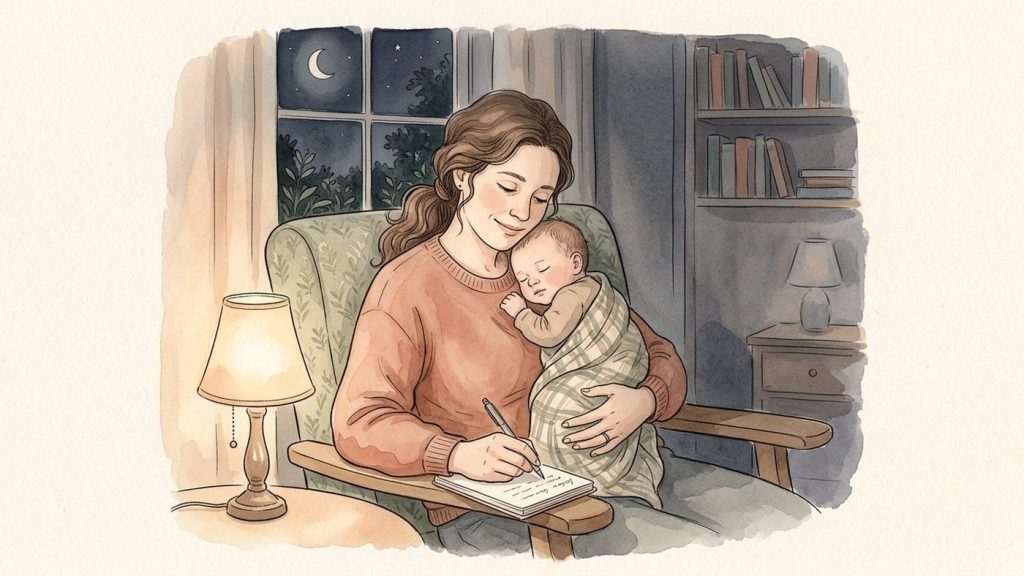
Keeping a simple log for the first couple of weeks helps a lot, especially at checkups. Write down each feed, each wet diaper, and each poop. Our baby feeding schedule by month shows how feeding patterns change after the newborn weeks.
What the research says: diaper counts, weight, and feeding behavior are the standard signs used by the AAP, NHS, and UNICEF UK to check that a newborn is getting enough milk. The exact day-by-day numbers vary a little between organizations because they’re practical guides, not strict cutoffs. A single low day is less worrying than a pattern, but none of these sources suggest waiting it out if your baby also seems unwell.
How many wet diapers should an older baby have?
Around six a day is still a useful guide through the first months. The AAP lists fewer than six wet diapers a day as one of the signs of dehydration in infants. Older babies can pee less often but in bigger amounts, so an occasional lighter day isn’t a cause for alarm on its own. The AAP also notes that during illness, fever, or very hot weather, urine output can drop by half and still be normal, but that’s exactly when to keep an eye on it. Once your baby starts solids and water around 6 months, patterns shift again; see when babies can drink water.
Call your pediatrician the same day if:
- after day 5–7, your baby has fewer than 6 wet diapers in 24 hours, or urine is dark yellow
- pink or red staining continues after the first few days, or you see actual blood
- poop is still black or dark green by day 4, or your baby has no poop in 24 hours in the first weeks
- your baby is very sleepy, hard to wake for feeds, or feeding poorly, or looks more yellow (jaundiced)
Call your local emergency number or go to the emergency department if your baby hasn’t had a wet diaper in 12 hours, has a sunken soft spot, is floppy or hard to wake, or has a fever of 38°C (100.4°F) or higher and is under 3 months old. For a newborn, don’t wait that long if you’re worried; call sooner.
Frequently asked questions
Does a diaper with pee and poop count as a wet diaper?
Yes, if it’s clearly wet. When you log it, count it in both columns. If you can’t tell whether there’s urine, change a little sooner after the next feed to check.
Do formula-fed babies have more wet diapers?
Formula-fed babies often take larger volumes in the first days, so they may wet more diapers earlier. By the end of the first week, the six-or-more guide applies to both.
My 2-month-old has fewer wet diapers but they’re heavier. Is that OK?
Often yes. As bladders grow, babies can pee less often but more at a time. If diapers are heavy, urine is pale, and your baby is feeding and gaining well, that’s reassuring.
Should I wake my newborn to feed if diapers are low?
Ask your pediatrician. Many newborns need waking for feeds in the first weeks until weight gain is established, and low diaper counts are a reason to get feeding checked.
Is it normal to see orange crystals in the diaper?
In the first couple of days, yes; these are usually urates from concentrated urine. If they continue beyond that, contact your pediatrician, since it can mean your baby needs more milk.
Sources
- NHS. Breastfeeding: is my baby getting enough milk? nhs.uk
- UNICEF UK Baby Friendly Initiative. Breastfeeding assessment tool. unicef.org.uk
- American Academy of Pediatrics, HealthyChildren.org. How to Tell if Your Breastfed Baby is Getting Enough Milk. healthychildren.org
- American Academy of Pediatrics, HealthyChildren.org. Warning Signs of Breastfeeding Problems. healthychildren.org
- American Academy of Pediatrics, HealthyChildren.org. Baby’s First Days: Bowel Movements and Urination. healthychildren.org
- American Academy of Pediatrics, HealthyChildren.org. Dehydration. healthychildren.org
- UNICEF UK Baby Friendly Initiative. How you and your health visitor can recognise that your baby is feeding well. unicef.org.uk
- NHS. Sepsis. nhs.uk