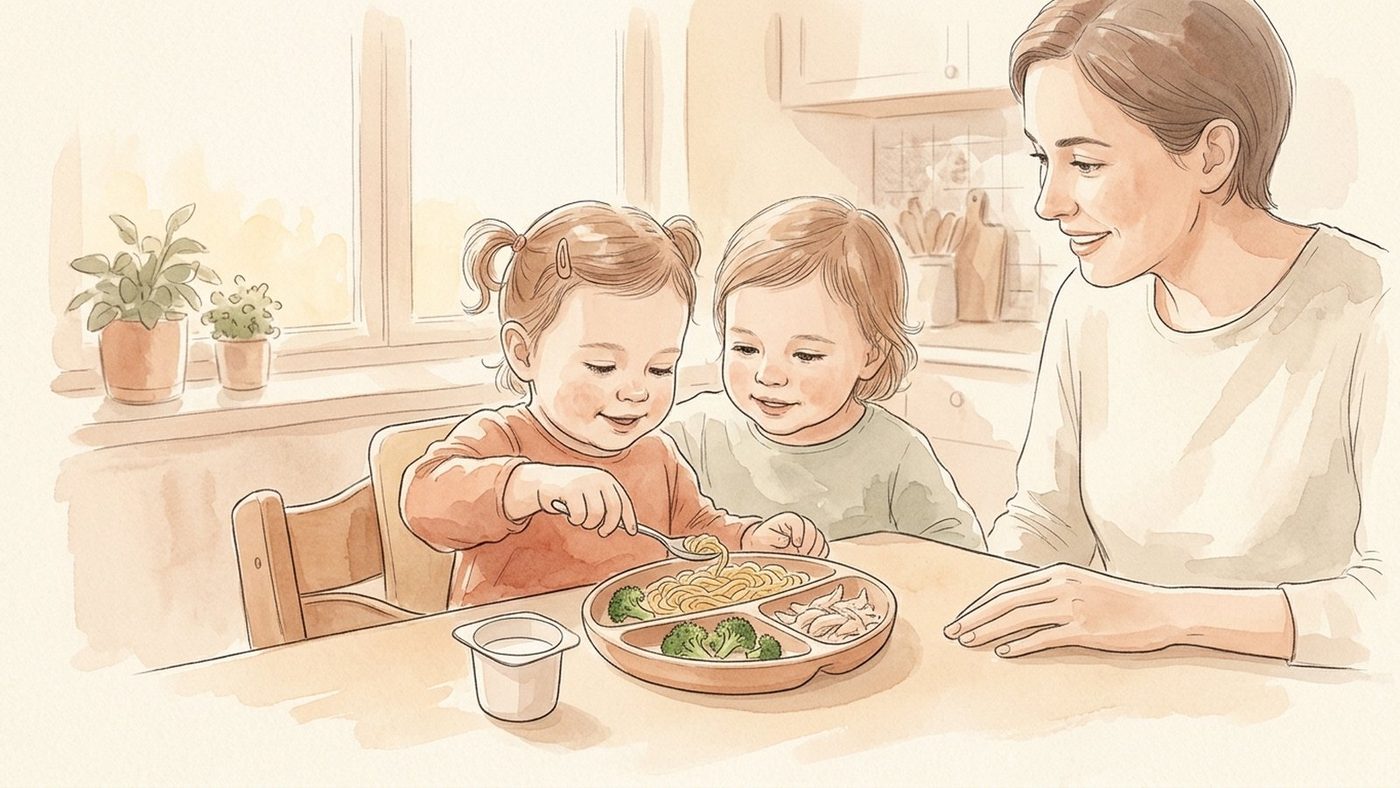
Short answer: Most toddlers need only about 2 cups (16 oz, around 475 ml) of milk a day, and the American Academy of Pediatrics advises no more than 16 to 24 oz (about 475–710 ml) a day after the first birthday. Drinking more than 24 oz a day can fill a toddler up so they eat less food, and it’s linked to iron-deficiency anemia, because milk is low in iron and reduces iron absorption. If your toddler drinks lots of milk and eats little, cutting back gradually and offering milk with meals usually brings their appetite back.
Adam isn’t a toddler yet, but the switch to cow’s milk is on my reading-ahead list, and “how much is too much?” was the first question I had. Here’s what the guidance says.
Key takeaways
- Ages 1–2: about 2 cups (16 oz) of whole milk a day is enough for most toddlers.
- Ages 2–5: about 2–3 cups (16–24 oz) a day, usually low-fat or skim in US guidance.
- The ceiling: no more than 24 oz (about 710 ml) a day.
- Why it matters: too much milk crowds out food and is linked to iron deficiency.
- The fix: cut back over about a week, offer milk with meals after some food, and water in between.
How much milk should a toddler drink a day?
About 2 cups (16 oz) a day for 1-year-olds, and 2 to 3 cups (16–24 oz) for 2- to 5-year-olds. Those figures come from the AAP’s HealthyChildren.org drinks guide, based on recommendations from Healthy Eating Research that the AAP, the American Heart Association, the Academy of Nutrition and Dietetics, and the American Academy of Pediatric Dentistry supported. The AAP’s toddler nutrition advice puts the upper limit at no more than 16 to 24 oz a day after the first birthday.
| Age | Cow’s milk per day | Water per day | Type of milk (US guidance) |
|---|---|---|---|
| 6–12 months | None as a drink | 4–8 oz (120–240 ml) | Breast milk or formula is the main drink |
| 12–24 months | About 16 oz (2 cups, ~475 ml) | 8–32 oz (1–4 cups) | Whole milk |
| 2–5 years | 16–24 oz (2–3 cups, ~475–710 ml) | 8–40 oz (1–5 cups) | Skim or low-fat (1%) |
| Any age 1–5 | Upper limit 24 oz (~710 ml) | Offer between meals | Too much can crowd out food |
UK guidance is a little different on fat: the NHS says whole or semi-skimmed milk can be a main drink from age 1, and skim or 1% milk shouldn’t be the main drink before age 5. It doesn’t give a daily volume. If your child is breastfed past one, that milk counts too, and you can talk to your pediatrician about how it fits.
Can a toddler drink too much milk?
Yes. Milk is filling and calorie-dense, and the AAP notes it fills little ones up quickly. A toddler who drinks a lot between meals often arrives at the table not hungry, which can look like picky eating. Over time the bigger concern is iron.
The AAP explains that milk is low in iron, that it decreases iron absorption, and that it can reduce the amount of other iron-rich foods children eat. Its HealthyChildren site advises limiting milk to no more than 24 oz a day after age 1. A newer AAP clinical report on iron deficiency, published in Pediatrics in 2026, likewise stresses that children from age 1 to 5 need enough iron-rich foods alongside their milk.
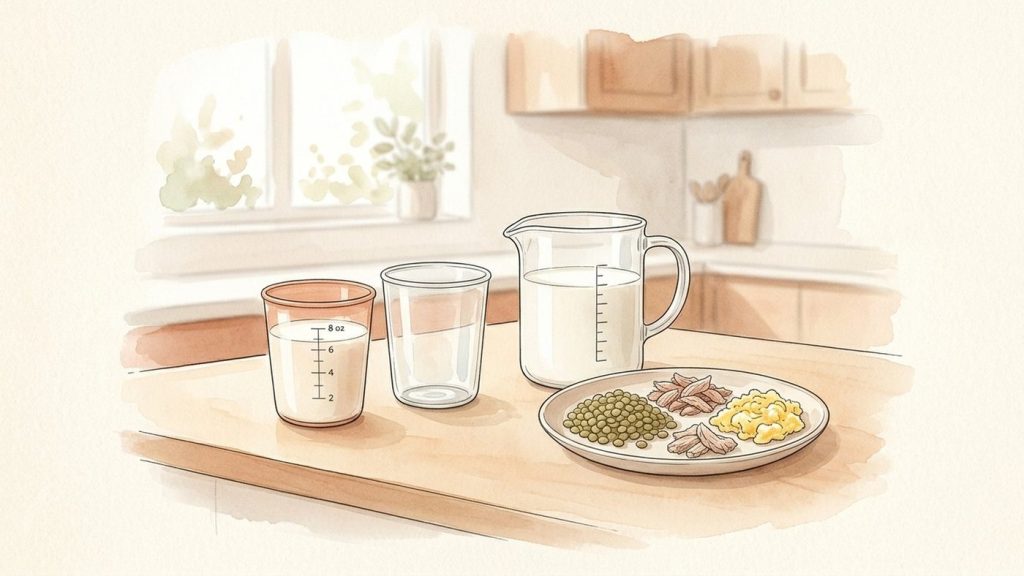
What the research says: the link between high milk intake and iron deficiency in toddlers comes from observational studies and many clinical case reports, and it’s consistent enough that the AAP builds it into its screening advice. The exact cutoff is less precise. 24 oz is the commonly used ceiling, but some clinicians suggest less, and the right amount depends on how much iron-rich food your child eats.
What are the signs my toddler is drinking too much milk?
The everyday sign is a toddler who drinks well but eats very little. Other clues:
- Milk is their “snack.” They ask for a cup or bottle between meals and through the day.
- They still need milk to fall asleep, or wake at night for it.
- They’re still using a bottle well after their first birthday, which makes it easy to drink large amounts.
- Possible signs of low iron. The AAP lists pale skin or pale lips and nail beds, irritability, tiredness or needing more naps, and pica (chewing non-food things like ice, dirt, or paper).
If you notice possible signs of low iron, don’t guess; ask your pediatrician about a blood test. The AAP recommends screening for iron deficiency at about 9 to 12 months for mostly breastfed babies and at about 15 to 18 months for babies who mostly drank formula.
Free download
Free: first foods and allergen tracker
Tick off each allergen and new food, with space for reactions, plus a feeding and diaper log. Part of our free 7-page printables pack.
How do I cut back on my toddler’s milk?
Gradually, over about a week, and by changing when milk is offered rather than just how much. These steps follow the AAP’s tips for easing a milk habit:
- Measure a normal day. Add up every cup and bottle so you know your starting point.
- Reduce over a week. The AAP suggests gradually reducing milk over one week until your toddler has no more than 16 oz a day.
- Milk with meals, after food. Offer milk only with meals, and only after your child has eaten some solid food.
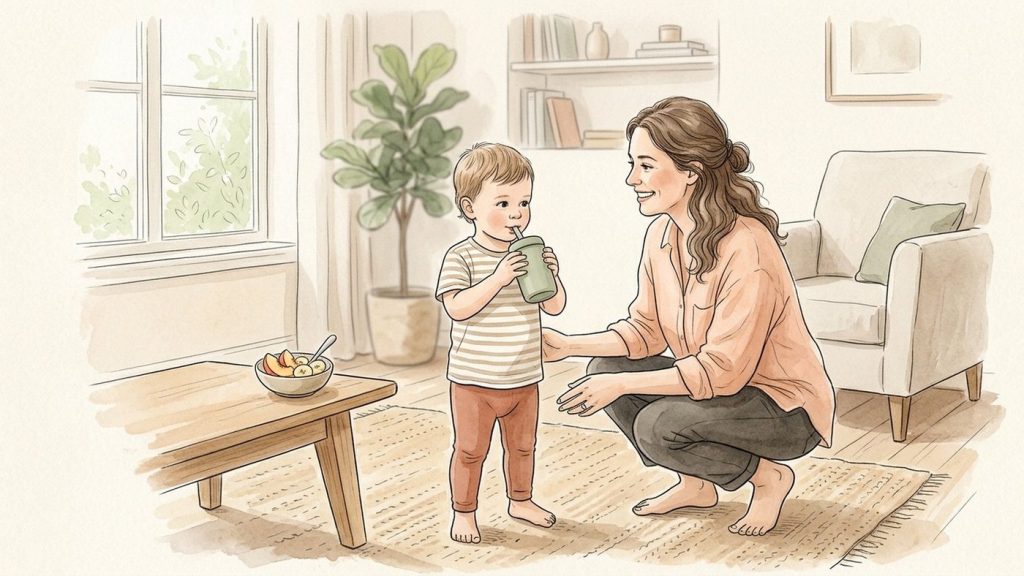
- Water between meals. Don’t serve milk as a snack or treat; offer water in an open or straw cup instead.
- Move away from the bottle. The AAP calls switching from bottle to cup a healthy step between 6 and 12 months, and the NHS says bottle-feeding should be discouraged after age 1. A cup makes it harder to drink large volumes quickly.
- No bedtime bottle. The AAP advises against a bottle at bedtime or naptime. Move milk to before the bedtime routine, followed by tooth brushing.
- Serve iron-rich foods. Meat, beans, lentils, tofu, eggs, and iron-fortified cereals help. Our guide to iron-rich foods for babies has ideas that work for toddlers too.
Expect some protest for a few days. Your toddler’s appetite for food usually picks up as milk drops, but meals won’t transform overnight. Toddlers eat very different amounts from day to day, which is normal; our post on how much a 2-year-old should eat covers realistic portions.
Do toddlers need milk at all?
Milk isn’t essential, but it’s an easy source of calcium, protein, and, when fortified, vitamin D. Toddlers who don’t drink milk can get those nutrients from other foods like yogurt, cheese, and fortified alternatives, with your pediatrician’s help if needed.
- Toddler formula: the AAP says these “toddler milks” are unnecessary for most children. See is toddler formula necessary?
- Plant milks: the AAP says most aren’t nutritionally equivalent to cow’s milk, with soy milk the exception. The NHS allows unsweetened, calcium-fortified alternatives from age 1. Our post on whether toddlers can drink oat milk compares them.
- Rice drinks: the NHS says children under 5 shouldn’t have rice drinks instead of breast milk, formula, or cow’s milk, because of arsenic.
What does a sensible milk day look like?
Simple and predictable. For a 1- to 2-year-old aiming for about 16 oz, that might be a small cup of milk (about 4 oz, or 120 ml) with breakfast, lunch, dinner, and one before the bedtime routine, with water offered at snacks and in between. An older toddler might have a little more at each meal. Spreading milk across meals, rather than serving it in one big bottle, makes it much easier to stay within the limit without anyone feeling deprived.
Cups help too. The NHS suggests introducing a cup from around 6 months and moving to an open cup as soon as your child is ready. Sipping from a small open or straw cup is slower than draining a bottle, and it naturally caps how much your toddler drinks at once. Our sippy cup vs straw cup guide compares the options.
Talk to your pediatrician if:
- your toddler regularly drinks more than 24 oz of milk a day and eats very little food
- you notice pale skin, lips, or nail beds, unusual tiredness, or your child chewing non-food items
- your child isn’t growing or gaining weight as expected, or is losing weight
- you’re thinking about an iron supplement; ask your pediatrician or pharmacist, who will dose it by weight
Frequently asked questions
Is 32 oz of milk a day too much for a toddler?
Yes. That’s well over the 24 oz ceiling the AAP uses. Cut back gradually over a week and talk to your pediatrician about checking iron.
Does yogurt or cheese count toward the milk limit?
The 16–24 oz figures refer to milk as a drink. Yogurt and cheese are dairy foods that are part of a balanced diet, and they don’t fill toddlers up in the same way as large cups of milk.
Should I give milk before or after meals?
With meals, after your child has eaten some food. That way milk complements the meal instead of replacing it.
When should my toddler switch to low-fat milk?
US guidance suggests whole milk from 12 to 24 months, then skim or 1% from age 2. The NHS keeps whole or semi-skimmed until 5. Your pediatrician may advise differently depending on growth.
My toddler refuses food but drinks milk. Should I just give milk so they eat something?
It’s understandable, but it can keep the cycle going. Offering water between meals and milk only with food usually helps appetite return. See our guide to the switch from formula to whole milk for a gentle starting point.
Sources
- American Academy of Pediatrics, HealthyChildren.org. Recommended Drinks for Young Children Ages 0–5. healthychildren.org
- American Academy of Pediatrics, HealthyChildren.org. Your Toddler Only Wants Milk? How to Ease a Milk Dependency Habit. healthychildren.org
- American Academy of Pediatrics, HealthyChildren.org. Iron Deficiency and Anemia in Babies, Children and Teens. healthychildren.org
- American Academy of Pediatrics (2026). Prevention, Screening, Diagnosis, and Treatment of Iron Deficiency and Iron Deficiency Anemia in Infants, Children, and Adolescents: Clinical Report. Pediatrics. doi.org
- NHS. Drinks and cups for babies and young children. nhs.uk