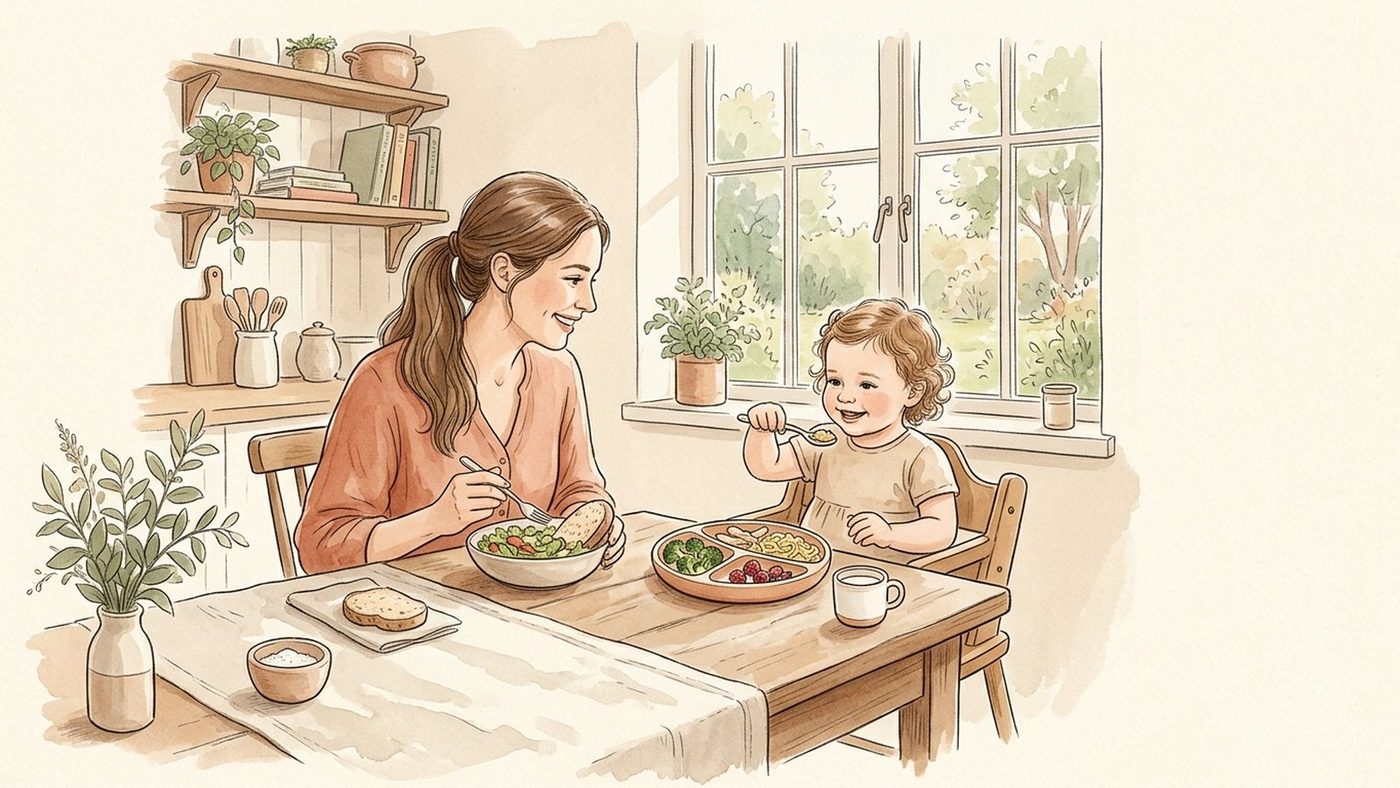
Short answer: A typical 2-year-old needs about 1,000 to 1,400 calories a day, spread over three meals and two or three snacks. Across a whole day, that works out to roughly 3 ounces of grains, 1 cup of vegetables, 1 cup of fruit, 2 ounces of protein foods, and 2 cups of milk or dairy. Toddler portions are small, appetites swing a lot from day to day, and it’s the week’s average that matters, not any single meal.
Key takeaways
- Calories: about 1,000–1,400 a day, depending on size and activity.
- Rhythm: three meals plus two or three planned snacks.
- Daily amounts for a 2-year-old: grains 3 oz, vegetables 1 cup, fruit 1 cup, dairy 2 cups, protein foods 2 oz.
- Milk: about 2 cups (16 oz, 480 ml) a day; too much can crowd out food and iron.
- Your job vs theirs: you choose what, when, and where; your toddler decides how much.
How many calories does a 2-year-old need?
About 1,000 to 1,400 calories a day. Both the AAP and Nemours KidsHealth give that range, and note that where your child falls depends on their size, growth, and how active they are. A small, calm 2-year-old may need closer to the bottom of the range; a tall child who runs all day, closer to the top.
You don’t need to count calories, and for most families it isn’t useful. A toddler’s appetite naturally rises and falls: growth slows after the first year, so many toddlers eat less than parents expect, then have days where they seem bottomless. KidsHealth notes that toddlers may sometimes eat less or skip meals, and that’s expected. Looking at what your child eats across a week gives a much truer picture.
How much food should a 2-year-old eat each day?
KidsHealth, which points parents to the USDA’s MyPlate food guide, lists these daily amounts for 2- and 3-year-olds. They’re totals for the whole day, not per meal:
| Food group | 2-year-olds (per day) | 3-year-olds (per day) | What that looks like |
|---|---|---|---|
| Grains (aim for half whole grain) | 3 oz | 4–5 oz | 1 oz is about 1 slice of bread, ½ cup cooked pasta or rice, or 1 cup dry cereal flakes |
| Vegetables | 1 cup | 1½ cups | A few spoonfuls at several meals adds up quickly |
| Fruit | 1 cup | 1–1½ cups | For example ½ banana plus ½ cup berries (cut up to prevent choking) |
| Dairy | 2 cups | 2½ cups | Milk, yogurt, or cheese |
| Protein foods | 2 oz | 3–4 oz | 1 egg, 1 oz meat or fish, or ¼ cup cooked beans each count as about 1 oz |
The equivalents in the last column are standard USDA “ounce-equivalents”. They’re guides, not targets to hit with a measuring cup. KidsHealth itself suggests trusting your own judgment and your child’s hunger cues alongside the chart.
What does a day of meals look like for a 2-year-old?
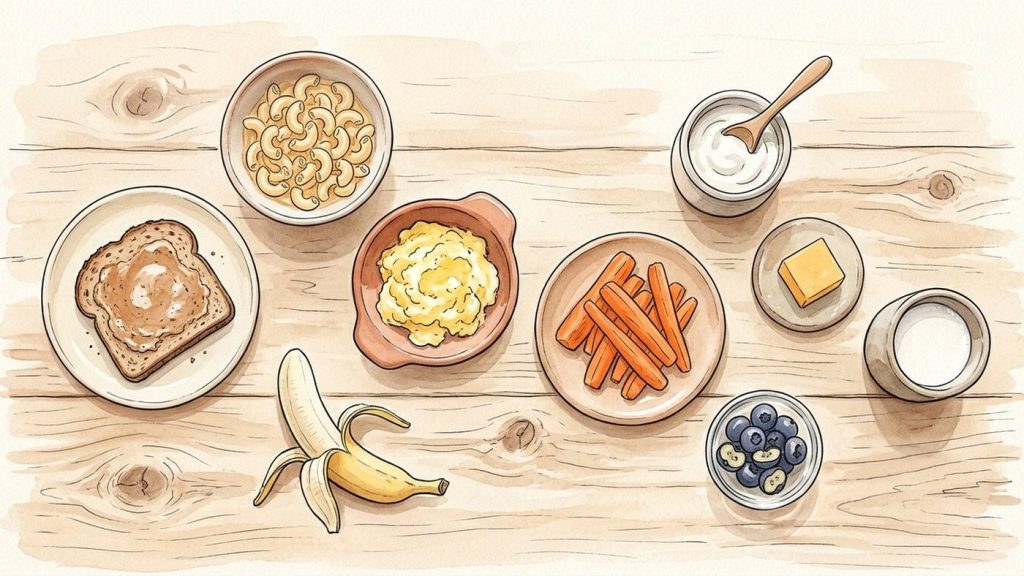
Smaller than most parents picture. The AAP publishes a sample one-day menu planned for a 2-year-old who weighs about 27 pounds (12.5 kg). Here it is in summary:
- Breakfast: ½ cup milk, ½ cup whole-grain cereal or 1 slice toast, ⅓ cup fruit, 1 egg
- Morning snack: 4 crackers with cheese or hummus, or ½ cup cut-up fruit, plus ½ cup water
- Lunch: ½ cup milk, ½ sandwich (1 slice bread, 1 oz meat or fish, cheese, a soft veggie), 2 tablespoons vegetables, ½ cup fruit
- Afternoon snack: ½ cup milk or yogurt, plus a little fruit such as ½ thinly sliced apple or ⅓ cup grapes cut into small pieces
- Dinner: ½ cup milk or yogurt, 2 oz fish, meat, or beans, ⅓ cup whole-grain pasta, rice, or potato, ⅓ cup vegetables
Notice how much of the day is milk and snacks. That’s normal for this age, but it’s also why a toddler who drinks a lot of milk or grazes on snacks may not be hungry at dinner. If dinner is a daily battle, our guide to a toddler who won’t eat dinner goes into why, and how many snacks a toddler should have covers snack timing.
Free download
Free: first foods and allergen tracker
Tick off each allergen and new food, with space for reactions, plus a feeding and diaper log. Part of our free 7-page printables pack.
How much milk should a 2-year-old drink?
About 2 cups (16 oz, 480 ml) a day. The AAP’s 2-year-old feeding guide suggests 16 ounces of low-fat or nonfat milk daily, and its drinks guidance for ages 2 to 5 gives a range of 2 to 3 cups (16 to 24 oz). Most children move from whole milk to low-fat or nonfat around their second birthday, though your pediatrician may advise otherwise.
Milk is nutritious, but it’s filling and low in iron. Children who drink much more than the recommended amount often eat less food, and drinking too much milk is a well-known cause of iron deficiency in toddlers. Water is the best drink between meals, and the AAP suggests no more than 4 ounces (120 ml) of 100% juice a day for 2- to 3-year-olds, with whole fruit preferred. See how much milk should a toddler drink for more.
What the research says: the calorie and food-group amounts come from national dietary guidance and are estimates for an average child, not exact requirements. Real toddlers vary a lot from day to day. The “parent decides what, child decides how much” approach is widely used by pediatric dietitians and fits the AAP’s advice not to force food, but it’s based more on clinical experience than on large trials.
How do I know if my toddler is eating enough?
Look at growth and energy, not the plate. If your child is growing steadily along their curve at checkups, has energy to play, and has regular wet diapers and bowel movements, they’re almost certainly getting enough, even if some days look like they live on air.
Toddlers are generally good at matching what they eat to what they need when adults don’t pressure them. KidsHealth advises not pushing food on a child who isn’t hungry, and notes toddlers signal they’re done by turning away, closing their mouth, or gesturing. The AAP suggests not fixating on amounts and never forcing a child to eat.
How can I help my toddler eat well without battles?
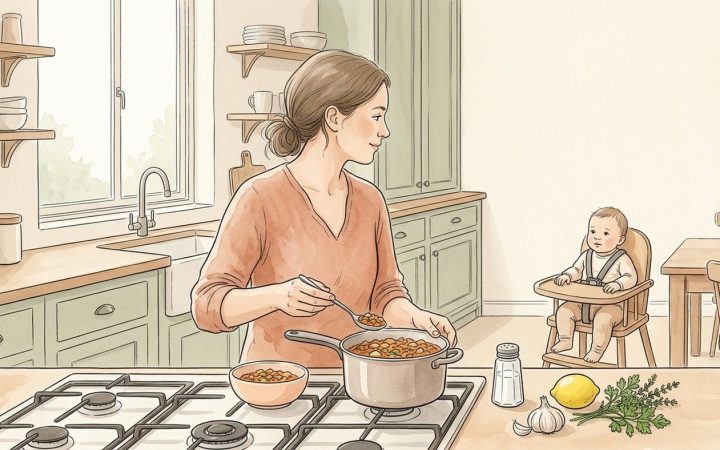
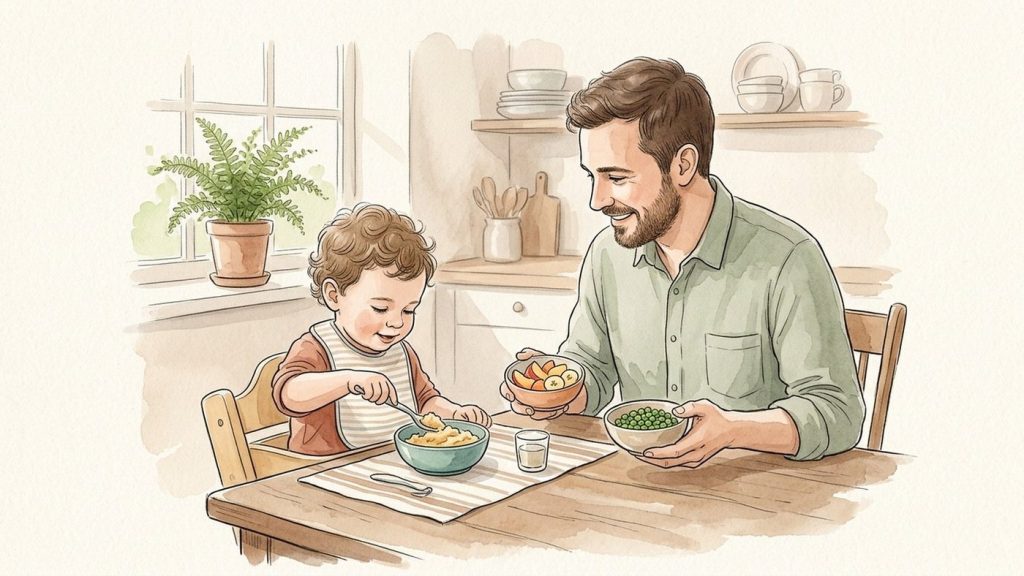
Many pediatric dietitians use dietitian Ellyn Satter’s “division of responsibility”: you decide what food is offered, when, and where; your child decides whether to eat and how much. In practice:
- Set a predictable rhythm. Three meals and two or three sit-down snacks, roughly every 2 to 3 hours, with little grazing in between.
- Serve small portions. Start with a spoonful or two of each food. Your child can always ask for more.
- Include one “safe” food. Put something your child usually eats next to anything new, so there’s always something they can fill up on.
- Offer choices, not ultimatums. The AAP suggests offering 2 to 3 healthy options and letting your child choose.
- Keep offering new foods. Preferences change. Many toddlers need repeated tries before accepting a food; see how many times to offer a new food.
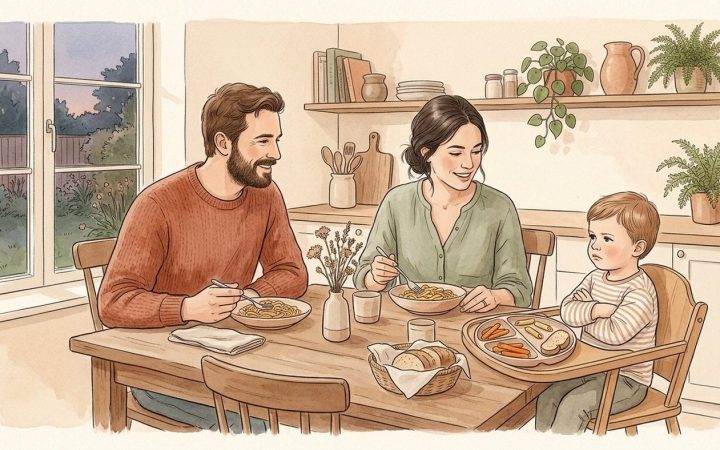
- Eat together and skip the pressure. No bribes, no “three more bites”, no dessert as a reward. Sitting down as a family lets your child copy you.
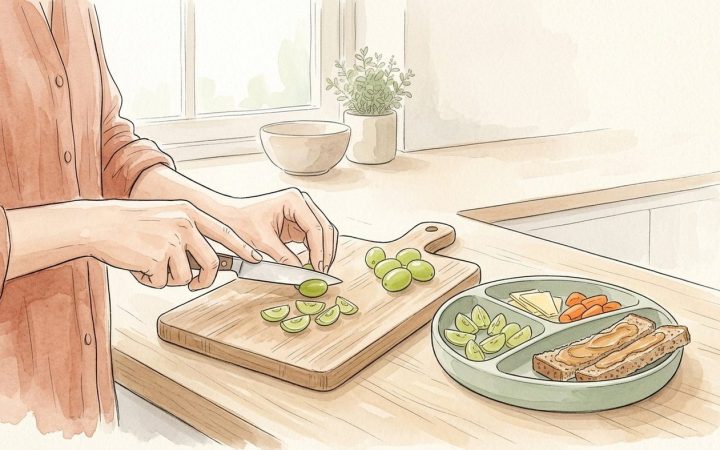
Two-year-olds are still at high risk of choking. Always seat your child to eat and stay with them. Cut grapes and cherry tomatoes into quarters lengthwise, slice hot dogs lengthwise and then into small pieces, spread nut butters thinly, and avoid whole nuts, popcorn, and hard candy. Our guide to choking hazard foods for toddlers has the full list.
Talk to your pediatrician if your toddler:
- is losing weight, or isn’t gaining weight or growing as expected at checkups
- often gags, coughs, or chokes when eating, or seems to have pain eating or swallowing
- eats only a very small number of foods, or refuses whole food groups for weeks
- drinks a lot of milk and eats little food, or seems pale and unusually tired
- has frequent vomiting, diarrhea, or constipation, or mealtimes are causing you real stress
Frequently asked questions
Is it normal for a 2-year-old to eat one good meal a day?
Yes, very common. Many toddlers eat one big meal and pick at the rest. Look at the whole day, or better, the whole week.
How big should a toddler portion be?
Much smaller than an adult’s. In the AAP’s sample menu, a dinner portion is ⅓ cup of pasta or rice, ⅓ cup of vegetables, and 2 ounces of protein. Start small and offer more if they’re still hungry.
Should I make my toddler finish their plate?
No. Pressure to eat tends to backfire. Let your child stop when they show they’re full, and offer food again at the next planned meal or snack.
How much should a 1-year-old eat compared with a 2-year-old?
Somewhat less. One-year-olds also eat three meals and a couple of snacks, but portions are smaller. Their milk is about 2 cups of whole milk a day, according to the AAP.
Does my toddler need a vitamin?
Many toddlers who eat a varied diet don’t, but some do, for example children on restricted or plant-based diets. Ask your pediatrician; see also our guide to a vegetarian toddler diet.
Sources
- Nemours KidsHealth (reviewed 2025). Toddlers: Food and Nutrition. kidshealth.org
- American Academy of Pediatrics, HealthyChildren.org. Sample One-Day Menu for a 2-Year-Old. healthychildren.org
- American Academy of Pediatrics, HealthyChildren.org. Feeding and Nutrition: Your 2-Year-Old. healthychildren.org
- American Academy of Pediatrics, HealthyChildren.org. Recommended Drinks for Young Children Ages 0-5. healthychildren.org
- Ellyn Satter Institute. Division of Responsibility in Feeding. ellynsatterinstitute.org