Short answer: At 8 to 10 months, new night waking is more often about development than teeth. Crawling, pulling up to stand, and separation anxiety all peak around this age, and research links them to more broken sleep. Teething can add a few rough nights, but in a study of 125 babies its symptoms clustered in about 8 days around each tooth, not weeks. If the waking lasts weeks with no tooth in sight, it’s probably the “regression.”
Key takeaways
- The “8-month regression” isn’t a medical diagnosis: it’s a name for the sleep disruption that often comes with big developmental leaps.
- Teething is short: symptoms cluster in roughly the 4 days before a tooth breaks through, the day itself, and 3 days after.
- Development is slower: studies link crawling and pulling to stand with weeks of more fragmented sleep, and separation anxiety can last months.
- Either way: keep bedtime consistent, practice new skills by day, respond calmly, and avoid starting habits you don’t want to keep.
Is it the 8-month sleep regression or teething?
Usually it’s the developmental changes, sometimes with teething on top. The simplest clue is time. Teething disruption tends to come and go within about a week around each tooth. A developmental “regression” usually drags on for a few weeks and often lines up with a new skill or new clinginess.
Use this checklist to sort out what you’re seeing:
| Clue | Points to teething | Points to a developmental “regression” |
|---|---|---|
| How long it lasts | A few days to about a week, around one tooth | Two to six weeks, sometimes longer |
| What you see in the day | Drooling, gum rubbing, chewing on everything, fussiness | New crawling, pulling up, cruising, or babbling |
| What happens at night | Wakes fussy, settles with comfort | Wakes and practices: sits up, stands, crawls, then can’t get back down |
| When you leave the room | No big change | Cries as soon as you walk away, day and night |
| Looking in the mouth | Swollen gum or a tooth edge coming through | No tooth in sight |
| Eating | May eat fewer solids for a day or two | Eating is usually unchanged |
If you see signs from both columns, you’re not imagining it. Many babies get teeth during the same months they learn to crawl and stand, so the two can overlap.
What does the research say about teething and sleep?
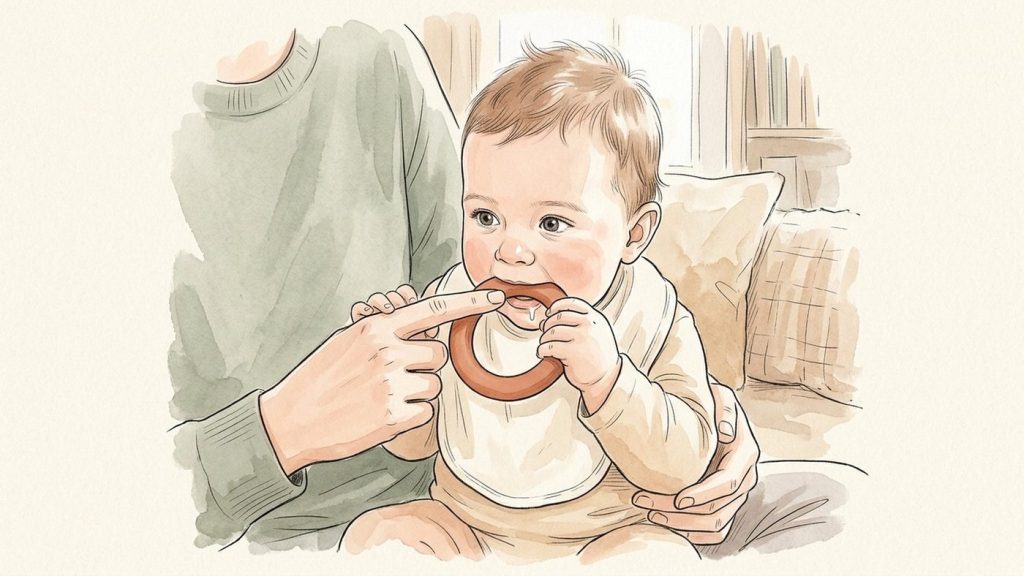
That teething causes less sleep trouble than most of us assume. The best-known study, published in Pediatrics in 2000, followed 125 babies whose parents recorded symptoms every day, along with the exact day each tooth came through. Wakefulness, drooling, gum rubbing, irritability, and eating less were all linked to teething, but only in an 8-day window: the 4 days before a tooth emerged, the day itself, and the 3 days after.
“Sleep disturbance” as a separate measure wasn’t significantly linked to teething in that study. And a summary in American Family Physician noted that no single symptom showed up in more than 35% of the babies who were teething. In other words, many babies cut teeth with barely a rough night.
The same study found that a temperature of about 38.3 to 38.9°C (101 to 102°F) was sometimes linked to teething, but higher fevers, diarrhea, cough, and infection were not. So if your baby has a high fever or seems sick, don’t put it down to teeth. Our teething and sleep guide goes deeper into the study, and our teething symptoms and remedies post covers what helps.
Why do babies wake more at 8 to 10 months?
Because this is one of the busiest stretches of development in the first year, and the brain keeps working on it at night. Three changes stand out:
- Crawling. In a study of 8-month-olds measured with movement-tracking wristbands, babies who had started crawling had more fragmented sleep than babies of the same age who hadn’t. A longitudinal study by the same Israeli research group followed 28 babies and found night wakings rose when crawling began. A press release on that work said sleep returned to its earlier pattern within about three months, but that detail comes from the release rather than the paper.
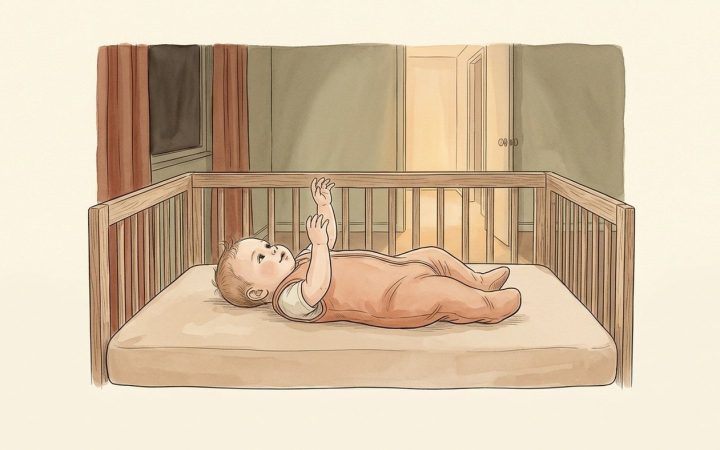
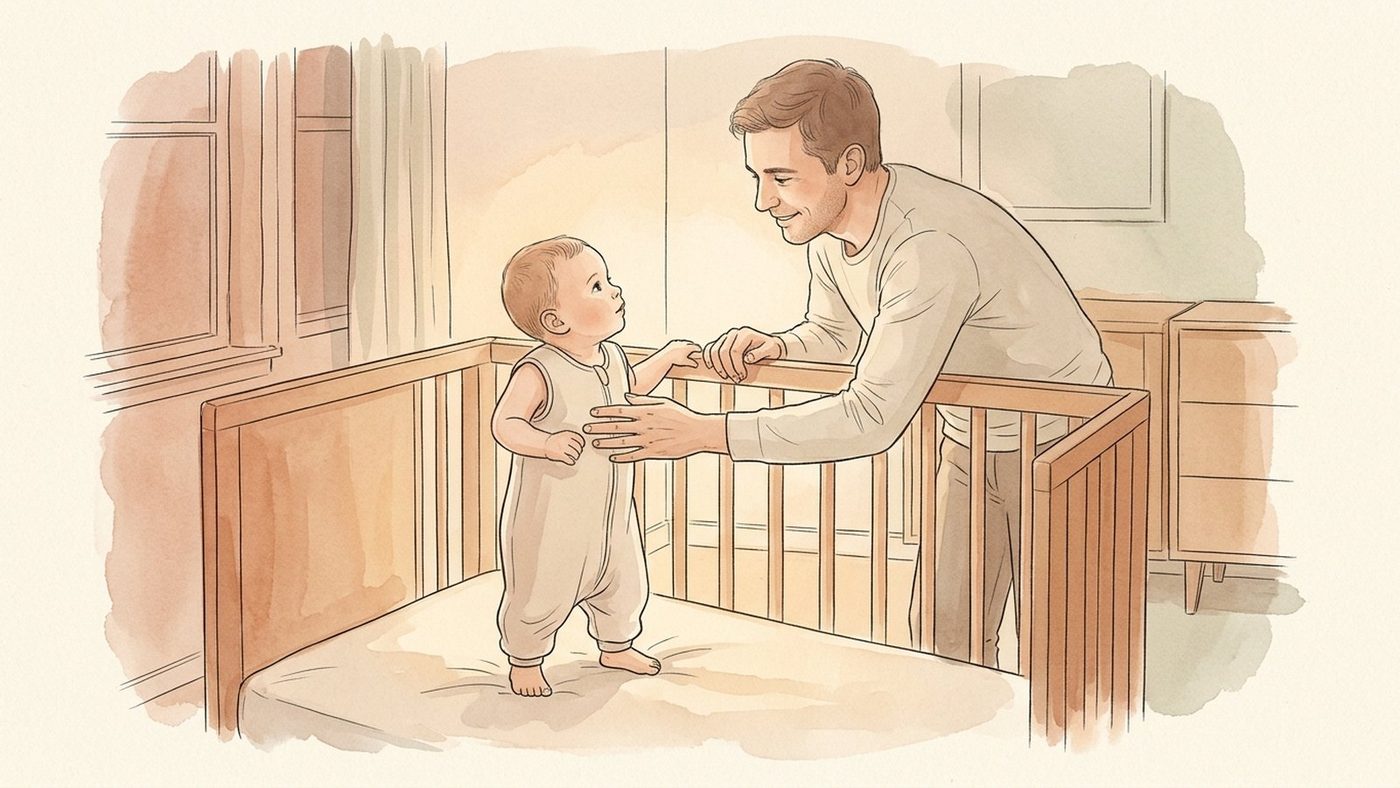
- Pulling up to stand. A 2016 study that followed 20 babies from 7 to 12 months found that, in babies who learned to pull up early, the new skill was linked in time to a period of disrupted sleep. Your baby may pull up in the crib, then cry because they can’t get back down.
- Separation anxiety. The AAP says separation anxiety can start in the second half of the first year and may disrupt sleep for several months, with babies waking and crying for a parent. It usually fades around the second birthday.
Changes in naps add to it. Many babies move from three naps to two somewhere around this age, and an awkward schedule during the switch can lead to overtiredness. Our guide to the 3-to-2 nap transition and our wake windows by age chart can help you adjust.
What the research says: the teething study is fairly large and recorded symptoms every day, but it relied on parent reports. The studies on crawling, standing, and sleep are small, with 20 to about 60 babies, so they show a link but can’t tell us how long disruption lasts for most families. No study defines an “8-month sleep regression” as a set event. It’s a useful label, not a diagnosis.
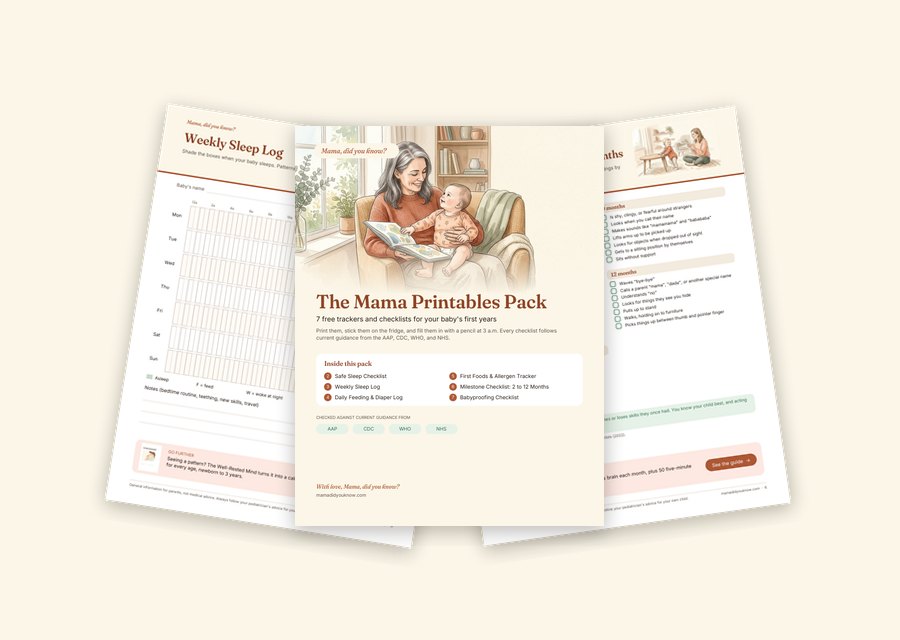
Free download
Free: safe sleep checklist and sleep log
Track naps and night wakings for a week and the pattern shows itself. Part of our free 7-page printables pack.
How long does the 8-month sleep regression last?
Often a few weeks, but there’s no reliable number. Parents and sleep coaches commonly describe two to six weeks, and that fits with how long it takes most babies to master a new skill. The research above suggests that sleep tends to settle once a skill becomes routine, but nobody has measured it well across many babies. Separation anxiety can last longer and come in waves.
For reference, the American Academy of Sleep Medicine, with AAP endorsement, recommends 12 to 16 hours of sleep in 24 hours, including naps, for babies 4 to 12 months old. A few weeks of broken nights within that range is normal. Our baby sleep chart by age shows typical totals.
What can I do to help my baby sleep?
Keep things steady and give the new skills an outlet in the day. These steps work whether the cause is teeth, crawling, or clinginess:
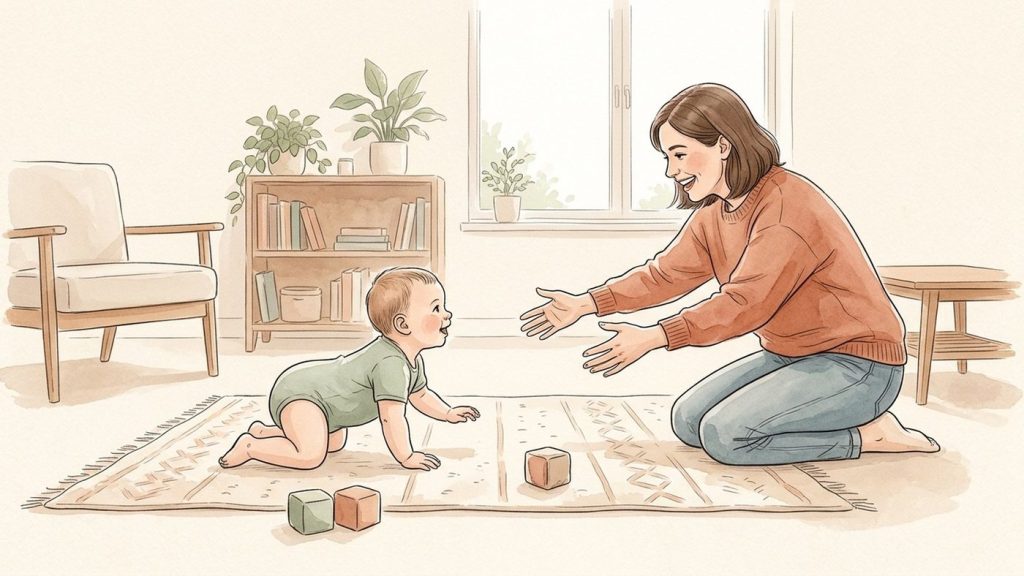
- Practice skills in daylight. Give lots of floor time to crawl, pull up, and practice sitting back down. A baby who can lower themselves from standing is less likely to get stuck in the crib.
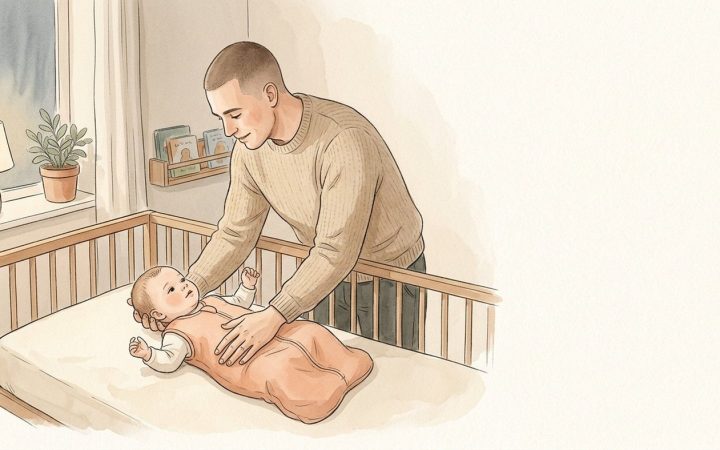
- Keep the bedtime routine the same. A predictable bath, feed, book, and song sequence is reassuring when everything else is changing.
- Play separation games. Peekaboo and short “I’ll be right back” trips out of the room help your baby learn that you return.
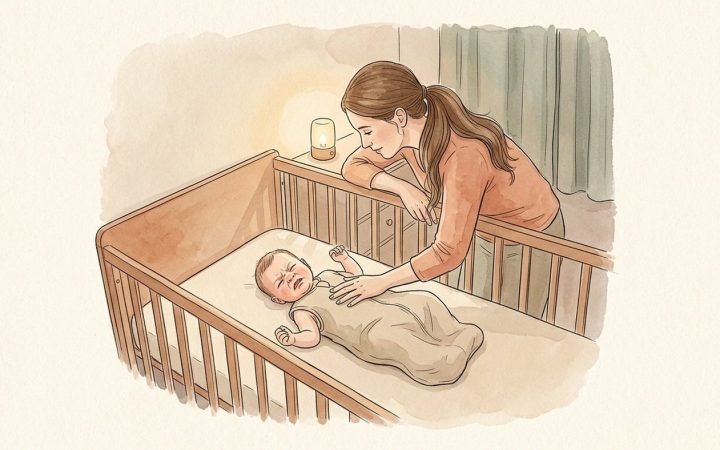
- Pause, then respond calmly. The AAP suggests giving your baby a few minutes to settle, then reassuring with a dim light and a soft voice, and leaving once they’re calm.
- If your baby stands in the crib, lay them back down. Gently, without a big fuss, as many times as needed. Lower the mattress to its lowest setting once your baby can pull up.
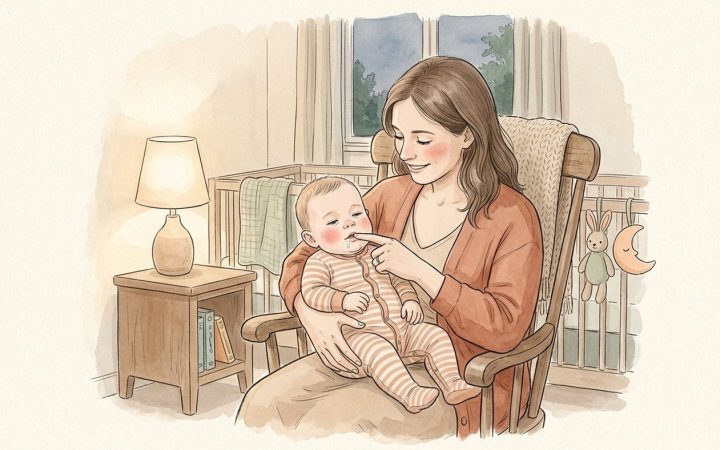
- Soothe sore gums safely. A cold (not frozen) teething ring or a clean finger rubbing the gum before bed can help. For pain relief, ask your pediatrician or pharmacist; any dose is based on your baby’s weight.
- Think before adding new sleep habits. It’s fine to comfort your baby more for a while. Just be aware that a new habit, like feeding back to sleep every waking, can outlast the phase that started it.
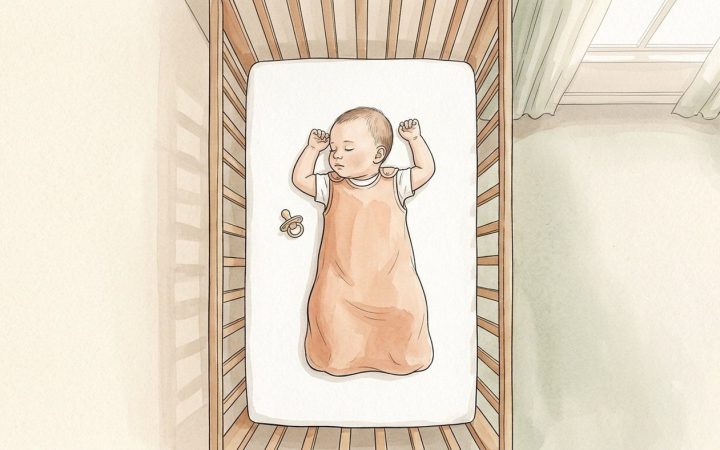
Skip teething gels with benzocaine, homeopathic teething tablets, and amber or teething necklaces and bracelets. The FDA warns against all of them for babies because of risks including a rare blood disorder, choking, and strangulation. Keep the crib bare, too: no pillows, bumpers, or loose blankets, even for a restless sleeper.
Should I sleep train during the 8-month regression?
That’s a personal choice, and experts differ on timing. Some suggest waiting until a new skill is mastered or a tooth is through, so you’re not working against a temporary disruption. Others argue that a consistent, gentle approach is helpful now, because separation anxiety can last months. If you’re weighing it up, our evidence review on whether sleep training works lays out what studies show about different methods.
Call your pediatrician if:
- your baby has a fever of 38.9°C (102°F) or higher, or any fever with a rash, diarrhea, vomiting, or cough, since these aren’t caused by teething
- your baby pulls at an ear with fever or seems in pain when lying down
- your baby snores loudly most nights, pauses in breathing, or struggles to breathe while asleep
- the waking lasts more than a month with no clear cause, or your baby is feeding much less or has fewer wet diapers
If your baby is struggling to breathe, is very hard to wake, or seems seriously unwell, call your local emergency number.
Frequently asked questions
Is the 8-month sleep regression real?
The sleep disruption is real, but “regression” isn’t a medical term. Small studies link crawling, pulling to stand, and separation anxiety with more night waking around this age.
Can teething cause night waking for weeks?
Not usually. In the Pediatrics study, symptoms clustered in about 8 days around each tooth. If waking lasts weeks without a tooth appearing, look for other causes.
Is it 8 months or 9 or 10?
Any of these. The timing follows your baby’s development, not the calendar, so it may show up anywhere from about 8 to 10 months, or not at all.
My baby stands in the crib and cries. What do I do?
Lay them back down calmly, and practice sitting down from standing during the day. It usually passes once they can get down on their own.
Should I bring my baby into my bed during the regression?
The AAP advises against bed-sharing. You can comfort your baby in your arms and then return them to their own crib, which can stay in your room if you’re room-sharing.
Sources
- Macknin ML, et al. (2000). Symptoms associated with infant teething: a prospective study. Pediatrics. pubmed.ncbi.nlm.nih.gov
- American Family Physician (2000). Tips from Other Journals: Symptoms Associated with Infant Teething. aafp.org
- Scher A (2005). Crawling in and out of sleep. Infant and Child Development. doi.org
- Atun-Einy O, Scher A (2016). Sleep disruption and motor development: Does pulling-to-stand impact sleep-wake regulation? Infant Behavior and Development. cris.haifa.ac.il
- American Academy of Pediatrics, HealthyChildren.org. Separation Anxiety & Sleeping Trouble in Young Children. healthychildren.org
- Paruthi S, et al. (2016). Recommended Amount of Sleep for Pediatric Populations: A Consensus Statement of the American Academy of Sleep Medicine. Journal of Clinical Sleep Medicine. pubmed.ncbi.nlm.nih.gov
- US Food and Drug Administration. Safely Soothing Teething Pain in Infants and Children. fda.gov
- American Academy of Pediatrics, HealthyChildren.org. How to Keep Your Sleeping Baby Safe: AAP Policy Explained. healthychildren.org