Short answer: A false start is when a baby falls asleep at bedtime, then wakes up crying 20 to 60 minutes later, around the end of the first sleep cycle. It’s a sleep-consultant term, not a medical diagnosis, and it usually means the timing was off: either your baby got overtired from a long last wake window or too little daytime sleep, or wasn’t tired enough yet. Adjusting the last nap and bedtime by 15 to 30 minutes fixes many false starts within a week or two.
Key takeaways
- What it is: a wake-up roughly 20 to 60 minutes after falling asleep at bedtime, often with crying, after which the baby may struggle to resettle.
- Why then: babies’ sleep cycles are shorter than adults’, so the first natural “surfacing” point comes early in the evening.
- Most common cause: timing. A long last wake window or short naps can leave a baby overtired; a very late nap can leave them under-tired.
- What helps: shift bedtime or the last nap by 15 to 30 minutes, keep the routine calm, and give changes a week before judging.
- Evidence check: there are no studies on “false starts” as such. The advice rests on general sleep science and common practice.
What is a false start in baby sleep?
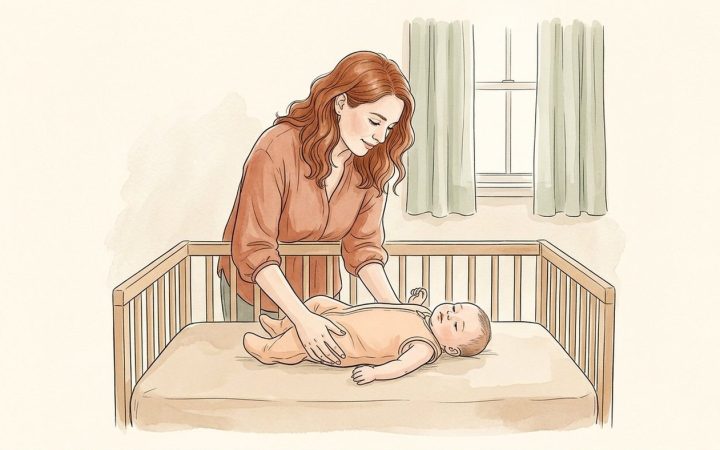
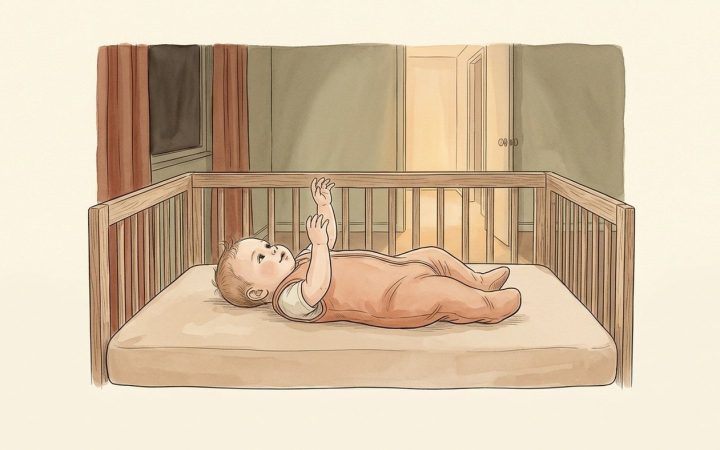
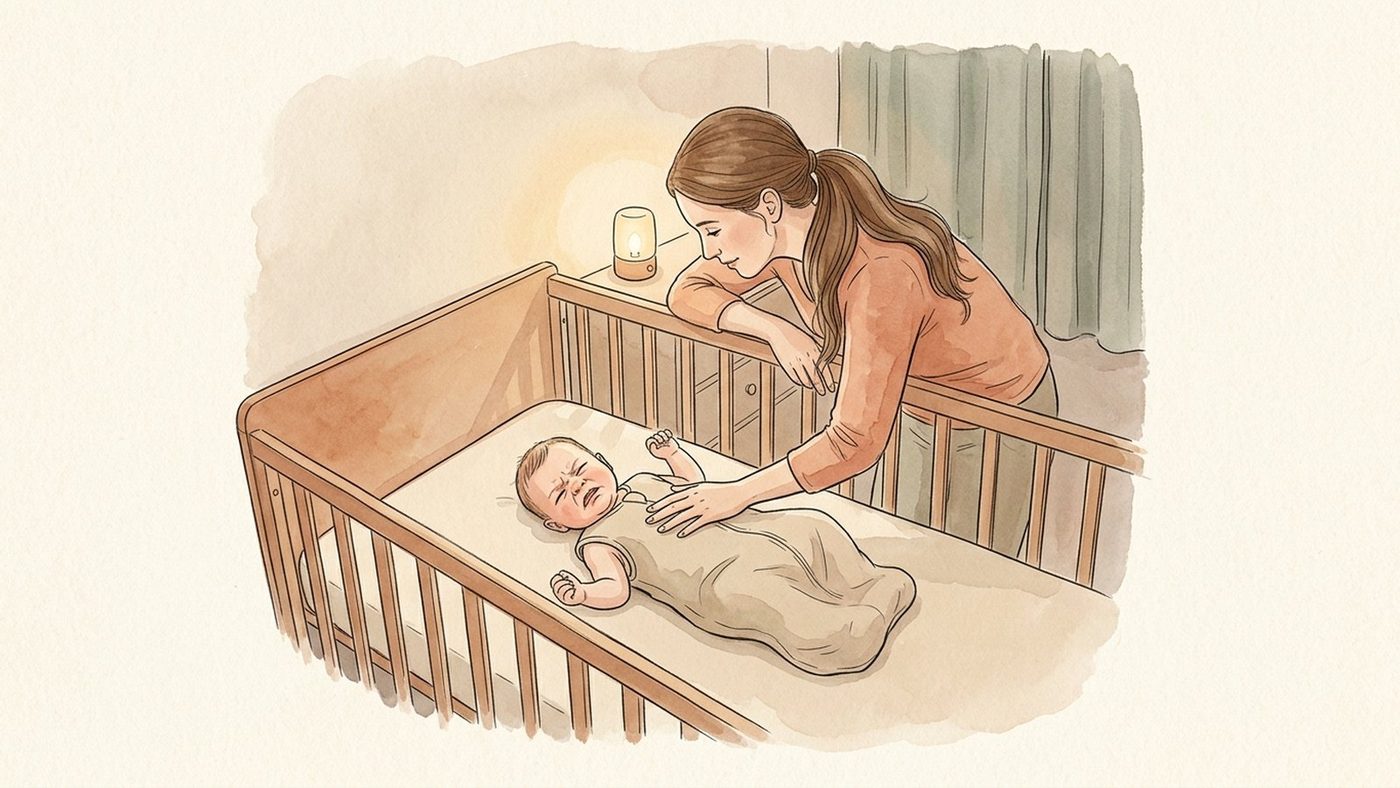
A false start is a bedtime that doesn’t “stick”: your baby falls asleep, then wakes up upset somewhere between about 20 and 60 minutes later, as if the night is starting over. Parents usually notice it because it happens at the same time most evenings, often just as they’ve crept out of the room.
The phrase comes from infant sleep consultants rather than from pediatric guidelines. You won’t find “false start” in AAP or NHS advice. That doesn’t mean it isn’t real, only that it describes a pattern rather than a condition. It’s most often talked about from around 4 months, when sleep becomes more organized, through the second year.
It helps to separate a false start from other evening and night wakings:
| Pattern | When it happens | Typical feel | Common timing clue |
|---|---|---|---|
| False start | 20–60 minutes after falling asleep at bedtime | Sudden, upset crying; may be hard to resettle | Long last wake window or short naps (overtired), or a late nap (under-tired) |
| Split night | Usually between about midnight and 4 a.m. | Wide awake and often calm for an hour or more | Too much daytime sleep or a very early bedtime |
| Early morning waking | Roughly 4–6 a.m. | Awake and ready to start the day | Light sleep near morning, light in the room, nap timing |
| Night feeds | Through the night, more often in younger babies | Hungry, roots, settles after feeding | Age and feeding needs |
If your baby’s wakings look more like the middle-of-the-night party, our guide to baby split nights covers that pattern. For dawn wake-ups, see baby waking at 5am.
Why does my baby wake 30 to 45 minutes after bedtime?
Because that’s roughly where the first sleep cycle ends. All of us cycle through lighter and deeper sleep through the night and briefly surface between cycles. Adults usually don’t remember these moments. Babies sometimes wake fully, and if something about falling asleep felt “off”, they may not drift back down.
Infant sleep cycles are shorter than the roughly 90-minute cycles of adults. Estimates for babies vary by study and age, from around 40 to 60 minutes, and cycles lengthen gradually through early childhood. The AAP notes that babies don’t have regular sleep cycles until about 4 months, which is one reason false starts are mostly discussed from that age on.
Babies also enter sleep differently. The AAP describes newborn sleep as roughly half active (REM) sleep, with twitching, eye movements under the lids, and irregular breathing, and half quiet sleep, which gets progressively deeper and harder to wake from. In the first part of the night, a baby passes from drowsiness into these stages, and the transition at the end of that first cycle is a natural weak spot.
So the question isn’t really “why does my baby surface?” Every baby does. It’s “why can’t my baby get back into the next cycle on their own?” That’s where timing comes in.
Is a false start caused by being overtired or under-tired?
It can be either, which is why the fix depends on your baby’s day. Sleep scientists describe sleep as being driven by two systems working together, an idea known as the two-process model:
- Sleep pressure builds the longer your baby is awake and drains away during sleep, including naps.
- The body clock (circadian rhythm) makes some times of day easier for sleep than others, and in babies it develops over the first months.
When the two line up, bedtime sleep tends to be solid. When they don’t, the first cycle can end in a full wake-up. The model was developed from adult research, and applying it to false starts is a reasonable inference rather than something that’s been tested in babies. Still, it explains the two common versions parents describe:
| Clue in your baby’s day | Likely version | What to try first |
|---|---|---|
| Short naps, a skipped nap, or a long stretch awake before bed | Overtired | Move bedtime 15–30 minutes earlier for a few days |
| Fussy, rubbing eyes, or very wired at bedtime | Overtired | Start the wind-down earlier and keep it calm and dim |
| A late-afternoon nap that ran long or ended close to bedtime | Under-tired (not enough sleep pressure) | Cap or end the last nap earlier, or push bedtime 15–30 minutes later |
| Happy and chatty when put down, takes ages to fall asleep | Under-tired | Try a slightly longer last wake window |
| Recently dropped a nap | Either, while the day rebalances | Use an earlier bedtime temporarily |
Our wake windows by age guide gives typical ranges for how long babies stay awake between sleeps. Treat them as starting points, not rules: babies vary, and your baby’s own cues matter more than the chart.
Free download
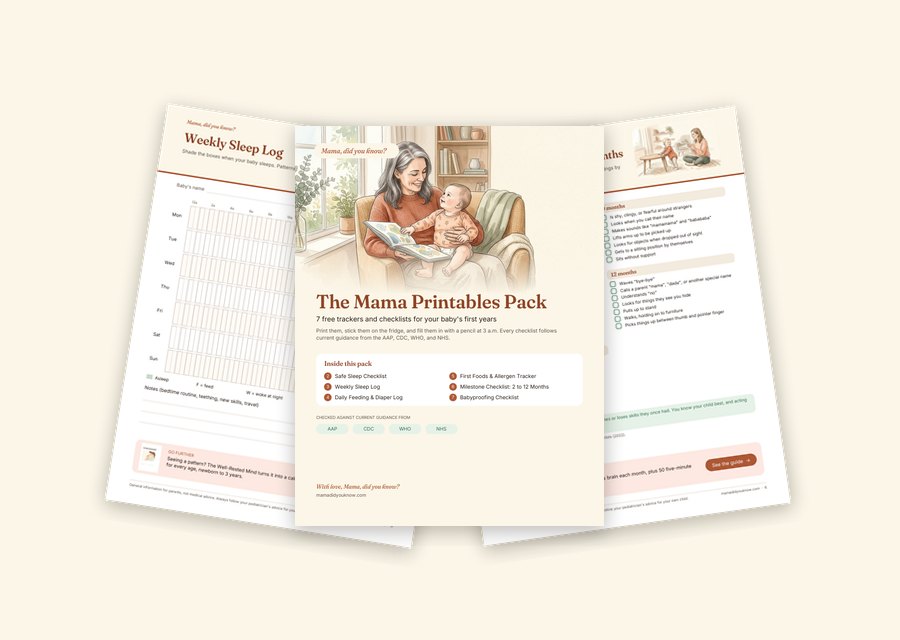
Free: safe sleep checklist and sleep log
Track naps and night wakings for a week and the pattern shows itself. Part of our free 7-page printables pack.
How do I fix false starts?
Start by changing one thing at a time, usually the timing of the last nap or bedtime, and keep notes for a week. These steps reflect common practice from sleep professionals rather than trial evidence, so adapt them to your baby:
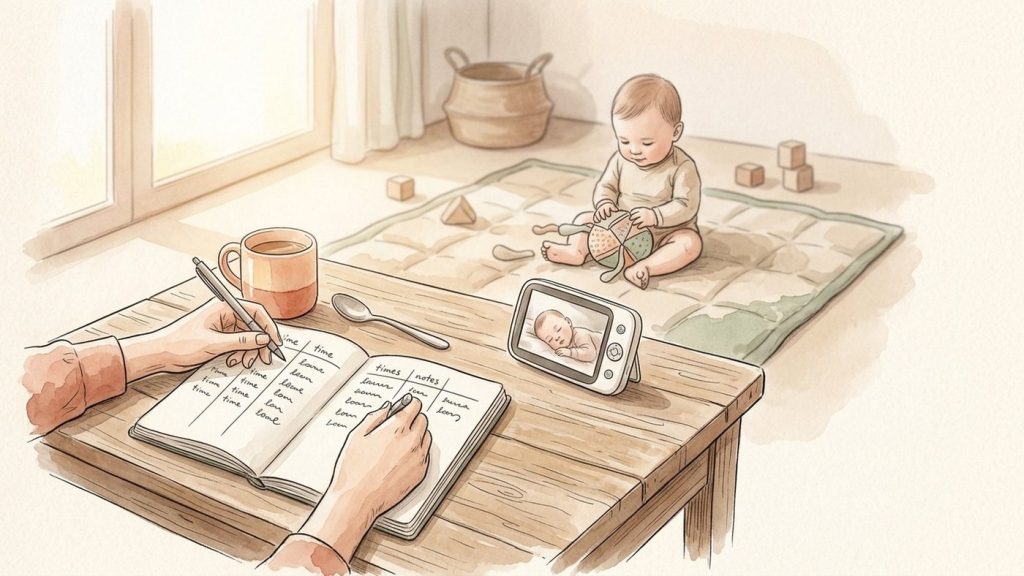
- Track three days. Write down nap start and end times, bedtime, and when the wake-up happens. Patterns jump out quickly on paper.
- Decide which version you’re seeing. Use the table above. Short naps and a long last stretch point to overtired; a long, late nap points to under-tired.
- Shift by 15 to 30 minutes. Move bedtime earlier (overtired) or end the last nap earlier (under-tired). Small shifts are easier to read than big ones.
- Keep the wind-down short and predictable. Feed, bath or wash, pajamas, sleep sack, a book or song, lights dim. The same order each night helps your baby’s body anticipate sleep.
- Watch how your baby falls asleep. The AAP suggests putting babies down drowsy but awake, so they learn to fall asleep on their own. A baby who falls asleep the same way they’ll find themselves after the first cycle may find it easier to link cycles.
- Respond in the same way each time. Pause briefly to see if it’s a passing grumble, then go in calmly. Keep the room dark and the interaction boring.
- Give it a week. One bad night tells you little. If nothing has changed after a week or two, try the opposite adjustment.
How much sleep does my baby need in a day?
Infants aged 4 to 12 months need 12 to 16 hours of sleep in 24 hours, including naps, and toddlers aged 1 to 2 need 11 to 14 hours, according to a 2016 consensus from the American Academy of Sleep Medicine that the AAP endorsed. Those ranges are wide on purpose, because healthy babies differ.
Total sleep matters for false starts because it tells you which way to lean. A baby sleeping well below the range for their age is more likely to be running on empty by bedtime. A baby at the top of the range with a lot of daytime sleep may simply not be tired enough at 7 p.m. Our baby sleep chart by age breaks this down further.
What the research says: no published study has looked at “false starts” by that name, and there’s no research comparing ways to fix them. What we do have is good evidence that babies’ sleep cycles are shorter than adults’, solid consensus on how much sleep babies need, and a well-established model of sleep pressure and body-clock timing from adult sleep science. The timing advice here is a sensible application of that science, not a proven treatment.
Could something other than timing be waking my baby?
Yes, sometimes. If adjusting the schedule doesn’t help, look at what else is happening around bedtime:
- Hunger. A sleepy, small bedtime feed may not hold younger babies for long. Some families move the feed earlier in the routine so the baby is more awake for it.
- Room conditions. Light from a hallway, noise from the house, or a room that’s too warm can all nudge a baby out of light sleep. UK guidance suggests a room temperature of about 16–20°C (61–68°F).
- Big developmental leaps. Rolling, sitting, crawling, and pulling up often show up in the crib first. See our post on the 4-month sleep regression for how development and sleep interact.
- Illness or discomfort. A stuffy nose or a cold can disrupt the first stretch of sleep for a few days. Once your baby is well, the pattern usually settles.
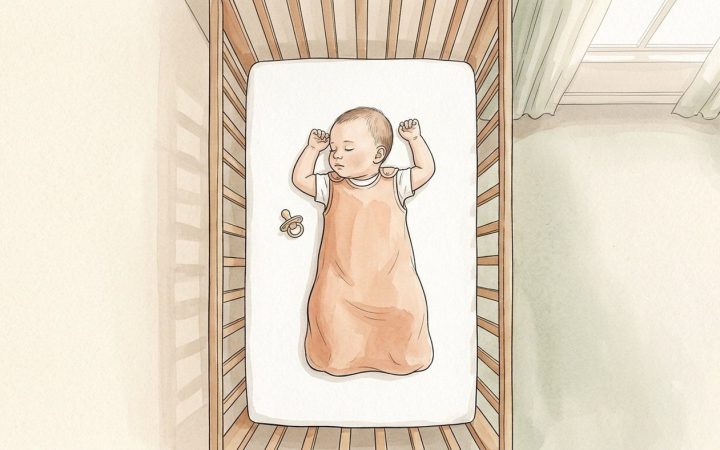
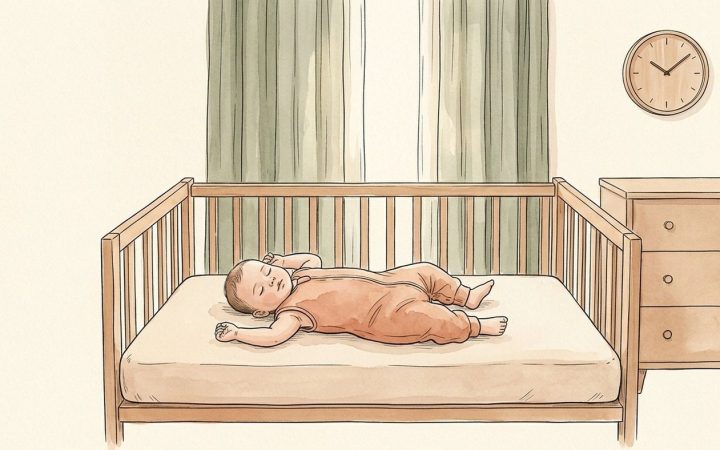
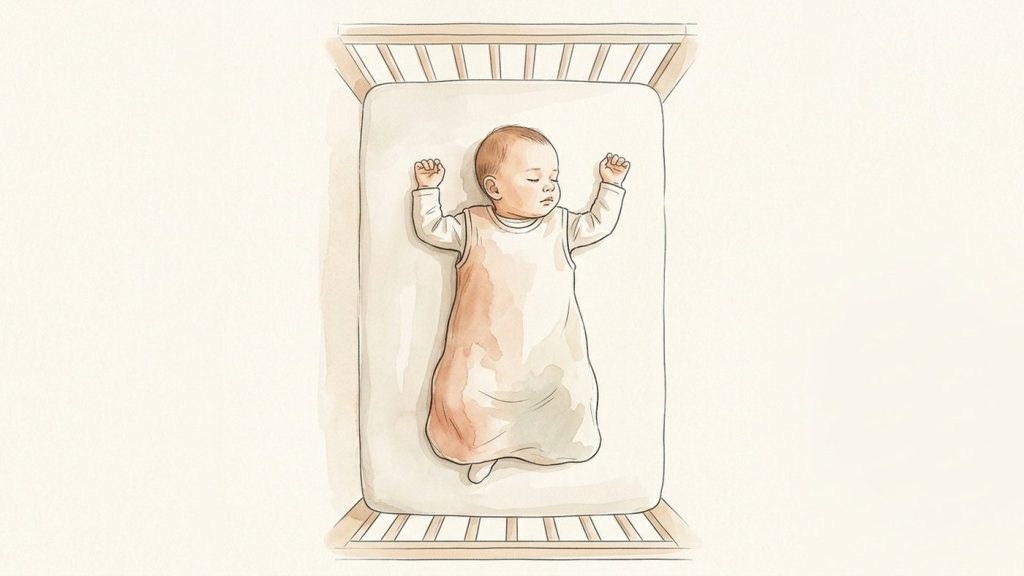
Whatever you change, keep the AAP’s safe sleep basics the same: place your baby on their back for every sleep, on a firm, flat surface with only a fitted sheet, with no pillows, bumpers, blankets, or toys. Use a non-weighted sleep sack for warmth, and don’t let your baby sleep in a swing or on an incline to “get them through” the first cycle.
Talk to your pediatrician if:
- your baby snores most nights, breathes noisily, or seems to struggle to breathe during sleep, which the AAP lists among possible signs of sleep apnea
- wakings come with signs of pain, fever, vomiting, or your baby seems unwell
- your baby is feeding poorly or not gaining weight as expected
- you’re exhausted and struggling to cope; your pediatrician can help, and so can your own doctor
If your baby’s breathing stops for more than 20 seconds, or their skin looks pale, bluish, or gray, call your local emergency number right away.
Frequently asked questions
At what age do false starts happen?
They’re most often described from about 4 months, when babies develop more regular sleep cycles, through the toddler years. Newborns wake often anyway, so the pattern is hard to spot before then.
Should I feed my baby during a false start?
If your baby seems hungry, yes, especially if they’re young or had a small bedtime feed. If feeding becomes the only way they resettle every night, it may be worth looking at the bedtime feed and timing instead.
Does an earlier bedtime really help an overtired baby?
Many families find that it does, and it fits with what we know about sleep pressure. But it hasn’t been tested in trials for false starts, so treat it as an experiment and watch your baby’s response.
Is a false start the same as a sleep regression?
Not exactly. “Regression” usually means a broader, temporary shake-up of sleep around a developmental change. A false start is one specific wake-up after bedtime. They can overlap, though.
Will sleep training fix false starts?
It may help a baby link sleep cycles, but it won’t fix a timing problem on its own. Our post on whether sleep training works walks through what the studies show.
Sources
- American Academy of Pediatrics, HealthyChildren.org. Getting Your Baby to Sleep. healthychildren.org
- American Academy of Pediatrics, HealthyChildren.org. Stages of Newborn Sleep. healthychildren.org
- Paruthi S, Brooks LJ, D’Ambrosio C, et al. (2016). Recommended Amount of Sleep for Pediatric Populations: A Consensus Statement of the American Academy of Sleep Medicine. Journal of Clinical Sleep Medicine. pmc.ncbi.nlm.nih.gov
- Borbély AA (2022). The two-process model of sleep regulation: Beginnings and outlook. Journal of Sleep Research. pmc.ncbi.nlm.nih.gov
- American Academy of Pediatrics, HealthyChildren.org. Sleep Apnea in Children: Detection and Treatment. healthychildren.org
- American Academy of Pediatrics, HealthyChildren.org. How to Keep Your Sleeping Baby Safe: AAP Policy Explained. healthychildren.org
- Sleep Foundation. Baby Sleep: How Much Sleep Do Babies Need? sleepfoundation.org
- The Lullaby Trust. Dress your baby for sleep. lullabytrust.org.uk