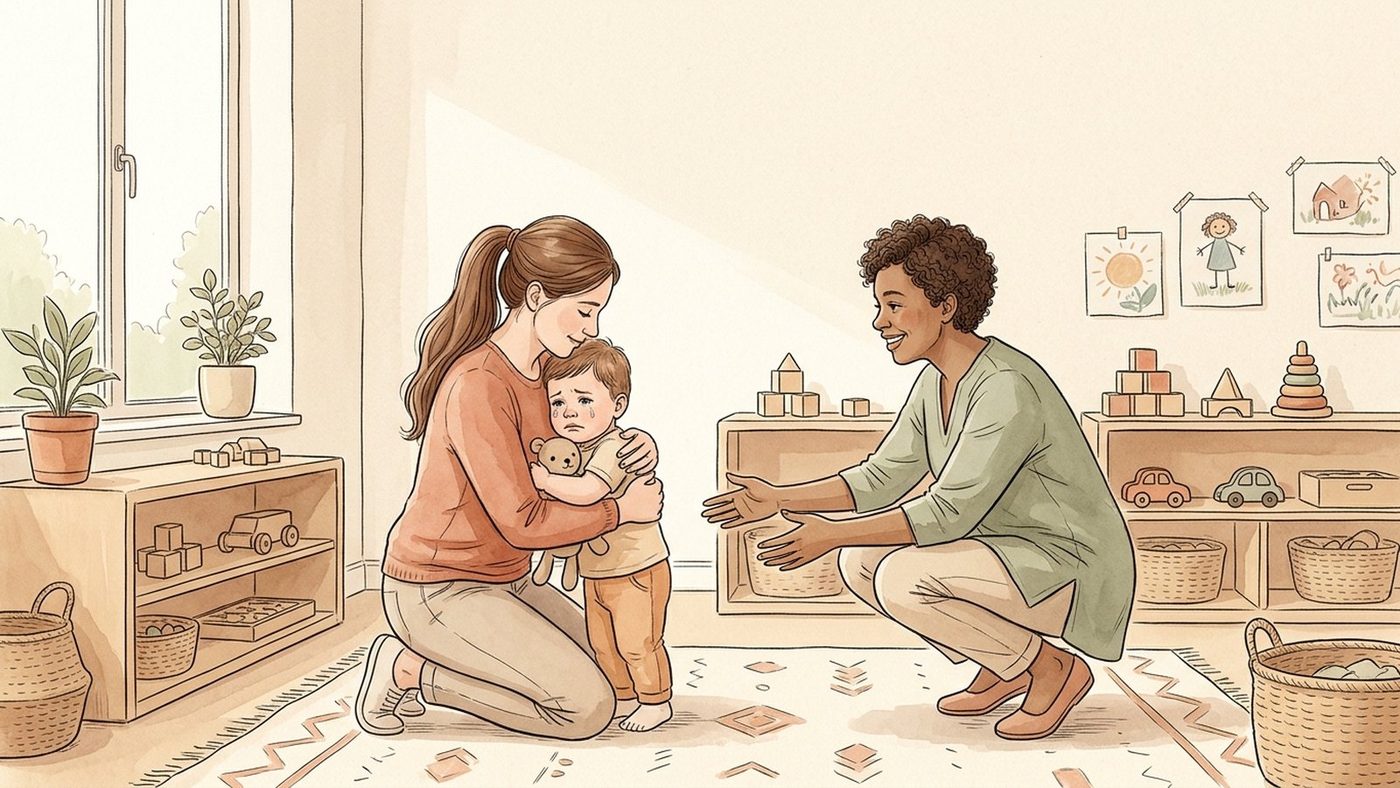
Short answer: Crying at daycare drop-off is a normal sign of separation anxiety, which the AAP says often becomes strong around 9 months and shows up again in many toddlers at 15 to 18 months. It usually eases as your child learns, day by day, that you always come back. What helps most is a short, warm, predictable goodbye: say goodbye clearly, leave without lingering, and come back when you said you would. Many children stop crying soon after the parent leaves, and most settle into a new routine within a few weeks.
Key takeaways
- It’s normal: separation anxiety is a healthy sign of attachment, and it’s common from late infancy through the toddler years.
- Crying isn’t a bad sign: in one study, securely attached toddlers actually cried more when their mothers left on the first days of child care.
- Keep goodbyes short: the AAP says lingering extends the transition and the anxiety.
- Be predictable: same ritual, same words, and come back when you promised.
- Ease in if you can: a gradual start with you present for the first days may help.
Why does my toddler cry at daycare drop-off?
Because they love you and haven’t yet learned that goodbyes are temporary and safe. Separation anxiety is so expected that the CDC lists “reacts when you leave (looks, reaches for you, or cries)” among its 9-month milestones. It usually follows “object permanence”, a baby’s growing understanding that people and things still exist when they can’t see them. The AAP says most babies develop stronger separation anxiety at around 9 months, sometimes as early as 4 to 5 months, and that many toddlers go through it again at around 15 to 18 months, when reactions can be loud, tearful, and hard to stop.
Nemours KidsHealth adds that while it often appears between 8 months and 1 year, some children start later, between 18 months and 2½ years. Children with certain temperaments can be more sensitive to separations for longer. If your baby is still young, our posts on object permanence and when stranger anxiety starts explain the brain development behind it.
Drop-off is also hard for practical reasons. It often happens first thing in the morning, sometimes before breakfast is finished, in a busy room full of noise. The AAP notes separations are harder when children are hungry, tired, or unwell.
Is it bad if my child cries every time I leave?
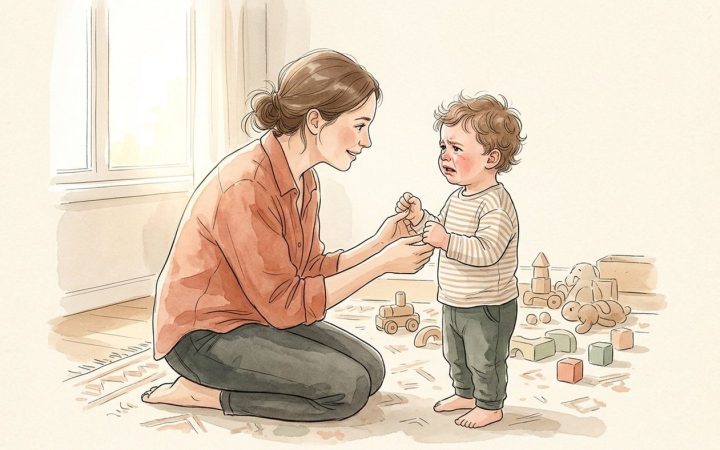
No. Crying at separation is not a sign that something is wrong with your child or your relationship. A study of 70 toddlers about 15 months old who were starting child care found that the securely attached toddlers fussed and cried more in the first days without their mothers than insecurely attached toddlers did. Protest is an expected reaction from a child who trusts their parent.
The same study, led by Lieselotte Ahnert and published in Child Development in 2004, found that toddlers’ stress hormone (cortisol) levels rose in the first hour after their mothers left during the first days of care. It also found that attachments stayed or became secure when mothers spent more days helping their children adjust before leaving them. That supports easing children in gradually where you can.
What the research says: research on the start of child care, including stress-hormone studies, shows the transition is stressful for many toddlers and that a gradual, parent-supported start may help. But studies are small, and we didn’t find good data on how long drop-off crying typically lasts. The goodbye tips below come from AAP and KidsHealth guidance based on clinical experience rather than trials.
How do I make daycare drop-off easier?
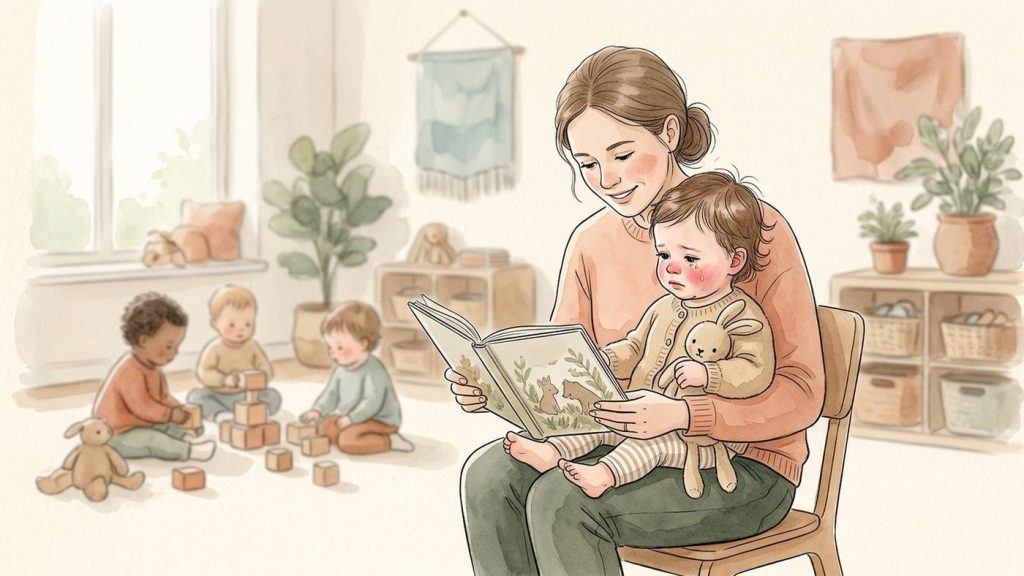
Make goodbyes short, warm, and the same every day. These steps combine advice from the AAP and Nemours KidsHealth:
- Practice before day one. Short separations with grandparents or a sitter, and a visit or two to the daycare with you there, help your child get familiar with the place and people.
- Start gradually if possible. Shorter days, or staying for part of the first few sessions, let your child build trust with their new caregiver while you’re nearby.
- Arrive fed and rested. Hunger and tiredness make separation harder, so give breakfast time and protect sleep the night before.
- Create a goodbye ritual. The AAP suggests a quick routine, such as a special handshake, a hug and a kiss, or waving from the window. Use it every day.
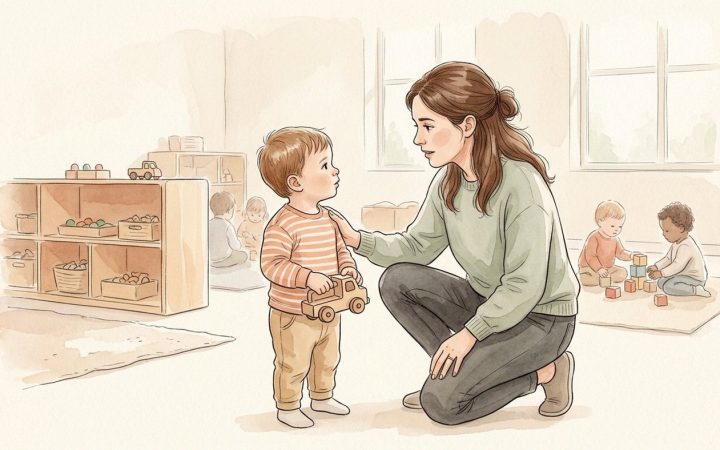
- Say goodbye, then go. Give your child your full attention, say a confident goodbye, hand them to a familiar caregiver, and leave, even if they cry. The AAP warns that lingering extends the transition.
- Explain when you’ll be back, in their terms. “I’ll pick you up after nap time” makes more sense to a toddler than “at 4 o’clock”.
- Come back when you promised. Keeping your word builds trust. The AAP says returning early to “check in” can prolong the anxiety.
The NHS suggests leaving something linked to you, such as a favorite toy or a scarf that smells of you, as a comfort object; check what your daycare allows. It also advises smiling and waving goodbye confidently rather than slipping away, because children pick up on tension. Sneaking out can feel kinder in the moment, but an open, predictable goodbye helps children learn to trust that you’ll return.

Free download
Free: milestone checklist, 2 to 12 months
The CDC milestones on one page, to tick off as your baby grows. Part of our free 7-page printables pack.
How long does it take a toddler to adjust to daycare?
Usually a few weeks, but it varies a lot. There’s no good research on an exact timeline. Many children cry hardest in the first days, then gradually less, and for many the crying stops fairly soon after the parent has gone. KidsHealth notes that children often calm down soon after you go, and encourages parents to trust the caregiver to handle it.
Expect a few bumps along the way. Crying can return after a holiday, an illness, a move to a new room, or a big change at home such as a new baby. That’s a normal setback, not a sign you need to start over.
| What you see | What it usually means | What to do |
|---|---|---|
| Cries at drop-off, settles within minutes | Normal separation protest | Keep the goodbye short and consistent |
| Fine for a week, then cries again | Common “second wave” as the novelty wears off | Stick with the same routine |
| Crying returns after a break or illness | Temporary setback | Expect a few hard days; keep the ritual |
| Clingy and tired in the evenings | Big days use a lot of energy | Extra cuddles, early bedtime, calm evenings |
| Still very distressed all day after several weeks | Not settling as expected | Talk with the caregivers and your pediatrician |
What should I ask the daycare?
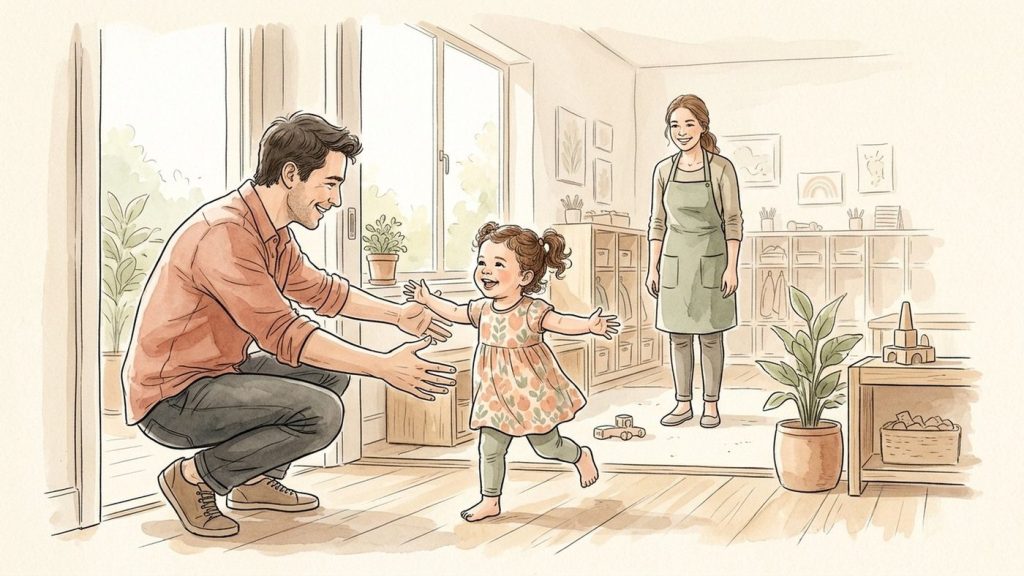
Ask how long your child cries after you leave and what helps them settle. Most caregivers are happy to send a quick message or photo once your child has calmed down, which can make a big difference to your own day. Other useful questions:
- Will my child have one main caregiver, especially at drop-off?
- Can I stay for part of the first few days, or do shorter days at first?
- How do you comfort children who are upset?
- How are naps and meals handled, and how will I know how they went?
- How do you handle biting, hitting, and toddler conflicts? (See toddler biting at daycare.)
Your own calm matters too. Toddlers read your face and voice. If you’re anxious, practice your goodbye words in advance and save the tears for the car. It’s completely normal to find drop-off hard yourself.
Choose licensed child care where possible, and check staff-to-child ratios, safe sleep practices for babies (on the back, in a bare crib), and how medicines and allergies are handled. You’re always allowed to drop in. If anything about a setting worries you, trust that feeling and ask questions.
Talk to your pediatrician if:
- your child is still very distressed all day, every day, after several weeks
- you notice ongoing trouble sleeping, loss of appetite, or a loss of skills they had, which KidsHealth notes can sometimes signal a problem with a childcare situation
- your child seems frightened of a particular person or place, or has injuries no one can explain
- intense separation fears continue into the preschool years and interfere with daily life
Frequently asked questions
Should I sneak out so my toddler doesn’t see me leave?
It’s generally better not to. The NHS advises a confident goodbye rather than slipping away. A short, open goodbye is more predictable, and predictability is what helps toddlers learn that you always come back.
Is it easier to start daycare at a certain age?
There’s no perfect age. KidsHealth suggests avoiding starting new child care between about 8 months and 1 year if you have the choice, because separation anxiety is often strong then, but many families don’t have that flexibility, and children adapt at every age.
My toddler cries at drop-off but is happy at pickup. Is that normal?
Very. Crying at the moment of separation and then enjoying the day is the most common pattern. Ask the caregivers how quickly they settle.
Why does my child cry for me but not for my partner?
Children often protest most with the parent they feel closest to in that moment, or with whoever usually does drop-off. If it helps, try switching who does the morning goodbye.
Will daycare harm my bond with my child?
In the Ahnert study, toddlers’ attachments stayed or became secure, especially when parents helped them through a gradual start. Your relationship at home is what anchors that bond.
Sources
- American Academy of Pediatrics, HealthyChildren.org. Soothing Your Child’s Separation Anxiety. healthychildren.org
- Nemours KidsHealth (reviewed 2023). Separation Anxiety. kidshealth.org
- Ahnert L, Gunnar MR, Lamb ME, Barthel M (2004). Transition to child care: associations with infant-mother attachment, infant negative emotion, and cortisol elevations. Child Development. pubmed.ncbi.nlm.nih.gov
- Centers for Disease Control and Prevention. Important Milestones: Your Baby By Nine Months. cdc.gov
- NHS. Separation anxiety. nhs.uk