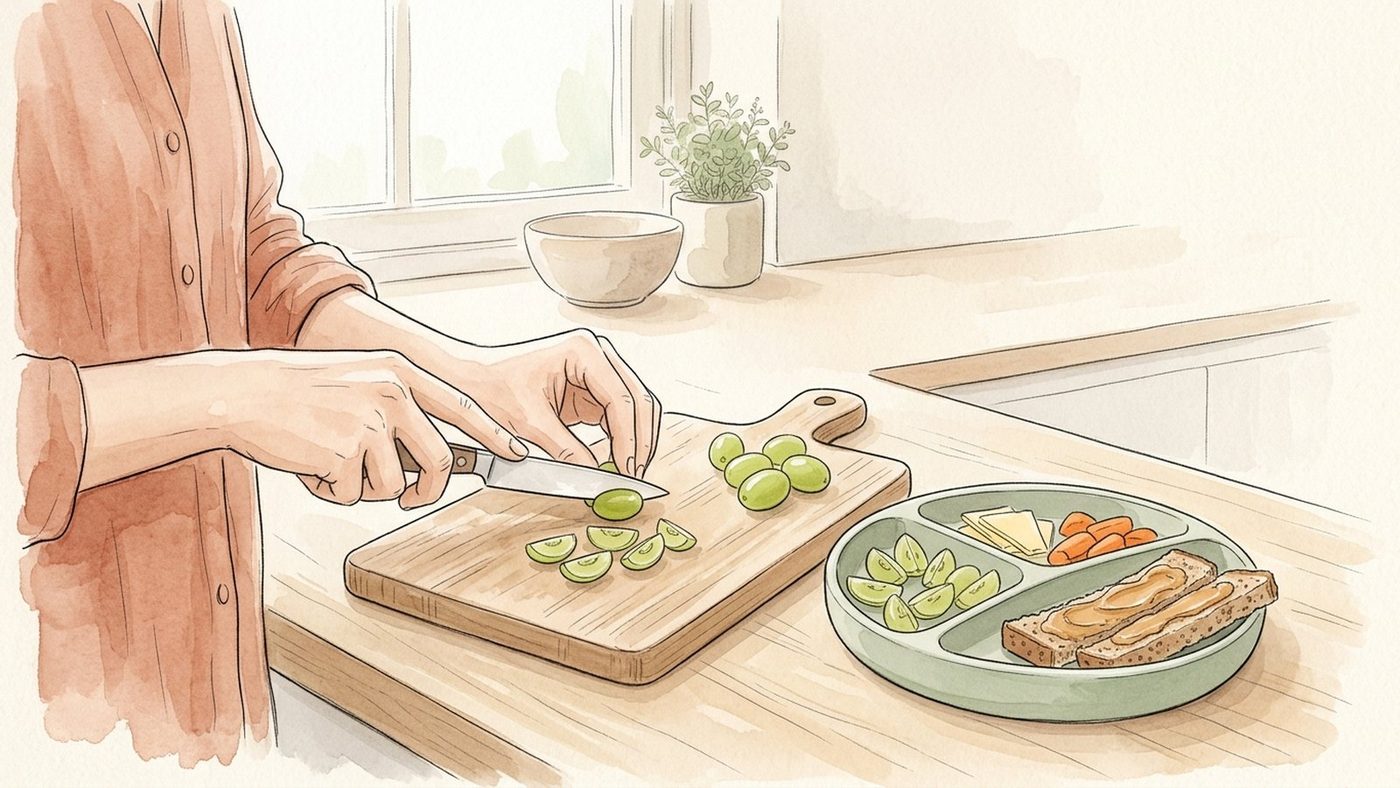
Short answer: The AAP advises keeping the riskiest foods away from children until at least age 4: whole grapes, hot dogs and sausages, whole nuts and seeds, popcorn, hard or sticky candy, gum, marshmallows, raw carrot sticks and apple chunks, chunks of meat or cheese, and spoonfuls of nut butter. Many of these can be made safer. Quarter grapes and cherry tomatoes, cut hot dogs lengthwise and then into small pieces, cook or grate hard fruits and vegetables, spread nut butters thinly, and keep pieces no larger than ½ inch (about 1 cm). Always have your child sit down and stay with them while they eat.
Key takeaways
- Age 4 is the line: the AAP says to keep dangerous foods from children until 4 years of age or older.
- Shape, size, and texture matter: round, firm, hard, sticky, or chewy foods are the riskiest.
- Half an inch: the AAP recommends pieces no larger than ½ inch (about 1 cm) for young children.
- Quarter round foods: grapes, cherry tomatoes, and similar foods should be cut into quarters, not halves.
- How kids eat matters too: sitting down, no running or eating in the car, and an adult watching.
Which foods are choking hazards for toddlers?
Foods that are round and firm, hard, sticky, or hard to chew. The AAP’s policy statement on choking says shape, size, and consistency make certain foods more dangerous, and that children aged 3 and younger are at highest risk. Young children’s back teeth and chewing skills are still developing, and they’re easily distracted while eating.
The AAP lists these as dangerous for young children:
- hot dogs, meat sticks, and sausages
- whole grapes
- nuts and seeds, especially sunflower seeds
- raw vegetables such as carrot sticks, and raw fruit chunks such as apple pieces
- popcorn
- hard, gooey, or sticky candy, chewing gum, and marshmallows
- chunks of meat, chunks of cheese, and string cheese
- thick chunks or spoonfuls of peanut butter or other nut butters
The CDC’s list adds whole corn kernels, uncut cherry tomatoes, berries, cherries and melon balls, whole pieces of canned fruit, raisins and other dried fruit, whole beans, bones in meat or fish, chips, pretzels, cookies and granola bars, seeded crackers and breads, whole cooked grains like barley, chewy fruit snacks, and gummy candies.
How do I cut each food to make it safer?
Change its shape, size, or texture. Here’s a food-by-food guide based on AAP, CDC, and NHS advice. Some foods can’t be made safe and should simply wait until after age 4.
| Food | Why it’s risky | How to serve it under 4 |
|---|---|---|
| Grapes, cherry tomatoes, cherries | Round and firm; can block the airway | Remove pits; cut into quarters, ideally lengthwise |
| Blueberries and other small berries | Round and firm | Flatten, mash, or quarter; cut large strawberries into small pieces |
| Hot dogs, sausages, meat sticks | Round “coins” fit a child’s airway | Cut lengthwise into quarters, then into small pieces; never in rounds |
| Chunks of meat | Tough and hard to chew | Shred or chop finely, or cook until very soft |
| Cheese, especially string cheese | Chunks are dense; strings can be swallowed whole | Grate, slice thinly, or cut into small pieces |
| Raw carrots, celery, apples | Hard; bitten pieces break off unpredictably | Grate, cook until soft, or slice very thinly |
| Whole nuts and seeds | Small, hard, easy to inhale | Avoid whole; use finely ground nuts or smooth nut butter |
| Peanut and other nut butters | Sticky lumps can stick in the throat | Spread thinly on toast or crackers, or stir into food; never by the spoonful |
| Popcorn | Light, irregular pieces are easily inhaled | Avoid until at least 4 |
| Hard candy, gum, marshmallows, gummies | Hard or sticky; little nutritional need | Avoid until at least 4 |
| Raisins and dried fruit | Sticky and chewy | Chop finely or soak until soft |
| Corn kernels and whole beans | Small and firm | Mash or lightly smash |
| Fish | Small bones | Check carefully for bones and flake |
| Chips, pretzels, seeded crackers | Hard pieces and seeds | Choose soft-dissolving options; avoid seeds and nut pieces |
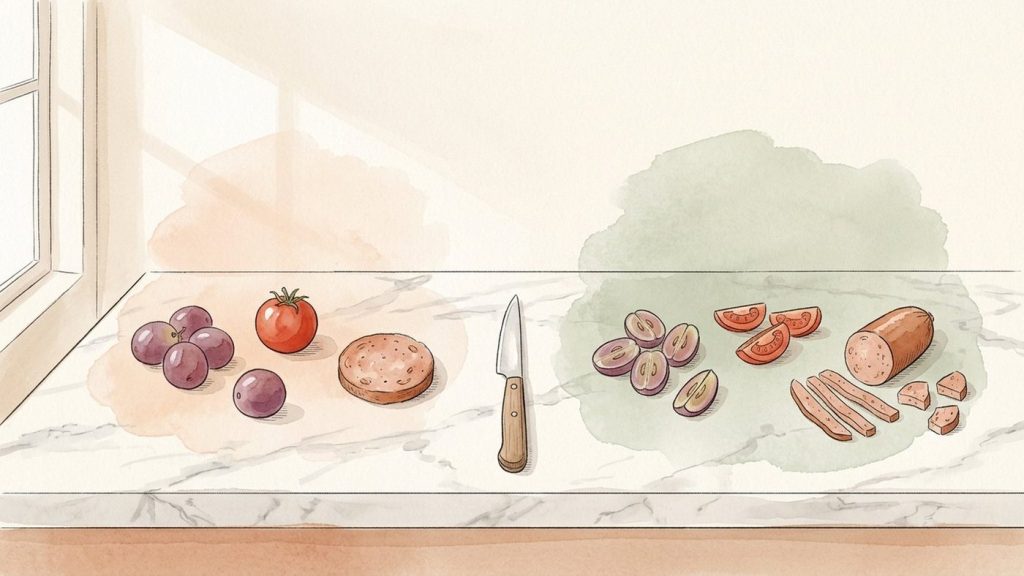
The AAP recommends cutting food for infants and young children into pieces no larger than ½ inch (about 1 cm). For grapes, the NHS advises cutting small, round foods into quarters, meaning four small pieces. Halves are still big enough to block a small airway, which is why quarters are the safer rule.
When can toddlers eat whole grapes, nuts, and popcorn?
Not before age 4, and later for some foods. The AAP says to keep dangerous foods from children until 4 years of age or older. The NHS advises not giving whole nuts to children under 5. Popcorn, hard candy, and gum have no nutritional need in early childhood, so waiting costs nothing.
Age 4 isn’t a magic switch. Many parents keep cutting grapes beyond then, especially for children who eat quickly, stuff their mouths, or eat while moving around. Children with developmental differences or swallowing difficulties may need modified foods for longer; your pediatrician or a feeding therapist can advise.
What the research says: the list of risky foods comes from injury surveillance data and case reports of children who choked, summarized in the AAP’s 2010 policy statement. The age 4 cutoff and the ½-inch size are expert recommendations based on that data and on how children’s chewing develops, not on trials. The guidance is consistent across the AAP, CDC, and NHS, which gives it weight.
Free download
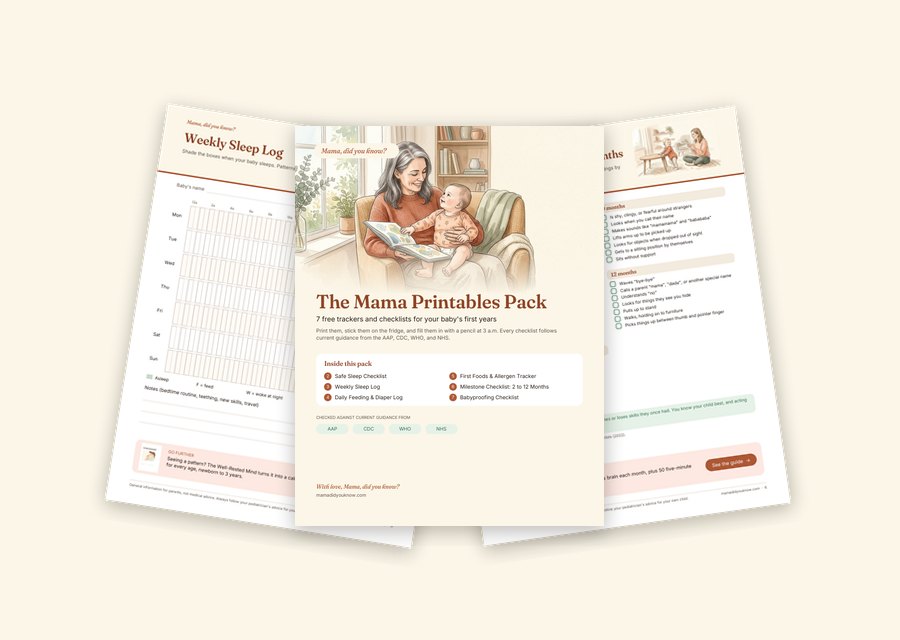
Free: first foods and allergen tracker
Tick off each allergen and new food, with space for reactions, plus a feeding and diaper log. Part of our free 7-page printables pack.
What are safer finger foods for toddlers?
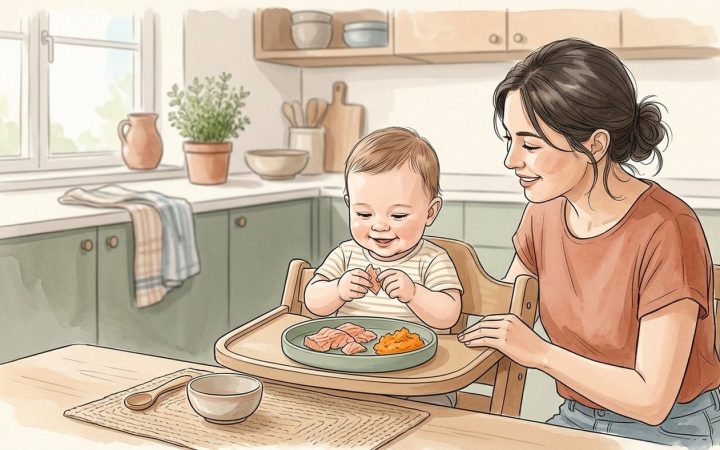
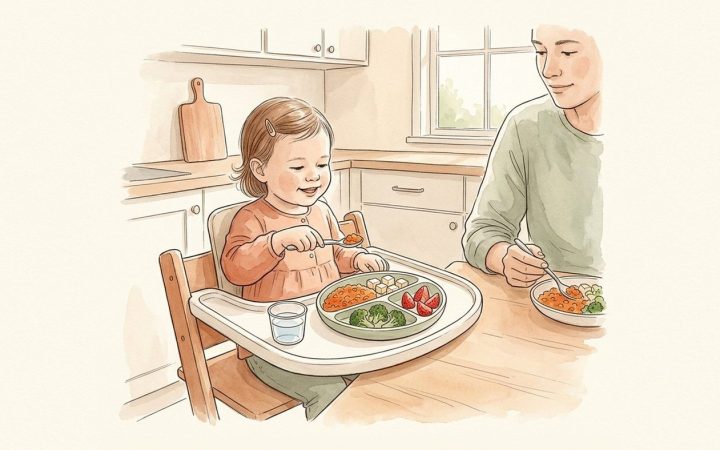
Foods that are soft, easy to mash, and cut small. A good test many parents use is whether you can squash a piece between your thumb and finger. Some easy options:
- Fruit: ripe banana, ripe pear or peach, avocado, quartered berries and grapes, and cooked or grated apple.
- Vegetables: steamed or roasted carrot, sweet potato, broccoli, zucchini, and peas lightly smashed.
- Protein: shredded chicken, flaked boneless fish, scrambled egg, soft tofu, mashed beans, and thin strips of soft cheese.
- Grains: soft pasta, toast strips with a thin spread, and soft-cooked rice or oatmeal.
As your toddler’s chewing improves, you can gradually offer firmer textures, but keep the highest-risk foods in the list above modified until at least age 4.
How can I prevent choking at mealtimes?
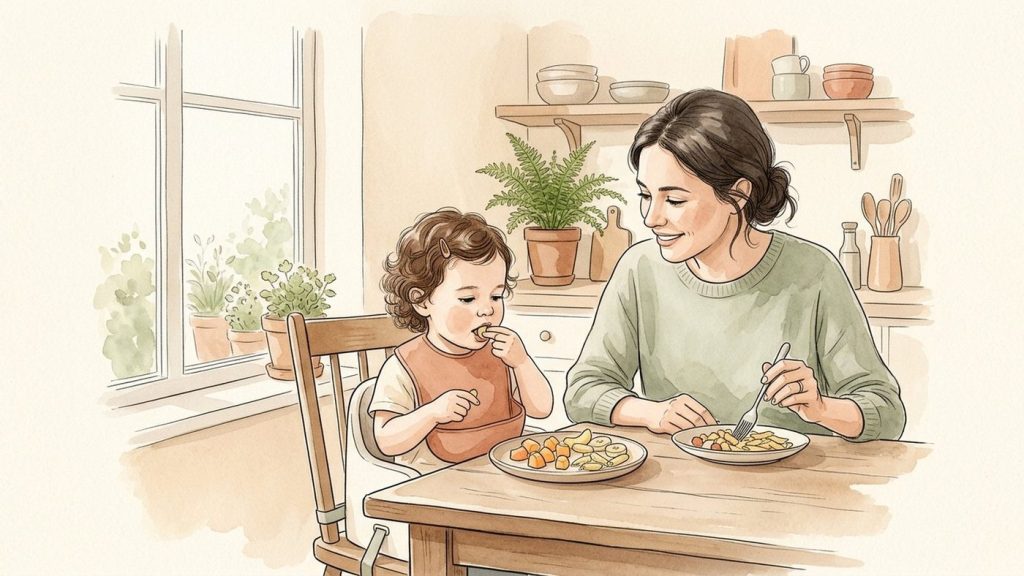
How a child eats matters as much as what they eat. These steps come from AAP and CDC guidance:
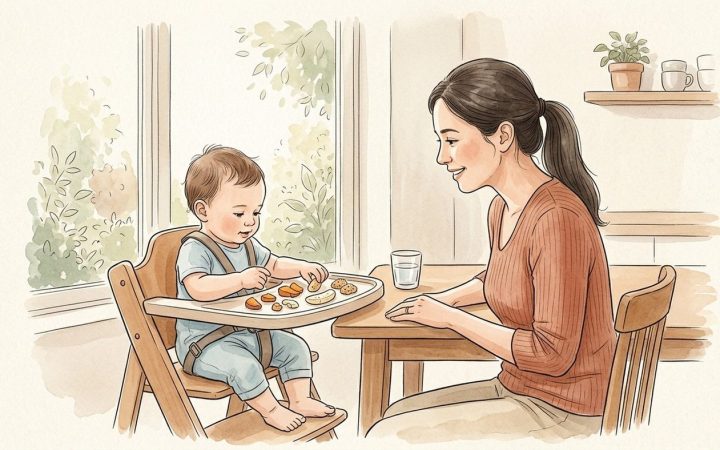
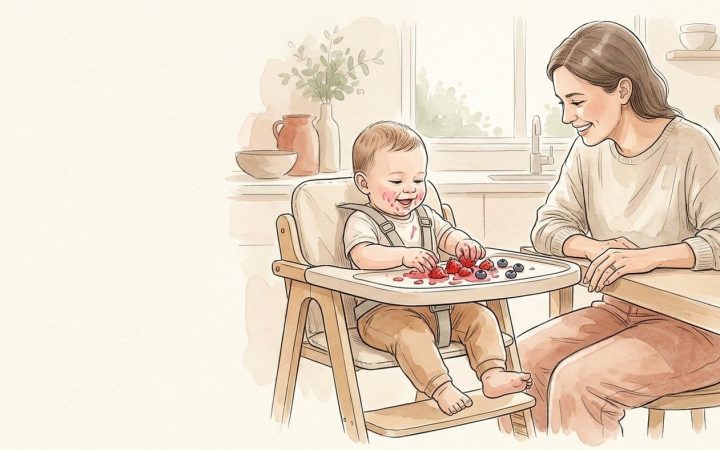
- Sit down to eat. In a high chair or at the table, never while walking, running, crawling, lying down, or playing.
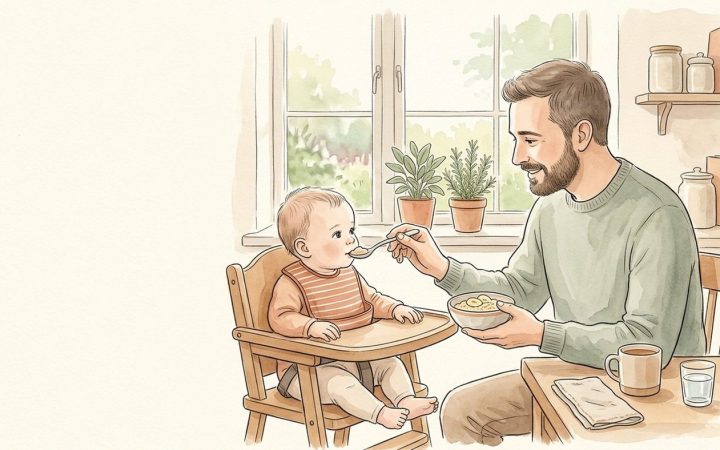
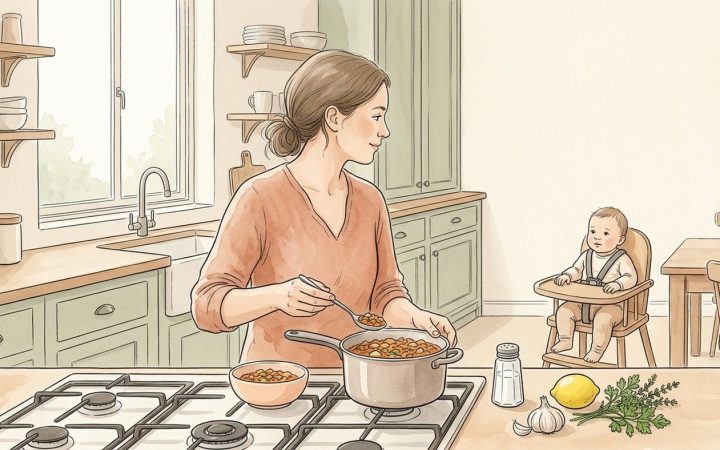
- Stay with your child. Watch them the whole time they’re eating; choking is often silent.
- Skip car and stroller snacks. The CDC advises against eating in the car or stroller, where you can’t watch closely or act quickly.
- Keep meals calm. Avoid rushing, screens, and silliness with food in the mouth.
- Offer small amounts at a time. A few pieces on the tray discourages stuffing.
- Watch older siblings. The AAP notes that many choking incidents involve older children giving unsafe foods or small objects to younger ones.
- Learn infant and child CPR. The AAP recommends a certified CPR and first aid course, for example through the American Red Cross or American Heart Association.
Gagging is not the same as choking. Gagging is noisy, with coughing and sputtering, and is a normal part of learning to eat. Choking is often silent. Our guide to gagging vs choking explains how to tell them apart and what to do. If you’re just starting finger foods, baby-led weaning vs purees covers safe textures for babies.
Food isn’t the only choking risk. Coins, marbles, small toy parts, small balls, and button batteries are also dangerous, and the AAP says balloons are a choking risk for children up to age 8. Check toy age labels, and see our post on button battery and magnet safety.
Call your local emergency number immediately if your child:
- can’t cough, cry, talk, or breathe, or is making high-pitched sounds
- is turning blue or gray, or becomes limp or unresponsive
Start back blows and chest or abdominal thrusts as taught in a first aid course while help is on the way. Call your pediatrician the same day if, after a choking episode, your child has a lingering cough, wheezing, noisy breathing, drooling, or trouble swallowing, even if they seem better. A small piece of food can sometimes end up in the lungs.
Frequently asked questions
Is cutting grapes in half enough?
For young children, quarters are safer. A grape half can still be large enough to block a small airway. The NHS advises cutting small round foods into quarters.
Can my 2-year-old eat popcorn?
The AAP lists popcorn as a choking hazard and advises keeping such foods from children until at least age 4.
Are whole blueberries safe for toddlers?
Small, firm berries are on the CDC’s list of choking hazards when uncut. Squash or quarter them for babies and younger toddlers, and keep an eye on fast eaters.
Can toddlers eat peanut butter?
Yes, spread thinly or mixed into food, never by the spoonful or in thick lumps. Early peanut introduction is encouraged for allergy prevention; see when can babies eat peanut butter.
Is it safe for my toddler to snack in the car?
The CDC advises against eating in the car or stroller because you can’t watch your child closely or respond quickly. Save snacks for stops.
Sources
- American Academy of Pediatrics, HealthyChildren.org. Choking Prevention for Babies and Children: What Every Parent Needs to Know. healthychildren.org
- American Academy of Pediatrics, Committee on Injury, Violence, and Poison Prevention (2010). Prevention of choking among children. Pediatrics. pubmed.ncbi.nlm.nih.gov
- Centers for Disease Control and Prevention. Choking Hazards. cdc.gov
- NHS. Your baby’s first solid foods. nhs.uk
- NHS. Foods to avoid giving babies and young children. nhs.uk
- American Red Cross. Infant Choking. redcross.org