Short answer: Babies can have strawberries and other berries from around 6 months, as soon as they’ve started solids. There’s no need to wait until age 1 or 2 for allergy reasons. What matters is the shape: mash berries or cut them into small, flat pieces, and quarter or flatten round berries like blueberries, because whole small round fruits are a choking hazard for babies and young children.
Key takeaways
- Age: from around 6 months, when your baby is ready for solids. No need to delay berries.
- Shape is the safety issue: mash, purée, or cut into small pieces. The NHS advises cutting berries, strawberries, and grapes into quarters.
- Blueberries: squash flat or quarter them. Whole small round fruits are on the CDC’s list of choking hazards.
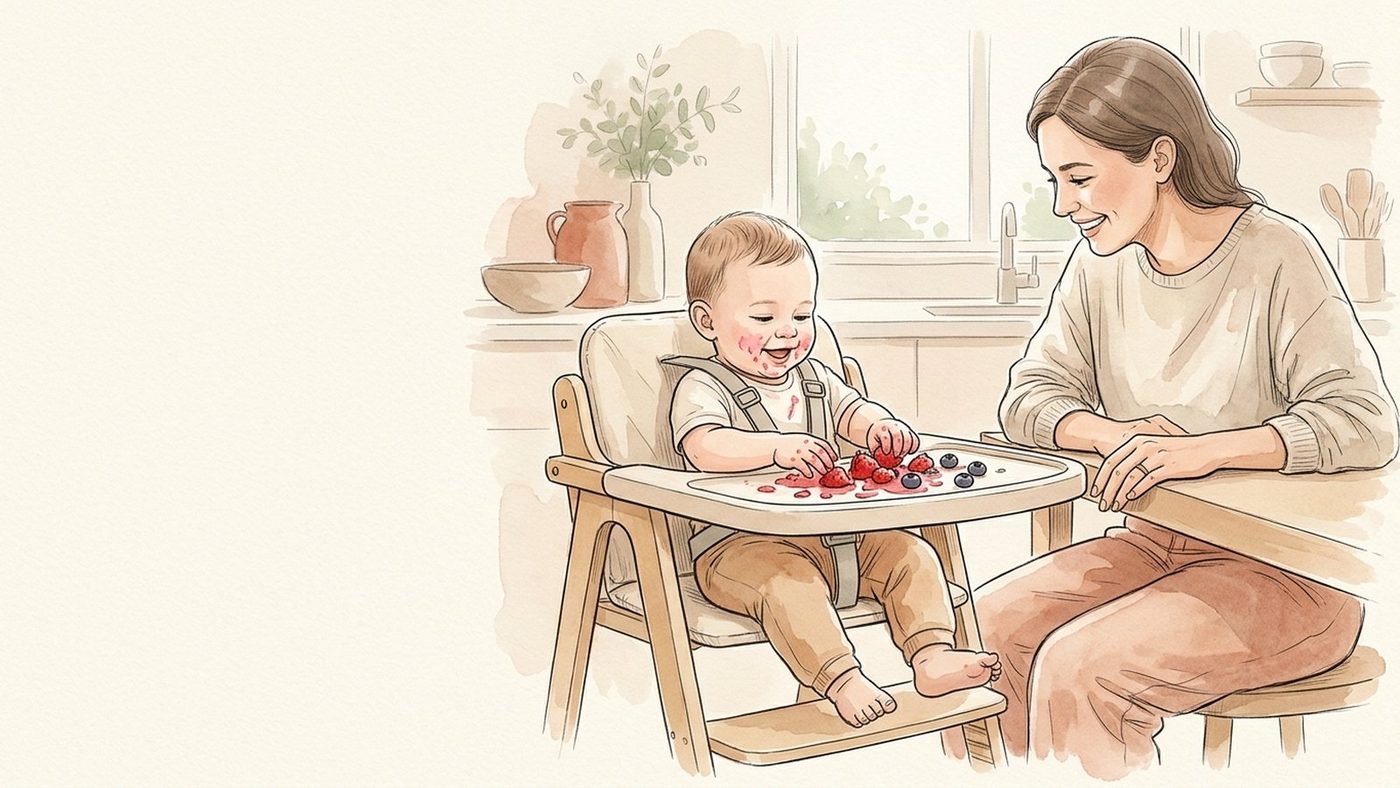
- Red around the mouth? A mild rash only where the fruit touched is usually skin irritation, not allergy (ASCIA).
- Bonus: berries are rich in vitamin C, which helps babies absorb iron from plant foods.
When can babies have strawberries?
From around 6 months, once your baby has started solid foods. The American Academy of Pediatrics recommends starting solids at about 6 months, when your baby can sit with support, has good head control, and shows interest in food. Strawberries, raspberries, blueberries, and blackberries can be among the first fruits you offer.
You may come across advice to wait until 1 year, or even 2, because strawberries are “allergenic.” That’s out of date. Strawberries aren’t one of the major food allergens, and current guidance from the AAP and from the Australasian Society of Clinical Immunology and Allergy (ASCIA) is that delaying foods doesn’t prevent allergies. ASCIA actually recommends introducing common allergens like egg and peanut in the first year, and says no food needs to be held back.
If you’re just getting started, our guide to baby-led weaning vs purées explains both approaches. Berries work well with either.
How should I cut strawberries and berries for my baby?
Make them soft, small, and not round. The CDC lists uncut grapes, berries, cherries, and melon balls among foods that can cause choking in young children. The NHS advises cutting small round fruits like grapes, cherries, berries, strawberries, and cherry tomatoes into quarters. Here’s how that looks by age:
| Berry | About 6–9 months | About 9–12 months | 1–3 years |
|---|---|---|---|
| Strawberries | Mashed, puréed, or very thin slices of a ripe berry | Small soft pieces for pincer practice | Quartered or chopped; never whole small berries |
| Blueberries | Squashed flat between your fingers, or mashed | Flattened or quartered | Quartered or halved lengthwise; keep flattening if unsure |
| Raspberries, blackberries | Mashed or gently flattened | Flattened or torn into pieces | Halved or torn; check that blackberries are soft |
| Frozen berries | Thawed and mashed, or cooked into a soft sauce | Thawed and cut small | Thawed; avoid whole frozen berries, which are hard |
A few more tips:
- Choose ripe, soft berries. Underripe strawberries are firmer and harder to munch.
- Wash them well. Rinse under running water just before serving, and remove green tops and stems.
- Stir into other foods. Mashed berries mix well into plain yogurt, oatmeal, or iron-fortified cereal. See can babies have yogurt for choosing a plain one.
- Skip the sugar. Berries don’t need any. Avoid berry jams and syrups for babies, and never sweeten with honey before age 1 (see can babies have honey).
Experts don’t all agree on the details for young babies. Some baby-led weaning guides offer a very large, ripe whole strawberry for a 6-month-old to munch, since it’s too big to fit in the mouth whole. Health services like the NHS stick to the simpler “cut it into quarters” rule. If you’re unsure, mashing or slicing is the cautious option.
Are blueberries a choking hazard?
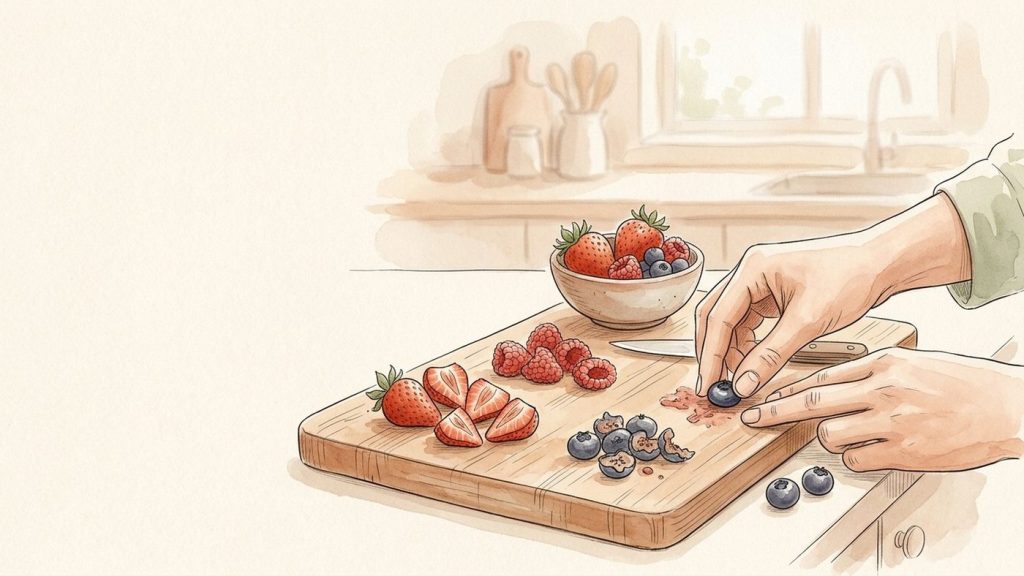
Whole blueberries can be. They’re small, round, smooth, and about the size of a young child’s airway, which is why they’re grouped with grapes and cherry tomatoes. The UK’s Child Accident Prevention Trust advises halving round foods like blueberries, cherries, and cherry tomatoes lengthwise, and ideally quartering them.
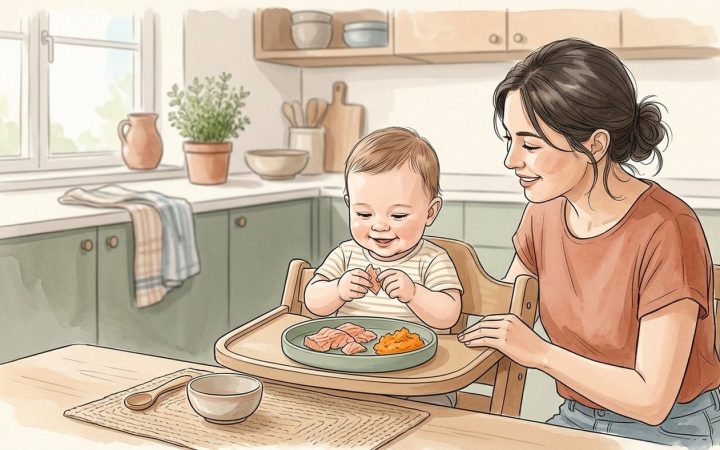
For babies, the easiest method is to squash each blueberry flat between your thumb and finger. It’s quick, and the flattened berry is easy for small fingers to pick up. For toddlers, quartering works well. There’s no exact age when it’s safe to stop. The AAP advises that round, firm foods like whole grapes be served to children under 4 only if chopped into tiny pieces, no larger than half an inch (about 1 cm), so many families keep cutting berries until then, and longer for children who eat quickly or while moving.
Always have your baby sitting upright in a high chair while eating, and stay with them. No eating while lying down, crawling, walking, or in the car seat. Learn the difference between noisy gagging (normal) and silent choking (an emergency) in our guide to gagging vs choking, and consider taking an infant first aid class.
Free download
Free: first foods and allergen tracker
Tick off each allergen and new food, with space for reactions, plus a feeding and diaper log. Part of our free 7-page printables pack.
Is a red rash around the mouth from strawberries an allergy?
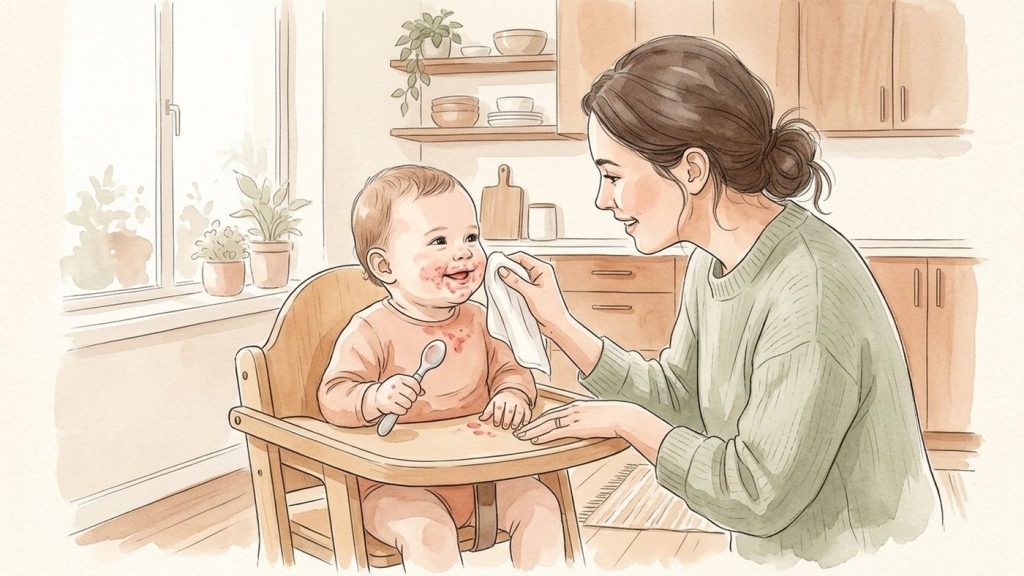
Usually not. Strawberries, tomatoes, and citrus are acidic and can irritate the delicate skin around a baby’s mouth. ASCIA says a mild rash limited to the mouth area, such as redness or small hives where the food touched, without any other symptoms, is not usually an allergic reaction. It suggests offering the food again when your baby is well, using a fragrance-free barrier cream around the mouth and spooning food in directly to reduce skin contact.
An allergic reaction looks different. According to ASCIA, signs usually appear within minutes to two hours of eating and can include:
- hives or welts that spread beyond the mouth area
- swelling of the lips, face, or eyes
- vomiting
- difficult or noisy breathing, or a swollen tongue
- looking pale and floppy, or a sudden change in behavior
One more thing that surprises parents: red seeds and red-tinged poop the next day are common after berries. Undigested bits of skin and seeds are normal at this age.
Are berries good for babies?
Yes. Berries are a nutritious, naturally sweet fruit, and they bring a few useful things to a baby’s plate:
- Vitamin C. Strawberries are especially rich in it. The NIH Office of Dietary Supplements notes that vitamin C helps the body absorb non-heme iron, the kind in plant foods and iron-fortified cereal. Pairing berries with iron-rich foods is a simple trick; see iron-rich foods for babies.
- Fiber. Berries, with their seeds and skins, add fiber, which can help keep things moving once solids start.
- New tastes and textures. Tart and sweet flavors, plus squishy textures, add variety to early meals.
Fresh, frozen, and thawed berries are all fine. Fruit juice isn’t a substitute: the AAP advises no juice for babies under 12 months. Whole fruit, mashed or cut safely, is the way to go.
What are easy ways to serve berries to a baby?
Start simple and let your baby explore. A few ideas that work well from around 6 months:
- Berry mash: mash ripe strawberries or raspberries with a fork and serve on a preloaded spoon.
- Berry oatmeal: stir mashed berries into iron-fortified oatmeal for a vitamin C and iron pairing.
- Yogurt swirl: fold squashed blueberries into plain, full-fat yogurt.
- Warm berry sauce: simmer frozen berries with a splash of water until soft, cool, and spread thinly on toast strips.
- Pincer practice (around 9 months and up): scatter a few flattened blueberries or small soft strawberry pieces on the tray.
Don’t worry if the first tries are mostly squishing and smearing. Touching and tasting new foods is part of how babies learn to accept them, and it often takes several tries before a new flavor is eaten happily.
What the research says: the advice not to delay foods for allergy prevention is backed by large trials and is now standard across the AAP, ASCIA, and other allergy bodies. The choking advice comes from injury data and expert consensus rather than trials, but it’s consistent across the CDC, AAP, and NHS: small, round, firm foods are the highest risk.
Call your local emergency number right away if your baby:
- is choking and can’t cry, cough, or breathe (start infant first aid while someone calls)
- has trouble breathing, a swollen tongue or face, or becomes pale and floppy after eating
Call your pediatrician if your baby has hives beyond the mouth, vomiting, or other allergy signs after eating berries, or if a rash keeps coming back. Stop offering that food until you’ve talked to them.
Frequently asked questions
Can a 6-month-old eat strawberries?
Yes, if they’ve started solids. Offer ripe strawberries mashed, puréed, or in very thin slices, with your baby sitting upright and supervised.
When can babies eat whole blueberries?
Small round foods are listed as choking hazards for children under 4. Flatten or quarter blueberries until then, and longer if your child eats quickly.
Should I buy organic strawberries for my baby?
It’s a personal choice. Conventional and organic berries are both fine for babies. Washing produce under running water is the main step either way.
Can babies eat strawberry seeds?
Yes. The tiny seeds on strawberries are safe, and you may see them in your baby’s diaper. That’s normal.
Do I need to introduce strawberries one at a time?
The AAP suggests introducing new single-ingredient foods every few days so you can spot a reaction. Strawberries aren’t a major allergen, so many families simply offer them alongside foods their baby already eats.
Sources
- American Academy of Pediatrics, HealthyChildren.org. Starting Solid Foods. healthychildren.org
- Centers for Disease Control and Prevention. Choking Hazards. cdc.gov
- NHS, Best Start in Life. Preparing food safely for your baby. nhs.uk
- Australasian Society of Clinical Immunology and Allergy (ASCIA). How to introduce solid foods to babies. allergy.org.au
- American Academy of Pediatrics, HealthyChildren.org. Choking Prevention. healthychildren.org
- Child Accident Prevention Trust. Choking: round foods advice. capt.org.uk
- Food Standards Agency. Early Years Choking Hazards Table. food.gov.uk
- NIH Office of Dietary Supplements. Iron: Fact Sheet for Health Professionals. ods.od.nih.gov
- Heyman MB, Abrams SA, AAP Section on Gastroenterology, Hepatology, and Nutrition, Committee on Nutrition (2017). Fruit Juice in Infants, Children, and Adolescents: Current Recommendations. Pediatrics 139(6):e20170967. doi.org