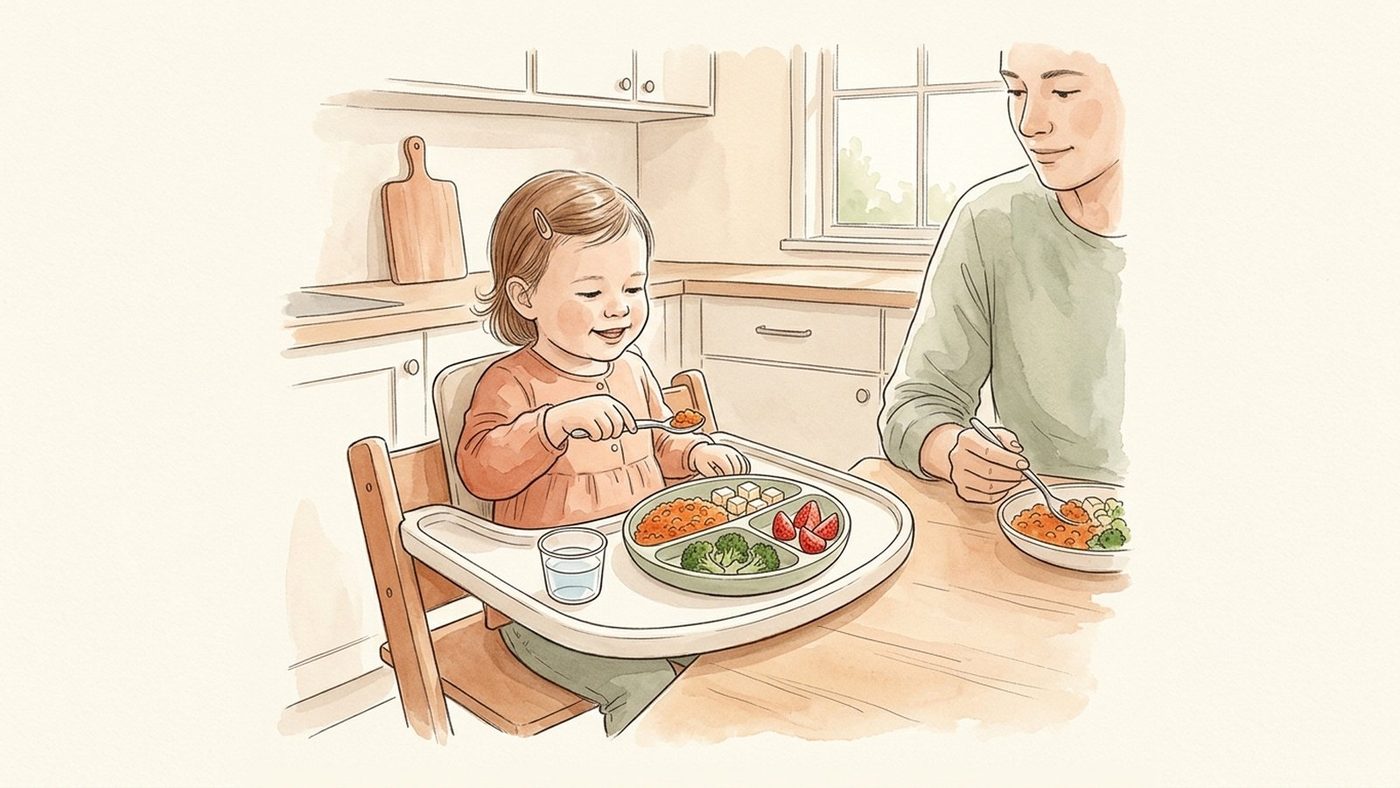
Short answer: A well-planned vegetarian diet can meet a toddler’s needs, according to the American Academy of Pediatrics, as long as you pay attention to iron, zinc, protein, calcium, vitamin D, and omega-3 fats. A vegan diet is possible but needs more care: every vegan child needs a reliable source of vitamin B12 from a supplement or fortified foods, and the AAP advises starting one only after talking with your pediatrician. European experts say the evidence on vegan diets in young children is still limited, so regular growth checks and dietitian support are recommended.
Key takeaways
- Vegetarian (with dairy and eggs): generally fine for toddlers when well planned. Iron is the nutrient to watch most closely.
- Vegan: needs a B12 supplement or B12-fortified foods every day, plus careful planning for calcium, vitamin D, iodine, iron, zinc, and omega-3 fats.
- Experts differ on vegan diets for young children: the AAP says it can be done carefully; a 2025 European review called the evidence on growth inconclusive.
- Toddlers have small stomachs: high-fiber plant foods fill them up fast, so include energy-dense foods like nut butters, tofu, avocado, and oils.
- Drinks: no rice drinks under 5. If you use a plant drink instead of milk, choose unsweetened, calcium-fortified soy.
Is a vegetarian diet safe for toddlers?
Yes, if it’s well planned. The AAP says vegetarian eating plans that include enough of the key nutrients are generally fine for children, and that children who eat vegetarian tend to get enough protein, along with plenty of fiber, fruits, and vegetables.
“Vegetarian” covers a lot of ground, and the planning needed depends on what your child eats:
| Diet | Includes | Main nutrients to plan for | Supplement usually needed? |
|---|---|---|---|
| Lacto-ovo vegetarian | Dairy and eggs, no meat or fish | Iron, zinc, omega-3 (DHA) | Vitamin D as for any toddler; others case by case |
| Pescatarian | Fish, dairy, eggs, no meat | Iron, zinc | Vitamin D as for any toddler |
| Vegan | No animal foods at all | B12, calcium, vitamin D, iodine, iron, zinc, protein, omega-3, energy | Yes: vitamin B12 always; often vitamin D and iodine; ask about others |
The biggest risk with any vegetarian toddler isn’t the lack of meat itself. It’s a picky toddler filling up on bread, pasta, and crackers. The AAP points out that relying on refined grains can leave real nutritional gaps.
Is a vegan diet safe for toddlers?
It can be, but experts are more cautious, and this is a place where they don’t fully agree. The AAP says it’s possible to have a child on a safe vegan diet but that it should be done carefully, and recommends starting only after talking with your pediatrician.
European bodies are more reserved:
- ESPGHAN (2025): the European pediatric nutrition society’s position paper, based on a systematic search, found 10 studies covering about 1,500 vegan children. It concluded that the evidence is inconclusive on whether a strictly vegan diet supports normal growth, though it found no significant differences in height or BMI compared with children who eat meat. It recommends regular monitoring of diet, growth, and nutritional status, and says B12 supplementation is essential.
- German Nutrition Society (DGE, 2024 update): says a vegan diet can be healthy for adults with B12 supplements, but that for children it can make no clear recommendation for or against because data are limited, and it strongly recommends counseling from qualified nutrition professionals.
What the research says: studies on vegan toddlers are few, mostly small, and observational, and families who choose a vegan diet often differ in other ways too. That’s why no major body says vegan diets are unsafe, but none says they’re risk-free either. The consistent message is: plan carefully, supplement B12, and check growth regularly.
Which nutrients do vegetarian and vegan toddlers need to watch?
Iron comes first for all vegetarian toddlers, and B12 is non-negotiable for vegan ones. Here’s what the AAP highlights, nutrient by nutrient:
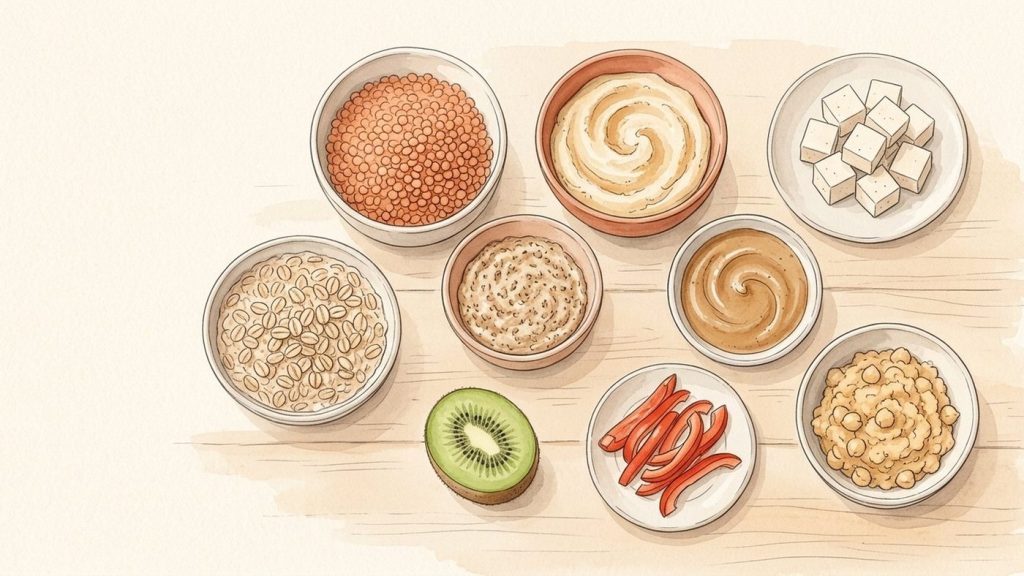
- Iron. Iron from plants is absorbed less well, and the AAP says vegetarians need about 1.8 times as much iron as non-vegetarians. Good sources are lentils, beans, tofu, iron-fortified cereals, and ground seeds. Serve them with a vitamin C food, like berries, tomato, pepper, or orange, to boost absorption. Our guide to iron-rich foods for babies has more ideas.
- Vitamin B12. Found naturally almost only in animal foods. Vegetarian toddlers who eat dairy and eggs usually get enough, but the AAP says vegan children should take a B12 supplement or eat fortified foods. Low B12 in young children can affect the blood and nervous system, so this matters. If you’re breastfeeding and vegan, you need a reliable B12 source too, because your milk is your baby’s supply.
- Zinc. The AAP notes zinc levels may be lower in vegetarian children, though deficiency is rare. Beans, lentils, whole grains, and seeds help; soaking, sprouting, and leavened bread make it easier to absorb.
- Calcium. Easy with dairy. For vegan toddlers, use calcium-set tofu, calcium-fortified soy drink and yogurt, and low-oxalate greens like kale or broccoli.
- Vitamin D. Few foods contain it. The AAP suggests vitamin D drops for toddlers who drink less than 32 oz (about 950 ml) of vitamin D-fortified milk a day; ask your pediatrician about the right product for your child.
- Omega-3 fats. The AAP says vegetarian diets are generally low in the long-chain omega-3s (EPA and DHA) found in fish, and vegan diets lack them. Ground flax, chia, hemp seeds, and walnut butter provide a plant form; some families also use an algae-based supplement after checking with their pediatrician.
- Iodine. Dairy and seafood are major sources in many countries, so vegan toddlers can fall short. Ask your pediatrician or dietitian whether iodized salt in family cooking is enough or a supplement is needed.
- Protein. Rarely a problem for vegetarians. Vegan toddlers need legumes, tofu, soy yogurt, and nut or seed butters at most meals.
Don’t start supplements on your own. Doses for toddlers are different from adults, and some vitamins can build up to harmful levels. Ask your pediatrician or pharmacist which products and doses fit your child’s age and diet.
Free download
Free: first foods and allergen tracker
Tick off each allergen and new food, with space for reactions, plus a feeding and diaper log. Part of our free 7-page printables pack.
How do I build a vegetarian toddler’s plate?
Start with a protein and iron food at every meal, then add fruit or vegetables, a grain, and a source of fat. A simple routine looks like this:
- Pick a protein-iron anchor. Lentils, beans, chickpeas, tofu, eggs, or a thin spread of nut butter.
- Add a vitamin C food. Strawberries, kiwi, tomato, or red pepper on the same plate.
- Include an energy-dense food. Avocado, full-fat dairy or soy yogurt, olive oil, or seed butter. Toddlers have small stomachs, and high-fiber foods fill them up before they’ve had enough energy.
- Choose fortified where it helps. Iron-fortified cereals, and for vegan families, B12- and calcium-fortified soy drinks and yogurts.
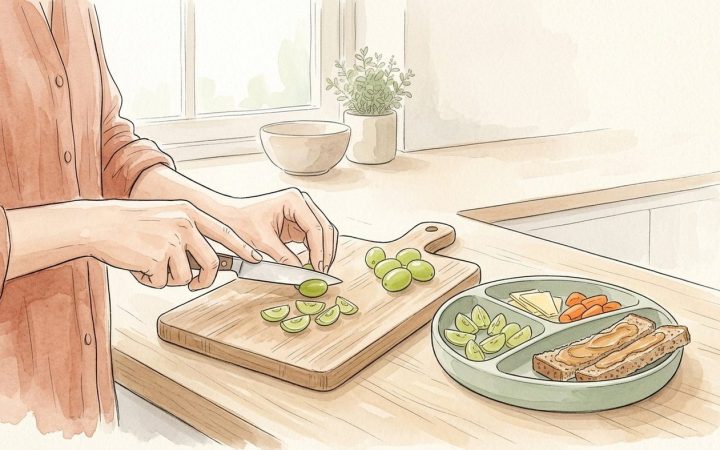
- Keep the shapes safe. Whole nuts, whole chickpeas for very young toddlers, and round foods like grapes are choking risks. Flatten, mash, or quarter them. See our list of choking hazard foods for toddlers.
A sample day for a vegetarian toddler might be iron-fortified oatmeal with mashed berries and ground flax for breakfast; hummus on toast fingers with soft-cooked carrot sticks for lunch; and lentil and vegetable pasta sauce with grated cheese for dinner, with yogurt and fruit as snacks. For portion sizes, see how much a 2-year-old should eat.
What should a vegetarian or vegan toddler drink?
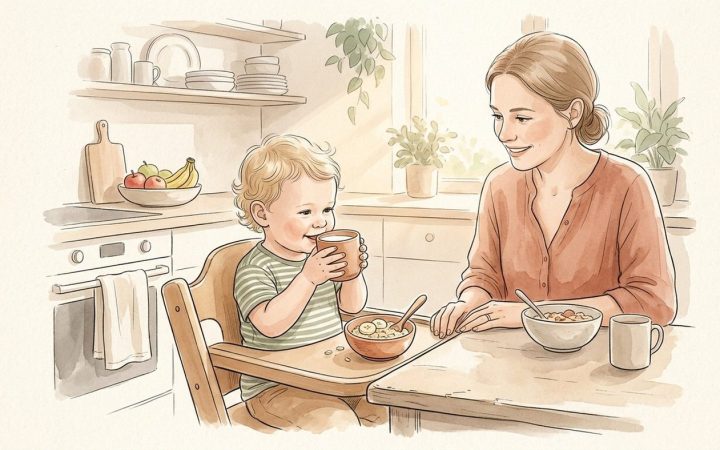
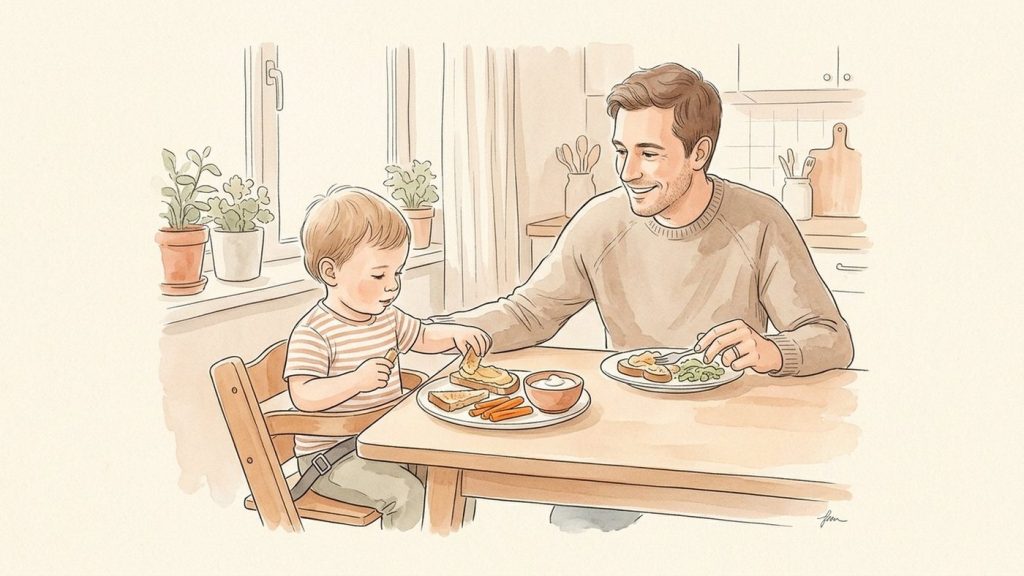
Water and milk, or a fortified soy drink for vegan families. Breast milk can continue as long as you both like.
- Plant drinks are not for babies under 1 as a main drink. Babies need breast milk or infant formula, including soy-based formula for vegan families when breastfeeding isn’t possible.
- From 1 year, the NHS says unsweetened, calcium-fortified soy, oat, or almond drinks can be part of a balanced diet.
- In the US, 2019 expert guidance backed by the AAP and the Academy of Nutrition and Dietetics says most plant drinks aren’t a full replacement for dairy milk, with fortified soy drink as the exception, because it’s the closest in protein and nutrients.
- No rice drinks under 5. The NHS advises against them because of arsenic levels.
For a closer look at the options, see can toddlers drink oat milk.
Never use homemade formula, nut “milks,” or plant drinks in place of breast milk or infant formula for a baby under 12 months. These don’t contain the nutrients babies need, and serious harm has been reported when infants were fed them as their main food. If you’d like a vegan option for your baby, ask your pediatrician about soy-based infant formula.
Talk to your pediatrician if your vegetarian or vegan toddler:
- isn’t gaining weight or growing as expected, or is dropping across growth chart lines
- seems unusually pale, tired, irritable, or short of breath, which can be signs of low iron
- is eating a vegan diet without a reliable B12 source, or has lost skills, seems weak, or is less interested in feeding
- is a very picky eater with only a few accepted foods
The AAP says your pediatrician may suggest a blood test to check iron or B12 levels. A referral to a pediatric dietitian is worth asking for, especially for vegan families.
Frequently asked questions
Do vegetarian toddlers get enough protein?
Usually, yes. The AAP says vegetarian children tend to get enough protein in variety and quantity. Vegan toddlers need legumes, soy foods, and nut or seed butters regularly to do the same.
Does my vegetarian toddler need a B12 supplement?
If they eat dairy and eggs regularly, usually not. If they’re vegan, or eat very little dairy and egg, yes: a supplement or B12-fortified foods every day. Ask your pediatrician about the right dose.
Can a vegan toddler get enough iron?
Yes, with planning. Offer beans, lentils, tofu, and iron-fortified cereals at most meals, paired with a vitamin C food. Keep milk drinks to recommended amounts, since a toddler who fills up on milk eats fewer iron-rich foods.
Is it OK to give my toddler oat milk instead of cow’s milk?
As one drink among others, from age 1, if it’s unsweetened and calcium-fortified. But oat drink is much lower in protein than cow’s milk or soy drink, so it shouldn’t be the main milk unless the rest of the diet makes up for it.
Should I see a dietitian?
It’s a good idea for any vegan toddler, and for vegetarian toddlers who are picky or slow-growing. Both the DGE and ESPGHAN recommend expert nutrition support for children on vegan diets.
Sources
- American Academy of Pediatrics, HealthyChildren.org. My child wants to be a vegetarian. Is that ok? healthychildren.org
- American Academy of Pediatrics, HealthyChildren.org. Dietary Supplements for Toddlers. healthychildren.org
- Verduci E, et al. (2025). Vegan diet and nutritional status in infants, children and adolescents: A position paper based on a systematic search by the ESPGHAN Nutrition Committee. Journal of Pediatric Gastroenterology and Nutrition. pubmed.ncbi.nlm.nih.gov
- German Nutrition Society (DGE) (2024). Update of the DGE position on vegan diet. dge.de
- NHS. Drinks and cups for babies and young children. nhs.uk
- Healthy Eating Research (2019). Healthy Beverage Consumption in Early Childhood: Recommendations from Key National Health and Nutrition Organizations. healthyeatingresearch.org
- NIH Office of Dietary Supplements. Vitamin B12: Fact Sheet for Health Professionals. ods.od.nih.gov
- NIH Office of Dietary Supplements. Iodine: Fact Sheet for Health Professionals. ods.od.nih.gov