
Short answer: Yes, for most families with a baby over about 6 months. Reviews of dozens of studies find behavioral sleep methods help most children within 1–2 weeks, and the longest follow-up, to age 6, found no harm to emotions, behavior, stress hormones, or attachment. But sleep training isn’t recommended before about 6 months, and it doesn’t give a child “better sleep for life.”
On a rough night with Adam, a friend texted me, “Just let him cry it out.” Before deciding anything, I wanted the actual trial results. Here they are.
Key takeaways
- An American Academy of Sleep Medicine review of 52 studies found 94% reported behavioral methods worked.
- Most methods show results in 1–2 weeks. The gentlest, staying in the room and slowly moving out, takes about 3 weeks.
- A trial following 225 children to age 6 found no differences in behavior, stress hormones, or attachment.
- The biggest benefit may be for parents: less depression two years later in one large trial.
- No crying-based methods before about 6 months, and every method happens in a safe sleep space.
What counts as sleep training?
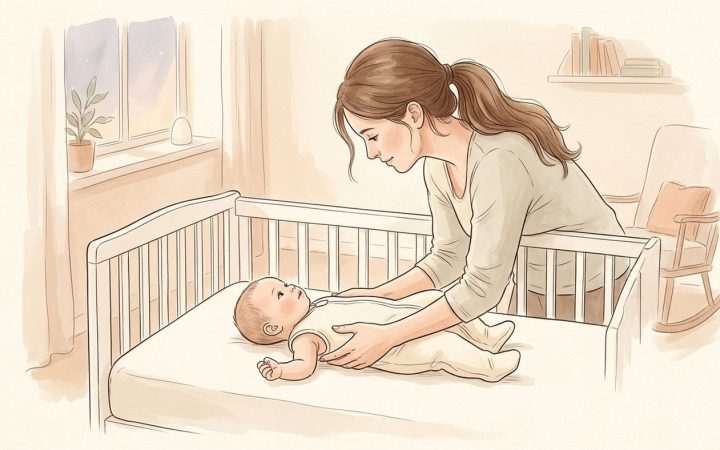
“Sleep training” means any planned, consistent way of helping a baby learn to fall asleep without full help from a parent. It covers a wide range: from very gentle approaches where you stay in the room (sometimes called “camping out” or the chair method), to timed check-ins (graduated extinction, or “Ferber”), to bedtime fading, to leaving and not returning until morning (extinction, or “cry it out”).
Does sleep training work?
Yes, for most families. When the American Academy of Sleep Medicine reviewed 52 studies, 94% found behavioral methods effective, and more than 80% of children improved in a meaningful way, with gains lasting three to six months. Later reviews agree, rating the evidence as moderate.
Change usually comes quickly. Most methods show results within one to two weeks, and several methods, including gentle ones, work about equally well in trials. So the best method is the one you can do consistently.
What the research says: many studies, including randomized trials, agree that behavioral methods improve bedtime problems and night waking in babies over 6 months. Most rely on parents’ reports, and some trials improved parents’ ratings and moods without changing night wakings measured by motion sensors. Confidence, a plan, and consistency are part of what these programs give families.
Is sleep training harmful?
No harm has been found in the studies to date. The best long-term evidence comes from an Australian trial that followed 225 children to age 6. Researchers found no differences between children whose parents had used sleep training and those who hadn’t, in emotional or behavior problems, in stress hormone levels, in attachment, or in closeness to their parents. A smaller randomized trial found no difference in attachment a year later.
The fair way to put it: no evidence of harm is not the same as “proven harmless.” The studies are few, mostly rely on parents’ reports, and don’t follow children past age 6.
The claim that crying it out “floods the brain with cortisol” traces back mainly to one 2012 study of 25 babies in a hospital sleep program, with no comparison group. A randomized trial at home found stress hormone levels went down, not up. The stress hormone studies are small and inconclusive in both directions.
What doesn’t sleep training do?
It doesn’t give your child better sleep for life. By age 6, children in both groups of the long-term trial slept the same. Think of it as a tool for getting through a hard season, not an investment you’ll lose by skipping it.
It also has no proven benefit before about 6 months. A review of studies in younger babies found that early sleep programs did not reduce crying, prevent later sleep problems, or protect against postnatal depression.
Who disagrees, and why?
Sleep medicine specialists generally support these methods for babies over 6 months. Some infant mental health and breastfeeding organizations advise against methods that involve leaving a baby to cry, especially in the first year. Both sides agree on two points: crying-based methods are not for the early months, and gentler options are completely legitimate.
Before you start: ground rules
- No crying-based methods before about 6 months.
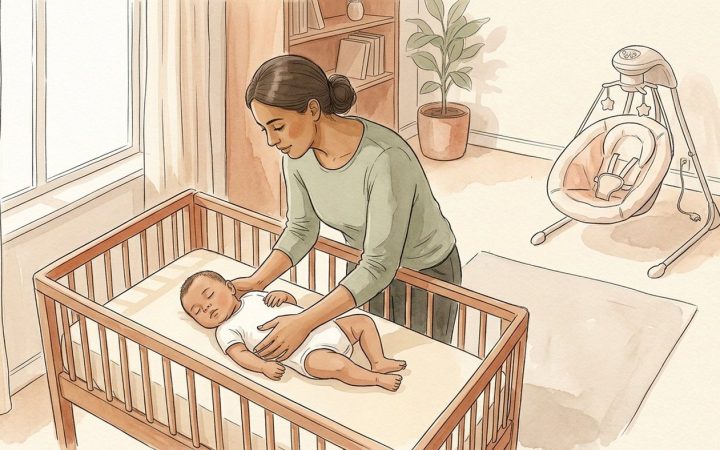
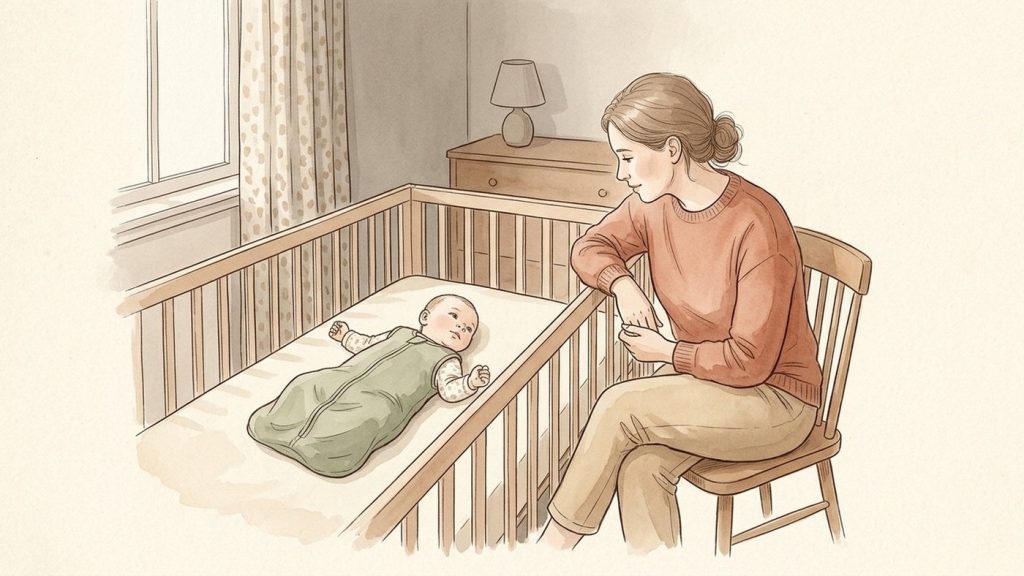
- Every nap and night happens in a safe sleep space: on the back, on a firm, flat surface, never a car seat, swing, sofa, or adult bed.
- Rule out medical causes first, and pause any plan when your child is unwell.
- Start with a short, predictable bedtime routine: the best-tested sleep tool of all.

- Loud snoring, gasping, or pauses in breathing during sleep
- Poor weight gain, frequent vomiting, or signs of reflux or pain
- You feel low, anxious, or overwhelmed: parents’ wellbeing matters too
Frequently asked questions
What age can you start sleep training?
Most studies, and most sleep specialists, start at about 6 months. Before that, focus on safe sleep and gentle routines.
Will sleep training affect breastfeeding?
No trial has shown that sleep training after 6 months shortens breastfeeding. The concern applies mostly to stretching feeds in young babies.
Is there a no-cry method that works?
Gentler methods, like staying in the room and gradually moving out, or bedtime fading, have worked in trials. They usually take a little longer, about three weeks.
Sources
- Mindell JA, et al. (2006). Behavioral treatment of bedtime problems and night wakings in infants and young children. Sleep 29(10). (AASM review of 52 studies)
- Price AMH, Wake M, Ukoumunne OC, Hiscock H (2012). Five-year follow-up of harms and benefits of behavioral infant sleep intervention: randomized trial. Pediatrics 130(4). doi.org
- Hiscock H, et al. (2007, 2008). Infant sleep intervention: cluster randomized trial and two-year follow-up of mother and child mental health. Archives of Disease in Childhood; Pediatrics.
- Gradisar M, et al. (2016). Behavioral interventions for infant sleep problems: a randomized controlled trial. Pediatrics 137(6).
- Middlemiss W, et al. (2012). Asynchrony of mother–infant hypothalamic–pituitary–adrenal axis activity following extinction of infant crying responses induced during the transition to sleep. Early Human Development 88(4).
- Douglas PS, Hill PS (2013). Behavioral sleep interventions in the first six months of life do not improve outcomes for mothers or infants: a systematic review. Journal of Developmental and Behavioral Pediatrics 34(7).
- Moon RY, et al. (2022). Sleep-related infant deaths: updated 2022 recommendations for reducing infant deaths in the sleep environment. Pediatrics 150(1).