Short answer: A baby who rolls onto their tummy in their sleep and wakes up crying is usually practicing a new skill they can’t fully use yet: they can roll over but can’t roll back. Keep placing your baby on their back for every sleep. If they can only roll one way, gently turn them onto their back when you find them on their tummy; once they can roll both ways on their own, the AAP says you don’t need to keep turning them back. Lots of awake practice rolling tummy-to-back usually ends the crying phase.
Key takeaways
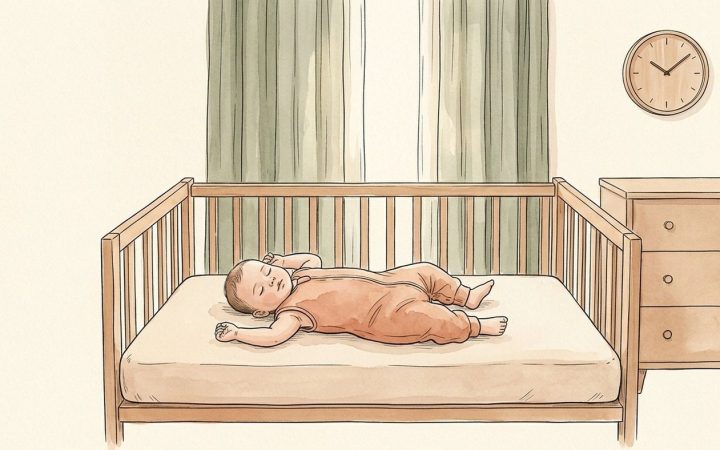
- Always start on the back: for naps and nighttime, every time, until your baby’s first birthday.
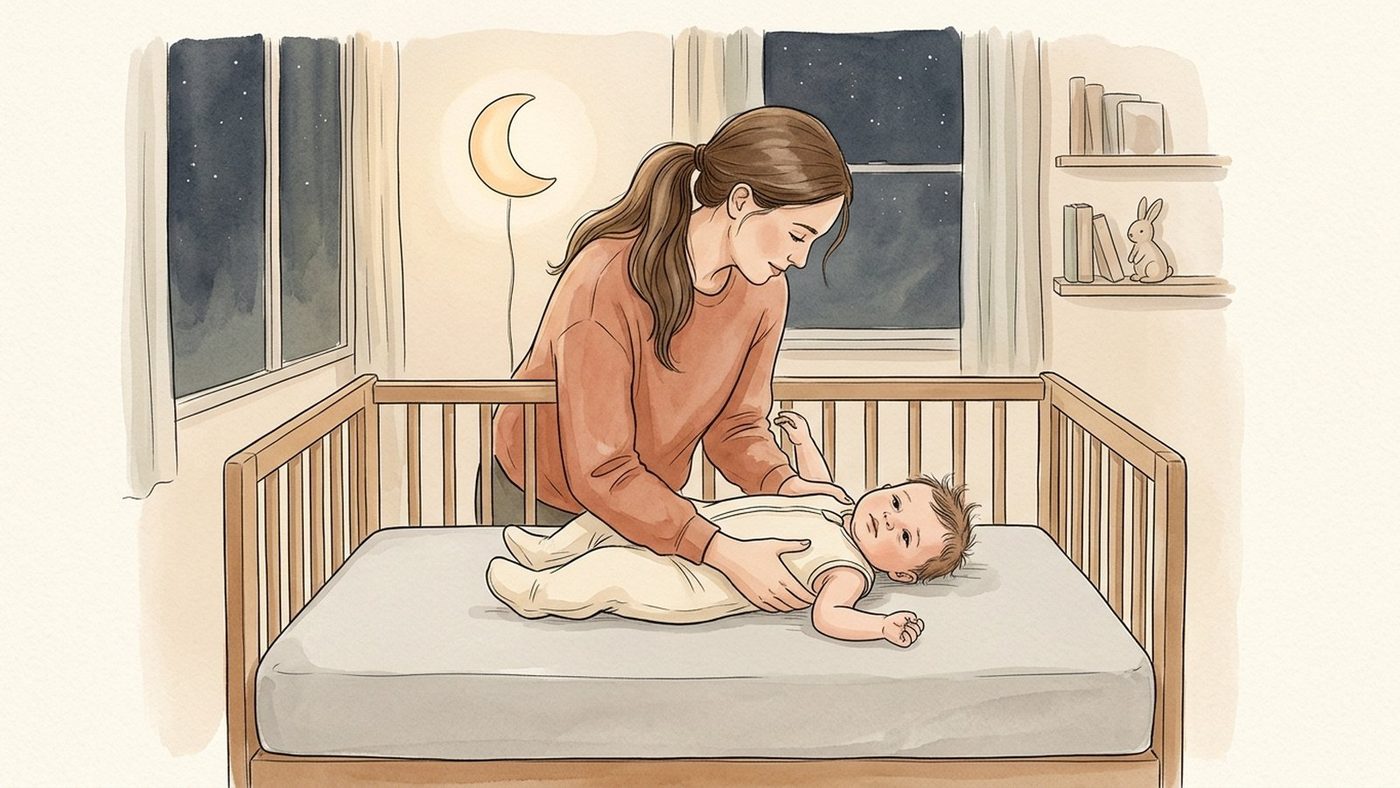
- Rolls one way only? Gently turn your baby onto their back when you see them on their tummy or side.
- Rolls both ways? You can leave them in the position they choose, and you don’t need to get up at night to check.
- Make rolling safe: stop swaddling, use an arms-free, non-weighted sleep sack, and keep the crib completely bare.
- Never use anti-roll products: wedges, positioners, and nests carry a suffocation risk.
Why does my baby roll over in their sleep and wake up crying?
Usually because they’ve learned to roll from back to tummy but haven’t yet learned the harder move back again. Babies don’t all learn the two directions in the same order, but rolling from tummy to back often needs stronger neck and arm muscles. Rosemary Horne, an infant sleep researcher at Monash University, notes that rolling back to front can start around 4 months, while rolling tummy to back may not come until about 5 to 6 months.
That gap is where the crying lives. A baby who rolls in a light phase of sleep can end up on their tummy, half-wake, find they can’t get back to their usual position, and protest. Some babies also simply don’t like sleeping on their front yet, or get frustrated pushing up and down without getting anywhere.
New motor skills tend to show up at night. Many parents notice their baby “practicing” in the crib, rolling, rocking, or pushing up, especially in the weeks after a skill first appears. It’s annoying at 2 a.m., but it’s a normal sign of development, not a sleep problem in itself.
Do I need to flip my baby back over?
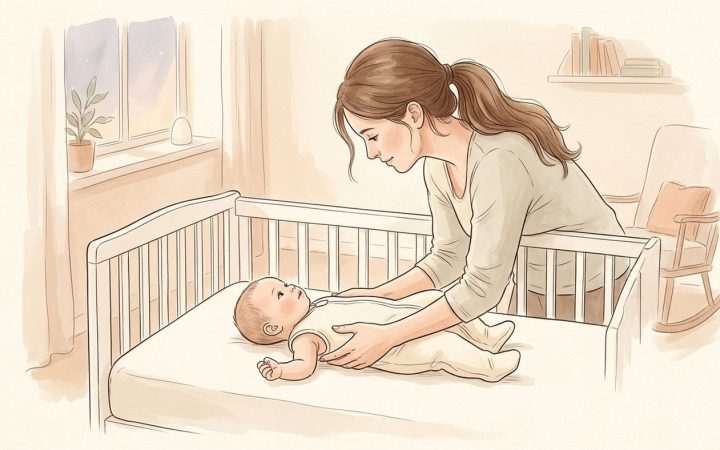
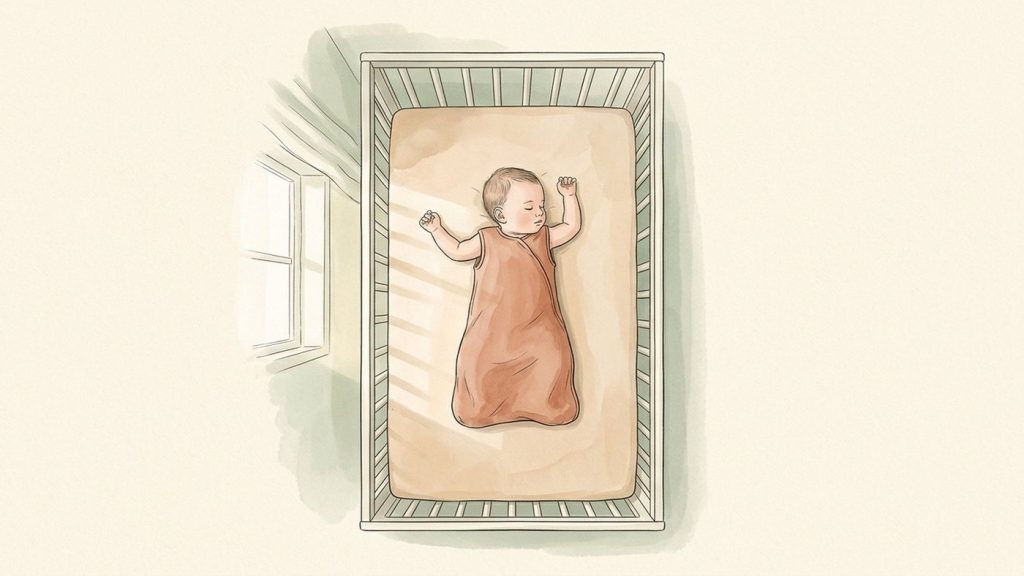
It depends on whether your baby can roll both ways on their own. Always place your baby on their back to start. After that, the guidance looks like this:
| Your baby’s rolling stage | What to do at sleep time | If you find them on their tummy |
|---|---|---|
| Not rolling yet | Place on back; swaddle only if no signs of trying to roll | Not expected; if it happens, they’re rolling, so stop swaddling |
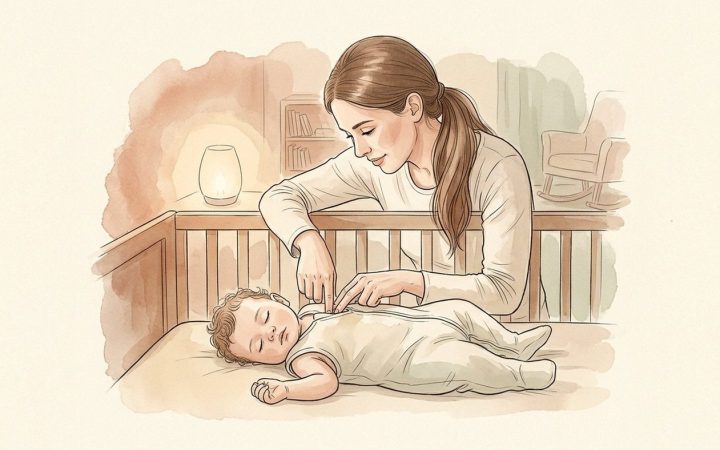
| Starting to roll, or rolls back-to-tummy only | Place on back; arms-free sleep sack, no swaddle | Gently turn them onto their back |
| Rolls both ways confidently on their own | Place on back; arms-free sleep sack | You can leave them in the position they choose |
The AAP says you should always place your baby to sleep on their back, but if your baby is comfortable rolling both ways, back to tummy and tummy to back, you don’t have to keep turning them onto their back. Red Nose, Australia’s leading safe sleep charity, gives the same advice and spells out the other half: if your baby can only roll unaided in one direction, gently roll them onto their back whenever you see they’ve rolled onto their front or side. Once your baby rolls both ways, Red Nose says there’s no need to wake during the night to check and turn them.
Side sleeping isn’t a halfway house. The AAP says the side position is just as dangerous as the stomach, partly because babies placed on their side roll onto their stomach more easily.
Why is back sleeping still the rule if my baby can roll?
Because babies placed on their backs are at lower risk of sudden infant death syndrome (SIDS), and a baby who chooses to roll has the strength to move their head and change position. A baby placed on their tummy before they’re ready doesn’t have that control.
Research summarized by Professor Horne helps explain why the tummy position matters. In studies of sleeping babies, tummy sleeping made it harder for babies to wake, and was linked with lower blood pressure and lower oxygen levels to the brain. Being able to wake up easily is thought to be one of the body’s protections, which is part of why back sleeping is recommended for every sleep until age 1.
What the research says: the evidence that back sleeping lowers SIDS risk is strong and consistent, and it underpins the AAP’s 2022 recommendations. The “leave them once they roll both ways” advice is a practical consensus from the AAP and other safe sleep bodies rather than the result of a specific trial. There’s no research on how long the “stuck on tummy and crying” phase lasts, so any timeframe you read is a parent’s estimate.
Free download
Free: safe sleep checklist and sleep log
Track naps and night wakings for a week and the pattern shows itself. Part of our free 7-page printables pack.
How do I stop my baby waking up crying after rolling?
You can’t safely stop a baby from rolling, but you can help them learn to roll back faster, which is what usually ends the crying. These steps are common practice and match what safe sleep bodies recommend:
- Practice rolling during the day. Plenty of supervised floor time and tummy time builds the neck, shoulder, and arm strength needed to roll tummy to back. The AAP suggests building up to at least 15 to 30 minutes of tummy time a day by about 7 weeks; our guide on how much tummy time a baby needs covers later months.
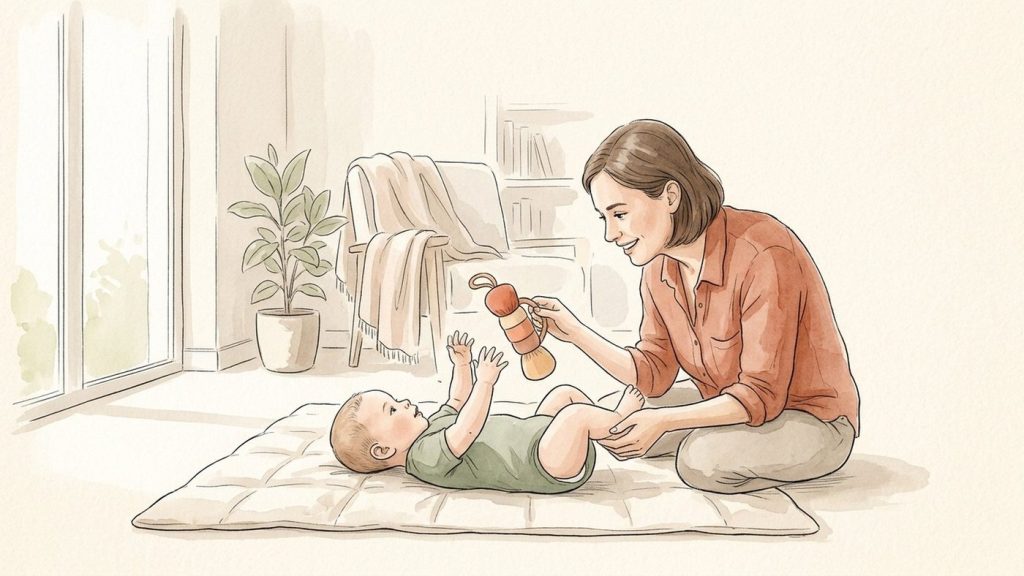
- Help them “find” the roll. During play, place a favorite toy just out of reach to the side, or gently guide their hip over so they feel the movement. Practice both directions.
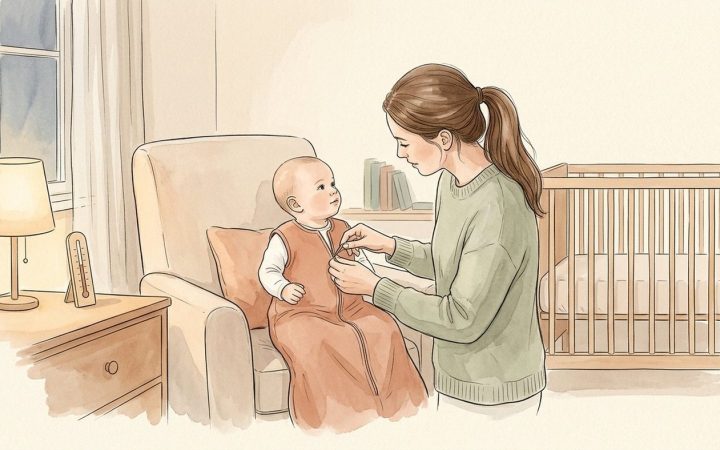
- Free the arms. Stop swaddling at the first sign of trying to roll and switch to a sleeveless, non-weighted sleep sack. Babies need their arms to push up and roll back. See when to stop swaddling for the details.
- Respond calmly and briefly. If your baby can’t roll back yet, go in, turn them onto their back, offer a quiet “shh”, and leave. Keep the lights low so it doesn’t become playtime.
- Pause before you go in once they roll both ways. A baby who can roll back may grumble and resettle in a new position on their own. Give them a moment before stepping in.
Expect some disrupted nights while the skill is new. Many families find the waking eases once rolling becomes easy in both directions, though it often overlaps with other changes. If the wake-ups line up with around 4 months, our post on the 4-month sleep regression explains what else is going on.
Should I use a wedge or positioner to stop my baby rolling?
No. Products sold to keep babies on their backs are not safe. The FDA tells parents not to use infant sleep positioners, the wedges and bolsters meant to hold a baby on their back or side, and says it knows of infant deaths linked to them. Babies can suffocate after rolling from their side onto their stomach, and even babies placed correctly on their backs can scoot up or down and become trapped. Red Nose likewise does not recommend anti-roll devices or anything that fastens a baby into a position.
The same goes for anything weighted. The AAP advises against weighted swaddles, sleepers, and blankets, and the NIH’s Safe to Sleep campaign warns that if a baby rolls over, added weight could make it harder for them to roll onto their back again. Our post on whether weighted sleep sacks are safe goes into more detail.
How do I make the crib safe for a baby who rolls?
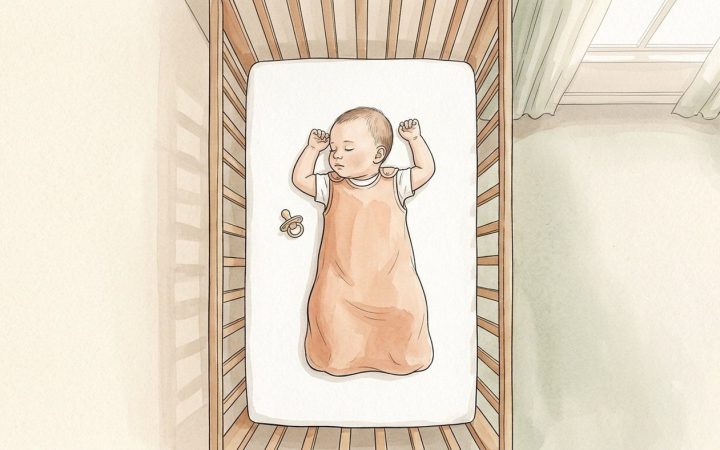
Keep it bare. A rolling baby can end up anywhere in the crib, including face-first against whatever is in it. The AAP says to keep pillows, blankets, stuffed toys, and bumper pads out of the bed because a baby could roll into them and have their airflow blocked. Your checklist:
- A firm, flat mattress that fits the crib snugly, with only a fitted sheet
- No pillows, bumpers, blankets, soft toys, or sleep positioners
- An arms-free, non-weighted sleep sack in the right size instead of a loose blanket
- No incline: the AAP says surfaces sloped more than 10 degrees aren’t safe for sleep
- Room-sharing, not bed-sharing, for at least the first 6 months
Rolling also changes daytime safety. A baby who rolls can tumble off a bed, sofa, or changing table in a second, so keep a hand on your baby on raised surfaces and use the floor for play. Never swaddle a baby who is rolling or trying to roll, for naps or at night.
Talk to your pediatrician if:
- your baby isn’t rolling from tummy to back by 6 months, a milestone the CDC says most babies reach by then (see baby not rolling over at 6 months)
- your baby seems very stiff or very floppy, uses one side of the body much more than the other, or loses a skill they had
- the crying seems like pain, comes with fever or vomiting, or your baby is hard to settle in any position
If your baby is ever limp, hard to wake, or struggling to breathe, call your local emergency number.
Frequently asked questions
Is it dangerous if my baby rolls onto their stomach while sleeping?
If your baby rolls both ways on their own in a bare crib, the AAP says you can leave them. If they only roll one way, turn them back when you notice. Always start them on their back.
Do I need to stay up all night to keep turning my baby back?
No. Turn them back when you see or hear them. Once they can roll both ways, Red Nose says there’s no need to wake at night to check their position.
My baby rolls in the sleep sack. Is that OK?
Yes, as long as it’s a sleeveless, non-weighted sleep sack that fits well and leaves the arms free. Swaddles and arm-restricting sacks should stop once rolling starts.
How long does this phase last?
There’s no research on it. Many parents say it eases once their baby rolls tummy to back easily, which for many babies happens by about 5 to 6 months, but every baby is different.
My baby keeps rolling onto their side. Should I prop them?
No. Never use rolled towels, wedges, or positioners. Place your baby on their back and, if they can’t yet roll both ways, gently return them to their back when you notice.
Sources
- American Academy of Pediatrics, HealthyChildren.org. How to Keep Your Sleeping Baby Safe: AAP Policy Explained. healthychildren.org
- Moon RY, Carlin RF, Hand I, et al. (2022). Sleep-Related Infant Deaths: Updated 2022 Recommendations for Reducing Infant Deaths in the Sleep Environment. Pediatrics. pubmed.ncbi.nlm.nih.gov
- Red Nose Australia. What to do when baby rolls over in sleep. rednose.org.au
- Red Nose Australia. Should I use a product to stop baby rolling? rednose.org.au
- Horne R (2017). Should I roll my baby back over if she rolls onto her stomach in her sleep? Monash Lens / The Conversation. lens.monash.edu
- US Food and Drug Administration. Recommendations for Parents and Caregivers About the Use of Baby Products. fda.gov
- NIH, Eunice Kennedy Shriver National Institute of Child Health and Human Development. Safe to Sleep: Frequently Asked Questions. safetosleep.nichd.nih.gov
- Centers for Disease Control and Prevention. Important Milestones: Your Baby By Six Months. cdc.gov