Short answer: No, learning two languages does not cause speech or language delay. Bilingual toddlers often know fewer words in each single language than monolingual children, but when you count the words they know across both languages, their total vocabulary is on par. They usually reach the main milestones on the usual schedule, and mixing languages is normal. A bilingual child can still have a genuine delay, though, and it will show up in both languages, so don’t wait if you’re worried.
Key takeaways
- No delay from bilingualism: guidance backed by the American Speech-Language-Hearing Association (ASHA) says using multiple languages doesn’t confuse children or cause delays.
- Count both languages: total vocabulary across languages is similar to monolingual children’s; single-language counts can look low.
- Same big milestones: first words around 1 year and two-word phrases by about 2, in any combination of languages.
- Mixing is normal: blending words from two languages in one sentence is an expected part of learning both.
- Real delays show in both languages: if your child is behind across everything they hear, get it checked.
Does being bilingual cause speech delay?
No. Guidance from the Communication Health Support Association, written with the expertise of the American Speech-Language-Hearing Association (ASHA), states plainly that using multiple languages does not confuse children or cause speech or language delays. It adds that multilingual children usually start using their first words by about 1 year and two-word phrases by about 2, the same broad timeline as children learning one language.
The myth persists because of how bilingual toddlers look when you measure only one language. If a child hears Spanish at home and English at daycare, they may know some words only in Spanish and others only in English. Test them in just one language and they can seem behind. Count both and the picture changes.
What does the research show about bilingual vocabulary?
The key studies come from psychologist Erika Hoff and colleagues at Florida Atlantic University, who followed Spanish-English bilingual toddlers:
- Hoff and colleagues, 2012: in children aged about 22 to 30 months, monolingual children were ahead on vocabulary and grammar when only one language was compared. But on total vocabulary, adding up words in both languages, the bilingual and monolingual groups were comparable. Within the bilingual group, skills in each language tracked how much of that language the child heard.
- Core and colleagues, 2013: in 47 bilingual toddlers aged 22 to 30 months, total vocabulary was similar in size and growth rate to monolingual norms. Total vocabulary also flagged about the same share of children as low as standard tests do for monolingual children, so the authors suggested using it in assessments.
| How you count | Bilingual toddler vs monolingual peers | What it tells you |
|---|---|---|
| Words in one language only | Often lower | Reflects split exposure, not a delay |
| Total vocabulary (all words in both languages) | Similar on average | Best everyday measure of how much language they have |
| Conceptual vocabulary (each idea counted once, even if known in both languages) | Lower than total vocabulary | Researchers still debate how to use this measure |
That last row is where experts genuinely disagree. If a child knows “dog” and “perro”, that’s two words in total vocabulary but one concept. Core’s study found conceptual vocabulary was smaller and grew more slowly. So bilingual toddlers have plenty of words, but some of them overlap. Most specialists recommend counting total vocabulary for everyday checks, while professionals may look at both.
What the research says: the finding that total vocabulary is on par is consistent across studies, but much of it comes from Spanish-English families in the US, often with higher incomes, and from fairly small samples. The link between amount of exposure and skill in each language is well established. Evidence on which family language strategy works best is limited.
How many words should a bilingual toddler say?
Use the same milestones as any toddler, counting words and phrases in every language your child uses. The CDC’s milestone checklists describe what most children (75% or more) do by each age:
- By 18 months: tries to say three or more words besides “mama” or “dada”, and follows one-step directions without gestures, like “Give it to me.”
- By 2 years: says at least two words together, like “More milk”, points to things in a book when asked, points to at least two body parts, and uses more gestures than just waving and pointing.
For bilingual children, “more milk” counts whether it’s “more milk”, “más leche”, or “more leche”. Understanding counts too: a child who follows directions in both languages is showing strong language skills even if they speak less. Our guides to how many words at 18 months and when babies start talking cover the milestones in more detail.
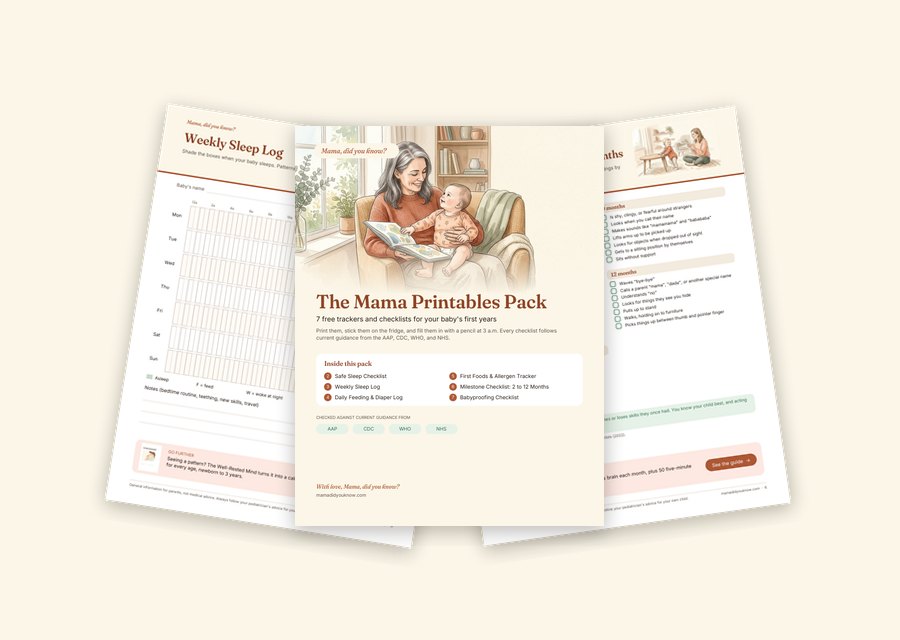
Free download
Free: milestone checklist, 2 to 12 months
The CDC milestones on one page, to tick off as your baby grows. Part of our free 7-page printables pack.
Is it OK that my toddler mixes languages?
Yes. Using words from both languages in one sentence, sometimes called code-mixing or code-switching, is an expected part of learning more than one language, according to ASHA-backed guidance. Toddlers grab whichever word they know best for the job. Bilingual adults do this too, often in skilled and deliberate ways.
Mixing doesn’t mean your child is confused or can’t tell the languages apart. If your child mixes, simply respond naturally, perhaps repeating their idea back in your language: “Más leche? Yes, more milk!”
Should we stop speaking one language to help our toddler talk?
No. Experts advise against dropping a language, especially a parent’s home language. ASHA-backed guidance encourages parents to talk to their child in the language or languages they are most comfortable using, noting that the more children hear and practice, in any language, the better their language skills will be. A parent speaking a language they’re fluent in usually offers richer vocabulary and more natural conversation than one speaking a second language they’re less comfortable in.
What seems to matter most is how much of each language your child hears, and how rich and responsive that input is. Ways to support both languages:
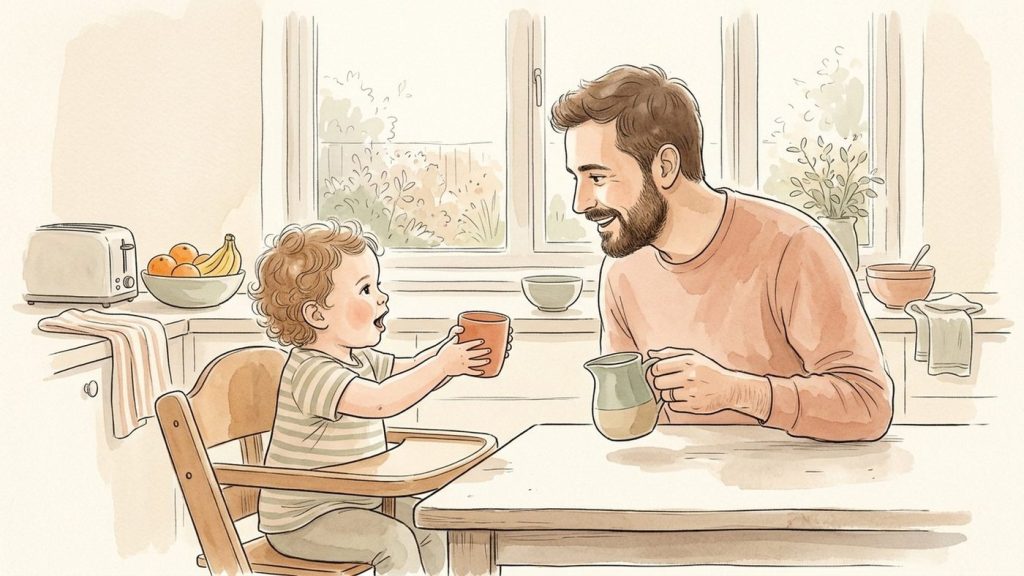
- Talk a lot, in your strongest language. Narrate the day, name things, and answer your toddler’s babble and words as if they were conversation.
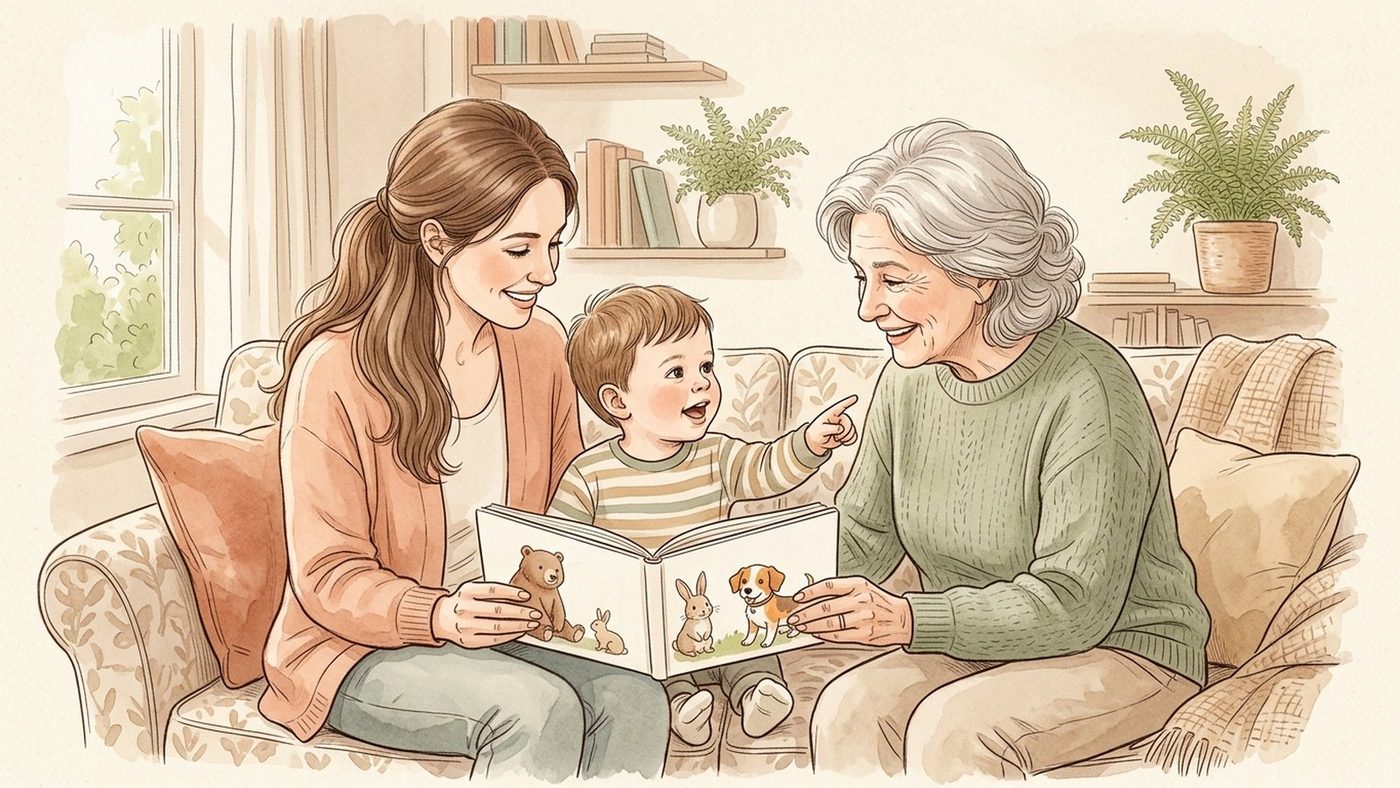
- Read together in both languages. Books bring in words that don’t come up in daily routines. See reading to your baby.
- Give each language enough time. Because skills track exposure, a language your child rarely hears will develop more slowly. Grandparents, songs, playgroups, and video calls with family can all add input.
- Pick a family approach that’s sustainable. “One parent, one language”, a home language plus the community language, or flexible mixing can all work. There’s limited evidence that one method is clearly best.
- Keep screens limited. Toddlers learn language from live conversation far better than from videos. See screen time for babies.
Don’t let “it’s just bilingualism” delay a check. If a bilingual child has a language disorder, it shows up in all the languages they use, and early help works best. When you see a specialist, ask for an assessment that considers both languages, ideally by a speech-language pathologist experienced with bilingual children or with an interpreter.
Talk to your pediatrician, and ask about a speech-language or hearing evaluation, if your child:
- isn’t trying to say three or more words in any language by 18 months, or isn’t combining two words by age 2
- doesn’t seem to understand simple words or directions in either language
- doesn’t point, wave, or use gestures to communicate, or doesn’t respond to their name
- loses words or skills they used to have
- has frequent ear infections or you wonder whether they hear well
In the US, you can also contact your state’s early intervention program directly for children under 3; the CDC notes that a doctor’s referral isn’t necessary, and services are free or low-cost for eligible children. See our guide to the late talker for more.
Frequently asked questions
Do bilingual children start talking later?
Not usually. ASHA-backed guidance says bilingual children typically say first words around 1 year and two-word phrases by 2, like other children. They may know fewer words in each language at first.
How do I count words for a bilingual toddler?
Add up all the words they say in every language. If they say “dog” and “perro”, count both. Tell your pediatrician the total and which languages your child hears.
Is it too late to add a second language at 2?
No. Young children can learn a new language at any age. Some children who start a second language later, for example at daycare, speak little of it at first while they listen and learn.
Will speech therapy be in one language?
It depends on what’s available, but a good assessment should consider both languages. Ask your provider how they assess bilingual children and whether therapy can support your home language.
Are bilingual toddlers more likely to stutter?
Many toddlers go through a phase of repeating words or sounds while their language grows, whatever language they speak. If it lasts, worries you, or comes with visible struggle, ask your pediatrician about a speech evaluation.
Sources
- Communication Health Support Association, powered by the expertise of the American Speech-Language-Hearing Association. Learning More Than One Language. helpingyoucommunicate.org
- Hoff E, Core C, Place S, Rumiche R, Señor M, Parra M (2012). Dual language exposure and early bilingual development. Journal of Child Language. pubmed.ncbi.nlm.nih.gov
- Core C, Hoff E, Rumiche R, Señor M (2013). Total and conceptual vocabulary in Spanish-English bilinguals from 22 to 30 months: implications for assessment. Journal of Speech, Language, and Hearing Research. pubmed.ncbi.nlm.nih.gov
- Centers for Disease Control and Prevention. Important Milestones: Your Child By 18 Months. cdc.gov
- Centers for Disease Control and Prevention. Important Milestones: Your Child By Two Years. cdc.gov
- Centers for Disease Control and Prevention. Learn the Signs. Act Early: Early Intervention Contacts by State. cdc.gov
- AAP Council on Communications and Media (2016). Media and Young Minds. Pediatrics. pubmed.ncbi.nlm.nih.gov