Short answer: Night terrors happen early in the night, in deep sleep: your toddler may scream, thrash, and stare with open eyes, but they’re not really awake, can’t be comforted, and won’t remember it. Nightmares are bad dreams that happen later in the night; your child wakes up scared, wants you, and can often tell you about it. For a night terror, stay close, keep your child safe, and don’t try to wake them. For a nightmare, comfort and reassure.
Key takeaways
- Timing is the biggest clue: night terrors usually come in the first few hours of sleep; nightmares come in the second half of the night.
- Awake or not: a child in a night terror is still asleep and won’t remember it. A child after a nightmare is awake and remembers being scared.
- Don’t wake a night terror: the NHS says waking them can make them more upset. Just keep them safe until it passes.
- Common and usually harmless: in a large Canadian study, about a third of children had sleep terrors at 18 months. Most grow out of them.
What is the difference between night terrors and nightmares?
Night terrors are a partial waking from deep sleep; nightmares are scary dreams. The AAP explains that night terrors take place during the deepest stages of sleep, early in the night, often before parents have gone to bed. Nightmares happen in the second half of the night, when dreaming is most intense. That difference in sleep stage explains everything else:
| Night terror | Nightmare | |
|---|---|---|
| When | Early in the night, usually in the first few hours | Later in the night or early morning |
| Sleep stage | Deep non-dreaming (non-REM) sleep | Dreaming (REM) sleep |
| What it looks like | Screaming, thrashing, sitting up, eyes open, fast breathing, sweating | Wakes crying or frightened, often calls for you |
| Responds to you? | No, may push you away or not seem to recognize you | Yes, wants and accepts comfort |
| How long | Usually a few minutes; the NHS says up to 15 minutes | Short, but falling back asleep may take a while |
| Remembers it? | No | Often yes, older toddlers may describe it |
| What to do | Stay close, keep them safe, don’t wake them | Comfort, reassure, help them settle |
The AAP says nightmares can start as early as 6 months, though young toddlers can’t tell you what they dreamed. Night terrors occur most often in toddlers and preschoolers.
At what age do night terrors start?
Often in toddlerhood, earlier than many parents expect. The NHS says night terrors are most common between ages 3 and 8, but research shows they’re also very common in younger children. A long-term study of 1,940 children in Quebec, published in JAMA Pediatrics in 2015, found that sleep terrors peaked at 18 months, when about 34% of children had them. Over the whole of childhood, from 18 months to 13 years, about 56% of the children had sleep terrors at some point. By age 13 only about 5% still did.
The same study found that night terrors and sleepwalking tend to run in families. Children whose parents had sleepwalked were more likely to sleepwalk themselves, and about a third of children with early sleep terrors later sleepwalked.
What should I do during a night terror?
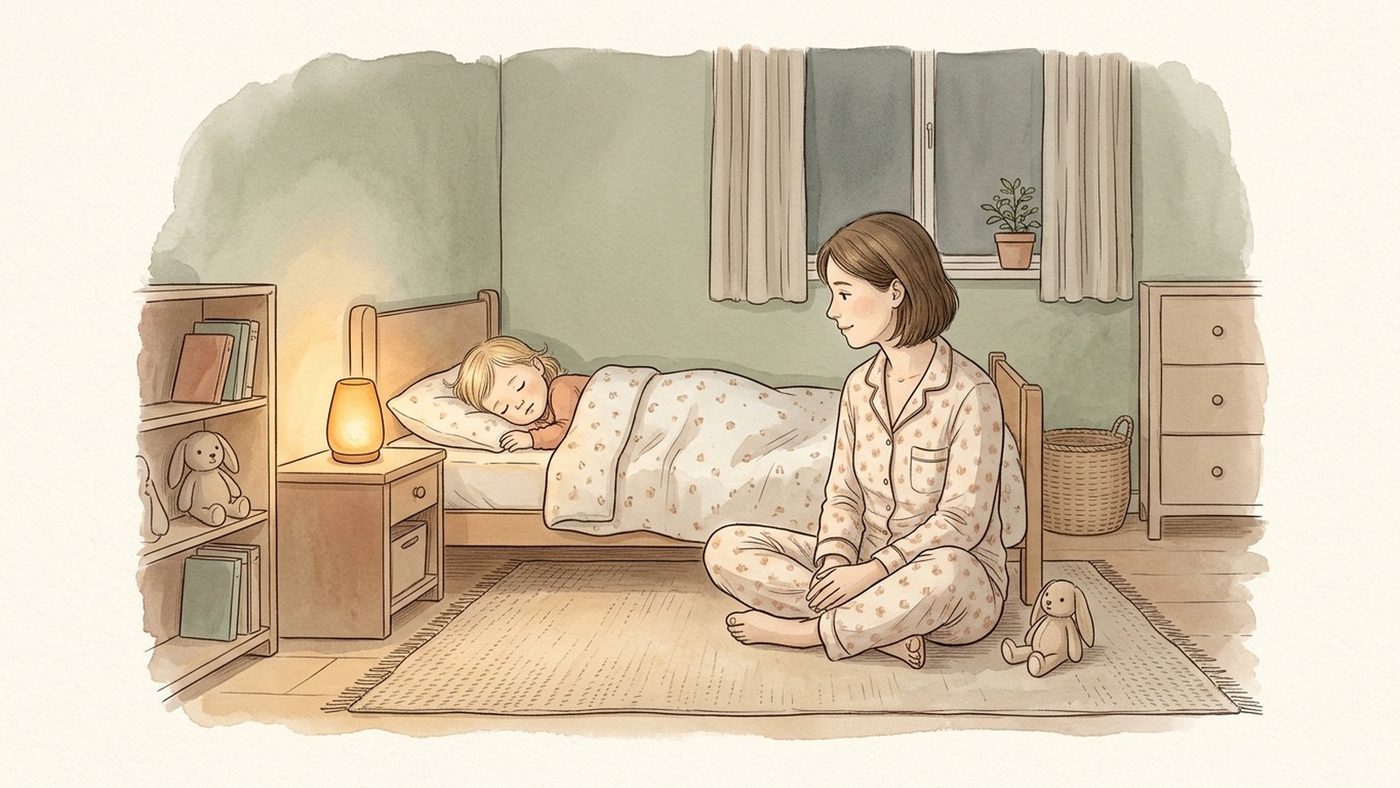
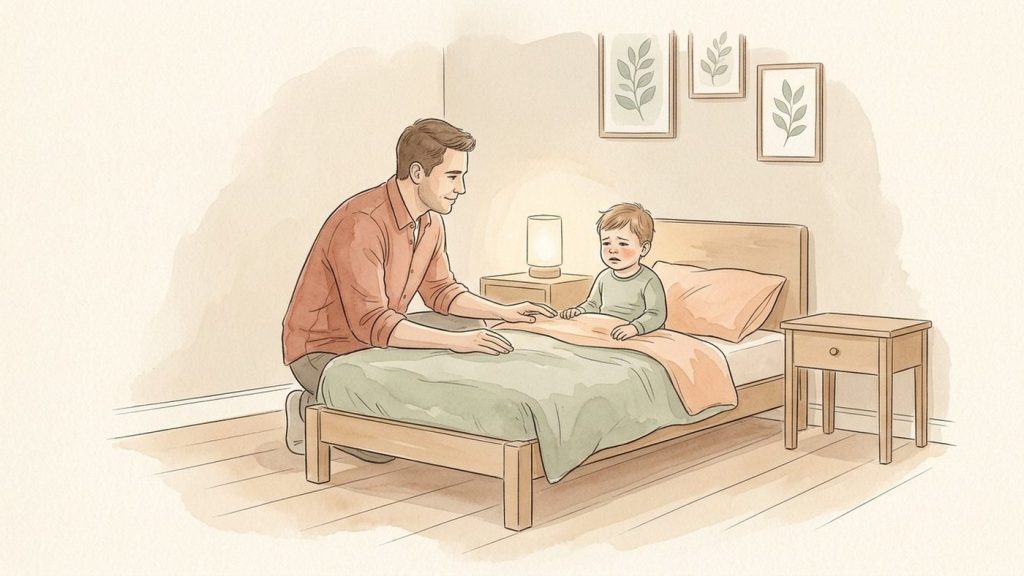
Stay calm, stay close, and wait it out. It’s much harder on you than on your child, who won’t remember anything. The NHS and the AAP agree on these steps:
- Don’t try to wake them. The NHS says your child may not recognize you and may get more upset if you try to comfort them.
- Keep them safe. Move anything they could hit, and stop them from climbing out of the crib or bed or falling down stairs. The AAP says to gently restrain only if they try to get out of bed.
- Don’t talk much or hold them tightly. The NHS advises not trying to stop them moving unless there’s a risk of injury.
- Wait for it to pass. Most episodes last a few minutes. When it ends, your toddler usually settles straight back into sleep.
- Don’t bring it up the next day. Your child won’t remember, and talking about it may worry them.

Free download
Free: safe sleep checklist and sleep log
Track naps and night wakings for a week and the pattern shows itself. Part of our free 7-page printables pack.
What should I do after a nightmare?
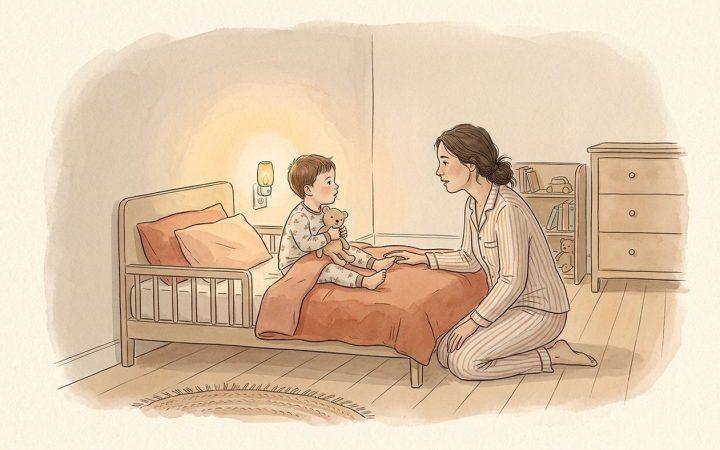
Go to your child quickly and comfort them. The AAP suggests reassuring them that they’re safe, reminding them that dreams aren’t real, and helping them fall back asleep. A few things can help a frightened toddler:
- Hold them and use a calm, low voice.
- Leave a dim nightlight on if it helps.
- Check the room for scary shadows or shapes together.
- Offer a familiar comfort object if your toddler is old enough to have one in bed.
- Keep the rest of the night boring and predictable, so it doesn’t turn into a fun middle-of-the-night visit.
During the day, keep scary shows and stories away from bedtime, and keep a calm, steady wind-down. Our toddler bedtime routine guide has a simple routine that works for most families.
What causes night terrors in toddlers?
Nobody knows exactly, but certain things make them more likely. They seem to happen when a child gets “stuck” between deep sleep and waking. The NHS lists these triggers:
- Being very tired or unwell. Overtiredness is one of the most common triggers, including after a dropped nap or a late night.
- Disturbances during deep sleep. Sudden noises at night, or needing to pee, can interrupt deep sleep.
- Stress or something frightening. A big change, like a new sibling, starting daycare, or a move.
- Family history. As the Quebec study showed, these sleep patterns run in families.
- Breathing problems during sleep. A 2003 study in Pediatrics found that many children with sleep terrors also had sleep-disordered breathing, and that the episodes often went away once the breathing problem was treated. If your toddler snores loudly most nights, mention it to your pediatrician.
What the research says: we have good long-term data on how common night terrors are and how they run in families. The evidence on prevention is weaker. Scheduled waking is recommended by the NHS and is supported by small studies and case reports, not large trials. The link with sleep-disordered breathing comes mostly from children referred to sleep clinics, so it may not apply to every child.
How can I prevent night terrors?
Mainly by protecting sleep. The American Academy of Sleep Medicine recommends 11 to 14 hours of sleep in 24 hours, including naps, for children aged 1 to 2, and 10 to 13 hours for ages 3 to 5. Toddlers who regularly get less are more likely to have episodes.
- Move bedtime earlier if your toddler is overtired, especially during a nap transition or a 2-year-old sleep regression.
- Keep a regular schedule for naps, bedtime, and waking, even on weekends where you can.
- Try scheduled waking. If the terrors happen at the same time each night, the NHS suggests gently waking your child about 15 minutes before that time, every night for 2 weeks. Rouse them just enough that they stir, then let them fall back asleep.
- Use the bathroom before bed for toddlers who are toilet trained, since a full bladder can stir deep sleep.
If your toddler wakes fully at night and can’t get back to sleep, that’s a different problem from night terrors. See our guide on a toddler waking at night and not going back to sleep.
Toddlers who have night terrors or sleepwalk need a safe space at night. Use a stair gate, keep windows locked or fitted with guards, keep furniture anchored to the wall, and clear the floor of things they could trip on. If your toddler climbs out of the crib, see our post on toddlers climbing out of the crib.
Talk to your pediatrician if:
- night terrors happen often, keep happening, or your child gets hurt during them
- your toddler snores loudly, gasps, or pauses breathing during sleep, or is very sleepy during the day
- episodes involve stiffening, jerking, or the same movements every time, or happen during the day, which can need checking for seizures
- nightmares are frequent or follow a frightening or upsetting event
- you’re worried, or the disrupted nights are wearing down your family
If your child has a seizure, is struggling to breathe, or can’t be woken after an episode, call your local emergency number.
Frequently asked questions
Are night terrors a sign of a psychological problem?
Usually not. In toddlers they’re a common, harmless sleep pattern that most children grow out of. Stress can trigger them, but they don’t mean something is wrong emotionally.
Do night terrors happen when toddlers are sick?
They can. The NHS lists being unwell as a trigger, and fever can disturb deep sleep. They usually settle once your child is better.
My toddler has night terrors every night. Is that normal?
It can happen during a stressful or overtired stretch. Try an earlier bedtime and scheduled waking for two weeks, and talk to your pediatrician if they keep happening.
Should I go in during a night terror?
Yes, to keep your child safe, but stay quiet and don’t try to wake or comfort them. Being nearby is enough.
Can babies have night terrors?
They’re rare in young babies. Most start in toddlerhood, with the Quebec study showing a peak at around 18 months.
Sources
- NHS. Night terrors and nightmares. nhs.uk
- American Academy of Pediatrics, HealthyChildren.org. Nightmares, Night Terrors & Sleepwalking in Children: How Parents Can Help. healthychildren.org
- Petit D, et al. (2015). Childhood Sleepwalking and Sleep Terrors: A Longitudinal Study of Prevalence and Familial Aggregation. JAMA Pediatrics. pubmed.ncbi.nlm.nih.gov
- Guilleminault C, et al. (2003). Sleepwalking and sleep terrors in prepubertal children: what triggers them? Pediatrics. pubmed.ncbi.nlm.nih.gov
- Paruthi S, et al. (2016). Recommended Amount of Sleep for Pediatric Populations: A Consensus Statement of the American Academy of Sleep Medicine. Journal of Clinical Sleep Medicine. pubmed.ncbi.nlm.nih.gov
- Cleveland Clinic. Are Night Terrors Disturbing Your Child’s Sleep? health.clevelandclinic.org