
Short answer: Newborns (0–3 months) usually need 14–17 hours of sleep in 24 hours, babies 4–12 months need 12–16 hours including naps, and toddlers 1–2 years need 11–14 hours. From about age 3, the range is 10–13 hours. These are healthy ranges, not targets: a baby who is growing well and content when awake is very likely getting enough.
In Adam’s first weeks, I counted every nap and still couldn’t tell if he was sleeping enough. This is the honest chart I was looking for.
Key takeaways
- 0–3 months: 14–17 hours a day (National Sleep Foundation and WHO). The American Academy of Sleep Medicine gives no figure under 4 months.
- 4–12 months: 12–16 hours, naps included (AASM, endorsed by the AAP; WHO). The National Sleep Foundation says 12–15.
- 1–2 years: 11–14 hours, naps included. 3 years and up: 10–13 hours.
- Normal is wide: in a review of 34 studies, babies 0–2 months slept 14.6 hours on average, but anywhere from about 9 to 20 hours fell in the normal range.
- Night waking is normal: at 12 months, about 28% of babies in a Canadian study still didn’t sleep 6 hours straight.
How much sleep does a baby need, by age?
Three expert bodies have published sleep ranges for young children, and they mostly agree. Here is what they say, along with what studies show about naps at each age.
| Age | Total sleep in 24 hours | Who says so | Naps (what studies show) |
|---|---|---|---|
| 0–3 months | 14–17 hours | National Sleep Foundation; WHO | Many short naps; about 3 a day on average up to 5 months, ranging from 1 to 5 |
| 4–12 months | 12–16 hours, naps included | AASM (endorsed by the AAP); WHO. NSF says 12–15 | Often about 3 at first; many babies settle into 2 later in the first year |
| 1–2 years | 11–14 hours, naps included | AASM; WHO; NSF | Most move from 2 naps to 1 between 12 and 18 months |
| 2–3 years | 11–14 hours, naps included | AASM; NSF | Usually 1 nap; fewer than 3 in 100 children stop napping before age 2 |
| 3–5 years | 10–13 hours, naps included | AASM; WHO; NSF | About 1 in 3 children have stopped napping by age 3 |
Notice that every figure is a range of three or four hours. That’s on purpose. Healthy babies differ a lot, and the panels behind these numbers say so.
Why do the sleep recommendations differ slightly?
Because they come from different expert panels reading the same limited research. The National Sleep Foundation (2015) and the American Academy of Sleep Medicine (2016) both used a formal consensus method, where experts review the studies and vote on ranges. The World Health Organization published its own guidelines in 2019.
The biggest difference is for babies 4–12 months: 12–15 hours (NSF) versus 12–16 hours (AASM and WHO). The AASM also chose not to give any figure for babies under 4 months, because newborn sleep varies so widely. The NSF itself notes that sleep a little outside its ranges may still be fine for a healthy child.
How much do newborns really sleep?
Most newborns sleep around 14–15 hours a day, in short pieces spread across the day and night. When researchers pooled 34 studies of healthy babies, 0–2-month-olds averaged 14.6 hours in 24 hours, with a normal range from about 9 to 20 hours.
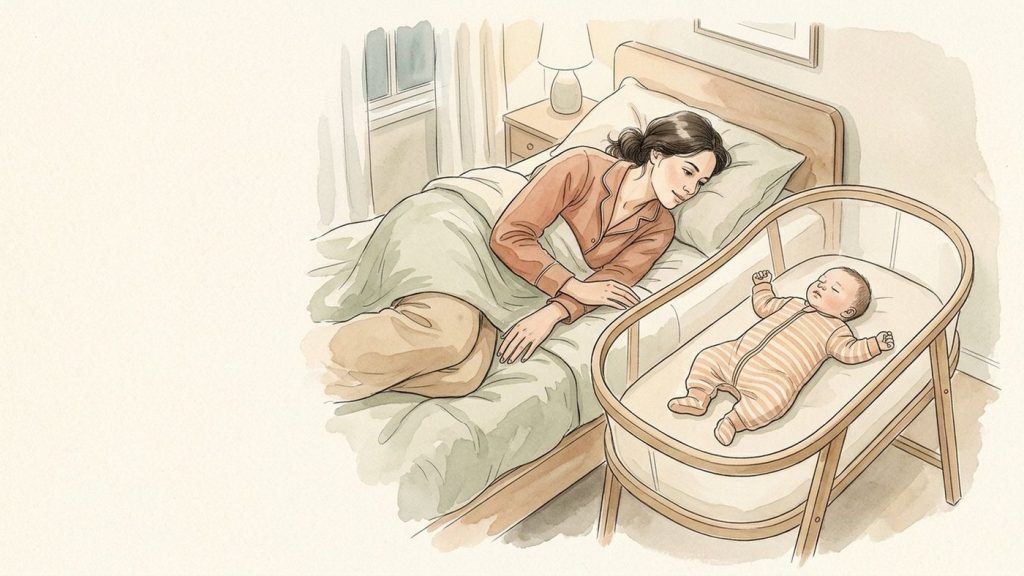
The same review found that babies 0–2 months woke about 1.7 times a night on average, and the longest stretch of sleep in the first five months averaged 5.7 hours, ranging from under 2 hours to almost 10. Newborns need to feed around the clock, and their body clock is still developing over the first few months, so scattered sleep is exactly what you’d expect.
When do babies sleep through the night?
Later than most parents are told, and at very different ages. In a Canadian study of 388 babies, 62% of 6-month-olds slept 6 hours straight and 43% slept 8 hours. At 12 months, those figures were 72% and 57%. Not sleeping through was not linked to slower development or to the mother’s mood.
Sleep also swings from night to night. When mothers kept two-week sleep diaries for 44 six-month-olds, half the babies never once slept 8 hours straight in those two weeks, and about three in four had highly variable nights. One great night followed by a rough one is ordinary, not a step backward. (If you’re wondering about the famous dip around 4 months, we look at the evidence in the 4-month sleep regression.)
Parents don’t see every waking. Many babies wake briefly between sleep cycles and settle themselves quietly, and the review of 34 studies notes that parent diaries tend to miss these wakings. A baby who “woke twice” may have woken more often and resettled alone the rest of the time.
How many naps does a baby need?
There’s no official nap count by age; the expert ranges simply include naps in the 24-hour total. What studies do show is a broad pattern. Babies under 5 months take about 3 naps a day on average. Between 12 and 18 months, most children move from two naps to one.
A review of 44 studies found that the average nap lasts a little over 2 hours at ages 1–2 and just under 2 hours at ages 2–3. Fewer than 3 in 100 children give up napping before age 2, about a third have stopped by age 3, and more than half by age 3 to 4. Charts that tell you exactly how long your baby should stay awake between naps are a different story; we cover what’s behind them in wake windows by age.
How do I know if my baby is getting enough sleep?
Look at your child, not the clock. A baby or toddler who is growing well, feeding well, and mostly content when awake is very likely getting the sleep they need, even if they sit at the low or high end of a range.
If you’d like to nudge sleep along, a short, predictable bedtime routine is one of the best-tested tools at every age. In a trial of 405 families, babies aged 7–18 months on a nightly routine (bath, massage, quiet time, lights out) went from a longest stretch of 6.9 hours to 8.5 hours within two weeks. Our guide The Well-Rested Mind walks through that routine and every research-tested method step by step. And if you’re weighing sleep training, start with does sleep training work?
What the research says: the age ranges are expert consensus, built by panels who reviewed hundreds of studies and voted on reasonable ranges. That makes them a sound guide, but not a precise prescription. The data on what’s normal (pooled averages and long-term studies of sleeping through) are solid, and they show that healthy babies vary widely.
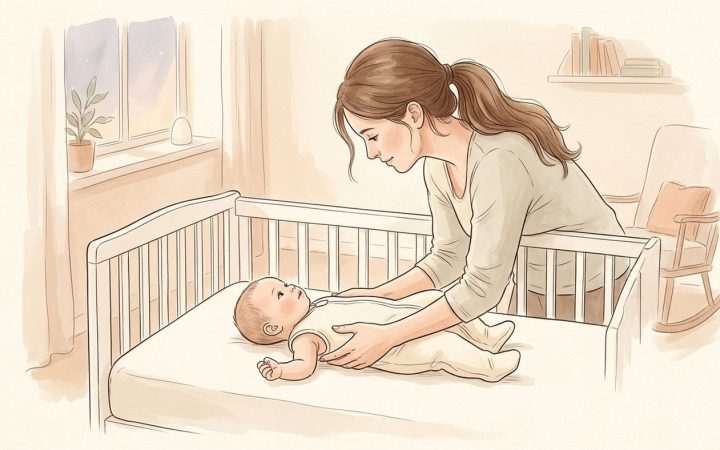
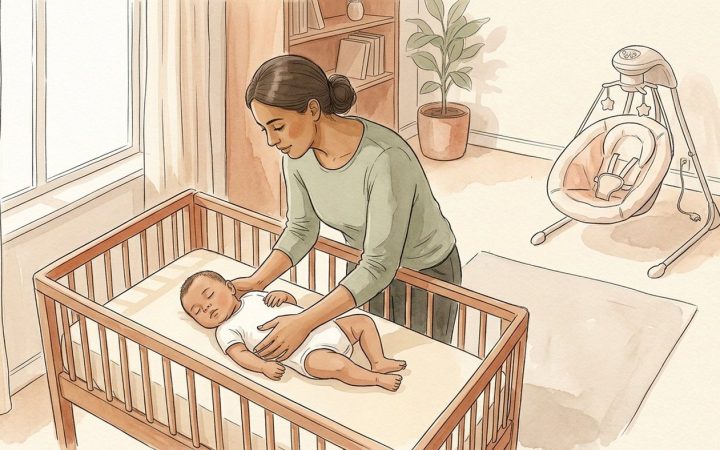
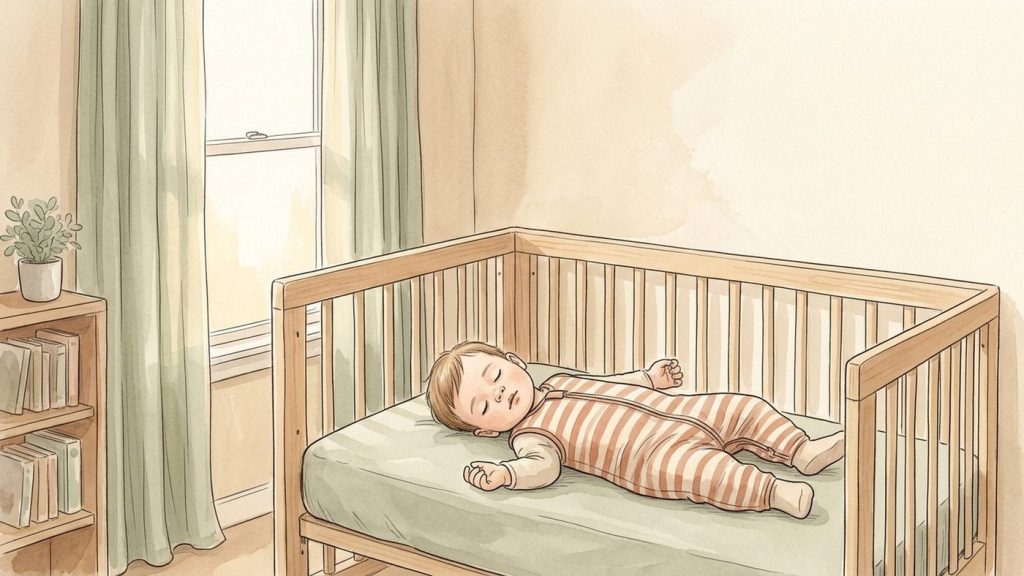
However many hours your baby sleeps, every nap and every night in the first year should be on their back, alone, on a firm, flat surface with only a fitted sheet. If your baby falls asleep in a car seat, swing, or stroller, move them to a flat sleep space when you can.
Talk to your pediatrician if your child:
- snores loudly most nights, gasps, or seems to pause in breathing during sleep
- is unusually hard to wake, too sleepy to feed, or not gaining weight well
- has very restless sleep, or a sudden change after a long stretch of good sleep
Frequently asked questions
Do the sleep hours include naps?
Yes. The AASM and WHO ranges are for total sleep in 24 hours, naps included. Add up night sleep and daytime sleep to compare.
My baby sleeps less than the chart says. Is that a problem?
Usually not. The ranges describe most healthy children, and the studies behind them found plenty of healthy babies outside them. If your baby is growing well and content when awake, they’re likely fine. If you’re worried, mention it at your next checkup.
Does the chart apply to babies born early?
Babies born early develop their sleep rhythms later, so many parents find it more useful to compare by corrected age (counting from the due date). Ask your pediatrician what to expect for your baby.
Should I wake my baby if they sleep more than the range?
Follow your pediatrician’s advice on feeding, especially in the newborn weeks. A healthy older baby who occasionally sleeps a lot, after illness or a busy day, is common. Call your pediatrician if your baby is hard to wake or too sleepy to feed.
Sources
- Paruthi S, et al. (2016). Recommended Amount of Sleep for Pediatric Populations: A Consensus Statement of the American Academy of Sleep Medicine. Journal of Clinical Sleep Medicine. pmc.ncbi.nlm.nih.gov
- Hirshkowitz M, et al. (2015). National Sleep Foundation’s sleep time duration recommendations: methodology and results summary. Sleep Health. pubmed.ncbi.nlm.nih.gov
- World Health Organization (2019). Guidelines on physical activity, sedentary behaviour and sleep for children under 5 years of age. who.int
- Galland BC, et al. (2012). Normal sleep patterns in infants and children: a systematic review of observational studies. Sleep Medicine Reviews. pubmed.ncbi.nlm.nih.gov
- Pennestri MH, et al. (2018). Uninterrupted infant sleep, development, and maternal mood. Pediatrics. doi.org
- Pennestri MH, et al. (2020). Sleeping through the night or through the nights? Sleep Medicine. pubmed.ncbi.nlm.nih.gov
- Staton S, et al. (2020). Many naps, one nap, none: a systematic review and meta-analysis of napping patterns in children 0–12 years. Sleep Medicine Reviews. pmc.ncbi.nlm.nih.gov
- Mindell JA, et al. (2009). A nightly bedtime routine: impact on sleep in young children and maternal mood. Sleep. pmc.ncbi.nlm.nih.gov
- American Academy of Pediatrics, HealthyChildren.org. How to Keep Your Sleeping Baby Safe: AAP Policy Explained. healthychildren.org