Short answer: Babies shouldn’t have added salt. The NHS says babies under 1 need less than 1 g of salt a day, and they get almost all of it from breast milk or formula, so don’t salt their food or cooking water. From 1 to 3 years, the NHS limit is no more than 2 g of salt a day (about 800 mg sodium). A small taste of salty food won’t hurt, but keep salty processed foods, stock cubes, and seasoning out of everyday meals.
Key takeaways
- Under 12 months: less than 1 g salt a day (NHS). Milk covers what babies need, so add none.
- 1 to 3 years: no more than 2 g salt a day (NHS), which is less than half a teaspoon.
- Why: babies’ kidneys can’t handle much salt, and early tastes shape what children prefer later.
- Hidden salt is the real issue: bread, cheese, stock cubes, gravy, processed meats, crackers, and many packaged toddler meals.
- Easy fix: take your baby’s portion out before seasoning, and use herbs, spices, garlic, and lemon for flavor.
Can babies have salt?
Not as an added ingredient. Babies do need a little sodium, which is the part of salt the body uses, but breast milk and formula already provide what they need. The NHS advises not adding salt to your baby’s food or cooking water, and not using stock cubes or gravy, which are often high in salt. The reason it gives is simple: babies shouldn’t eat much salt because it isn’t good for their kidneys, which aren’t fully developed yet.
The World Health Organization’s 2023 guideline for feeding children aged 6 to 23 months goes further, advising that foods high in salt, sugar, and trans fats shouldn’t be part of a young child’s diet. The AAP’s HealthyChildren site makes a related point for families: taste preferences form early, so it’s easier to keep salt low from the start than to cut back later.
This doesn’t mean you need to panic about every grain. Many foods naturally contain a little sodium, and that’s fine. The goal is no added salt and as few salty processed foods as possible, especially in the first year.
How much salt can a baby or toddler have per day?
The clearest daily limits come from the UK’s NHS, which sets maximums for salt by age. In the US, nutrition labels list sodium instead of salt. To convert, 1 g of salt contains about 400 mg of sodium, so multiply the sodium figure by 2.5 to get salt.
| Age | NHS maximum salt per day | About the same as sodium | In practice |
|---|---|---|---|
| Under 1 year | Less than 1 g | Less than 400 mg | Milk provides it. Add no salt at all. |
| 1 to 3 years | No more than 2 g | No more than 800 mg | No added salt; limit salty extras like ham, crackers, and stock |
| 4 to 6 years | No more than 3 g | No more than 1,200 mg | Still well below the adult limit |
| Adults | No more than 6 g | No more than 2,400 mg | About one level teaspoon |
US figures are set differently. The National Academies of Sciences, Engineering, and Medicine set an “adequate intake” of sodium (an estimate of what’s needed, not a limit) at 370 mg a day for babies 7 to 12 months and 800 mg a day for children 1 to 3. Either way, the message is the same: young children need very little, and most of it comes from ordinary food without any added salt.
Which foods have hidden salt?
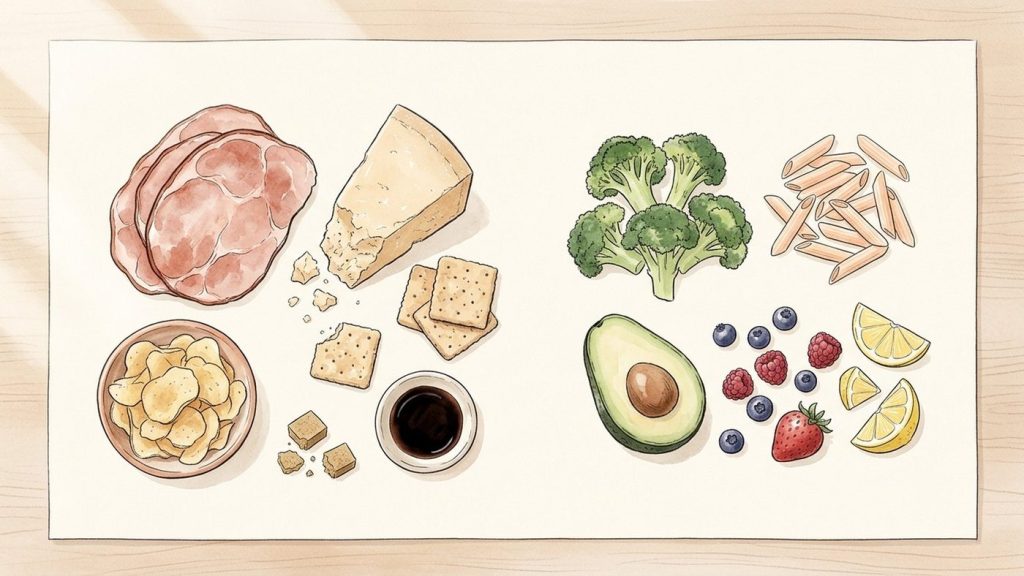
Mostly processed and prepared foods, not the salt shaker. The NHS lists bacon, sausages, salted fries and chips, crackers, crisps, ready meals, and takeaways as foods to avoid for babies. Other common sources to watch:
- Bread and toast. Not very salty per slice, but eaten often. Fine in small amounts; compare labels.
- Cheese. Hard and processed cheeses are saltier. Fresh mozzarella, ricotta, and Swiss-style cheeses are usually lower. Always choose pasteurized.
- Stock cubes, bouillon, gravy, and soy sauce. Very high in salt. Use water or homemade unsalted stock instead.
- Processed meats. Ham, bacon, salami, hot dogs, and sausages.
- Canned foods. Beans, vegetables, and soups often have added salt. Choose “no salt added” or rinse beans well.
- Snacks and dips. Crackers, chips, pretzels, and some hummus. Our post on hummus for babies covers how to choose or make a lower-salt version.
- Packaged toddler meals. A CDC-led study of more than 1,000 US baby and toddler products found most foods made for babies were low in sodium, but about 7 in 10 toddler dinners were high in sodium. The data were from 2012, and some products have changed since, so read labels.
Foods made specifically for babies under 12 months generally have little or no added salt. The bigger jump usually happens around the first birthday, when children start eating more family food and “toddler” products.
For toddlers, it helps to think in days rather than single foods. A slice of toast at breakfast, a little cheese at lunch, and a serving of pasta sauce from a jar at dinner can add up quickly to the 2 g limit. You don’t need to calculate every meal. Building most meals around fresh vegetables, fruit, plain grains, eggs, beans, fish, and meat you cook yourself keeps the total low without any counting. If you’re wondering how big toddler portions should be in the first place, see how much should a 2-year-old eat.
Free download
Free: first foods and allergen tracker
Tick off each allergen and new food, with space for reactions, plus a feeding and diaper log. Part of our free 7-page printables pack.
How do I cook family meals without salting my baby’s food?
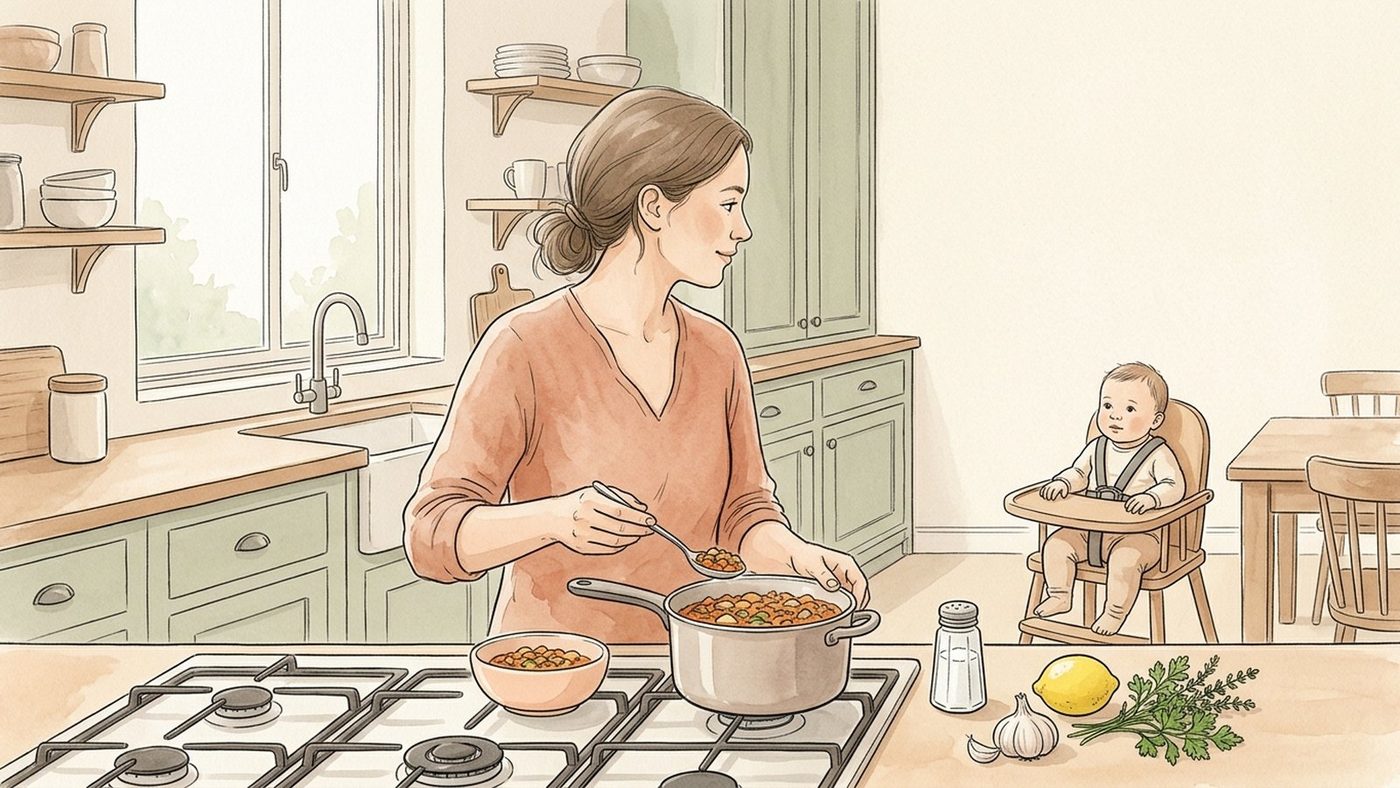
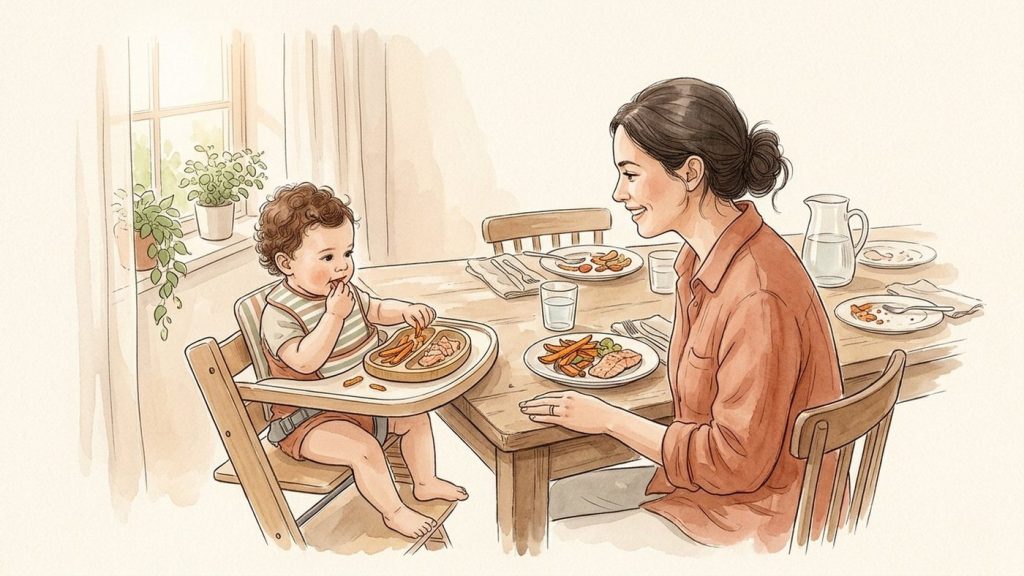
Cook without salt, take your baby’s portion out, then season the rest. The NHS suggests this for babies who eat the same meals as the family. It works whether you do purées, baby-led weaning, or a mix (see baby-led weaning vs purées).
- Leave salt out of the pot. Don’t salt the cooking water for pasta, rice, or vegetables.
- Flavor with other things. Garlic, onion, herbs, mild spices like cumin or cinnamon, lemon juice, and a little unsalted butter or olive oil all add taste.
- Set your baby’s portion aside. Serve it in a safe texture for their age.
- Season at the table. Older family members can add salt to their own plates.
- Swap salty ingredients. Use no-salt-added canned goods, unsalted nut butters, and water or homemade unsalted stock instead of cubes.
Less salt doesn’t mean bland. Babies are often happy with stronger flavors than we expect, and offering a wide range of tastes now may help with fussy eating later. For iron-rich ideas that are easy to make without salt, see iron-rich foods for babies.
What if my baby ate something salty?
A taste of salted food, like a fry or a bite of your toast, is not an emergency. Go back to unsalted food and offer milk or, if your baby is over 6 months, sips of water from a cup with meals (see when can babies drink water). What matters is the everyday pattern, not one meal.
Eating a large amount of salt at once is different. Swallowing table salt from a shaker, a spoonful of bouillon powder, or a lot of very salty food can be dangerous for a small child. Keep salt, stock powders, and seasoning mixes out of reach, the same way you would cleaning products.
Never add salt, sugar, cereal, or anything else to your baby’s bottle, and always make formula exactly as the package says. Too much powder makes a bottle too concentrated, which can be harmful. Never use salt as a home remedy, for example to make a baby vomit.
Call your local poison control center, your pediatrician, or your local emergency number right away if your child:
- may have swallowed a large amount of salt, stock powder, or seasoning mix
- is vomiting, very thirsty, unusually sleepy or irritable, or seems confused after eating something very salty
- has signs of dehydration, such as far fewer wet diapers, a dry mouth, or no tears when crying
What the research says: the advice to avoid added salt for babies is consistent across health bodies, and it rests on infant kidney physiology and on studies linking sodium to blood pressure. But exact daily numbers differ between countries because they’re set in different ways: the NHS uses maximum limits, while the US uses estimated needs. Evidence that early salt exposure directly shapes lifelong taste is suggestive rather than proven.
Frequently asked questions
When can babies have salt?
There’s no age at which babies “need” added salt. Avoid it in the first year. After 1, small amounts in family food are fine as long as daily intake stays under about 2 g of salt until age 3.
Is sea salt or pink salt better for babies?
No. Sea salt, Himalayan pink salt, and kosher salt are all mostly sodium chloride. The same limits apply.
Can my baby eat bread?
Yes, in small amounts from around 6 months, served in safe pieces. Bread contains some salt, so compare labels and don’t make it the main food at every meal.
Do babies need salt for iodine?
Babies get iodine from breast milk or formula. Don’t add salt to their food for iodine. If you’re breastfeeding, ask your doctor whether you need an iodine-containing supplement.
Is cheese too salty for babies?
Some cheeses are. Choose pasteurized, lower-salt options like fresh mozzarella, ricotta, or Swiss-style cheese, and offer small amounts.
Sources
- NHS. Salt: the facts. nhs.uk
- NHS. Foods to avoid giving babies and young children. nhs.uk
- World Health Organization (2023). WHO Guideline for complementary feeding of infants and young children 6–23 months of age. ncbi.nlm.nih.gov
- National Academies of Sciences, Engineering, and Medicine (2019). Sodium and Potassium Dietary Reference Intake Values Updated in New Report. nationalacademies.org
- Cogswell ME, Gunn JP, Yuan K, Park S, Merritt R (2015). Sodium and sugar in complementary infant and toddler foods sold in the United States. Pediatrics. doi.org
- American Academy of Pediatrics, HealthyChildren.org. We Don’t Need to Add Salt to Food. healthychildren.org